


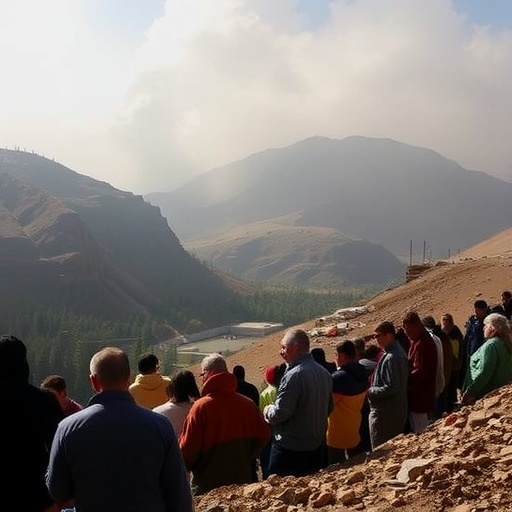
Iran is facing a critical environmental crisis characterized by severe water scarcity, deforestation, land erosion, and the drying of vital lakes and rivers. These environmental disasters are exacerbated by poorly managed economic development projects, including the widespread construction of dams and inter-basin water transfers. The overexploitation of surface and groundwater resources has led to significant ecological degradation, such as desertification, contamination of water supplies, and depletion of wetlands, profoundly impacting both ecosystems and local communities downstream.
A recent investigative study by Dr. Allan Hassaniyan from the University of Exeter, published in Environmental Challenges and Movements on the Margins, Beyond the Centre, reveals the Iranian government’s inability and unwillingness to address these environmental catastrophes comprehensively. The central government’s focus on authoritarian control over environmental activism undermines grassroots efforts and stifles innovative solutions needed for sustainable management. The state’s suppression of environmental NGOs, including licensing restrictions that geographically limit their operations, facilitates pervasive surveillance and diminishes their capacity to influence policy or mobilize public support during protests.
Kurdistan province exemplifies the environmental turmoil, where military exercises, intentional forest fires, and resource plundering have devastated natural habitats. The Iranian Revolutionary Guard Corps (IRGC) and affiliated security agencies have reportedly targeted Kurdish environmental activists with persecution, imprisonment, and even assassination, intensifying the securitization of environmental movements. This violent repression represents a broader strategy to neutralize any perceived threats posed by critical environmentalism, framing civic activism as a national security risk.
The environmental damage also triggers socio-economic instability by displacing communities who depend on natural resources for their livelihoods. The altered water regimes and reduced ecosystem services disrupt agricultural productivity and traditional water management approaches. Such ecological injustices compound regional inequalities and fuel political tensions. Dr. Hassaniyan’s research utilized government documents, policy analyses, and firsthand interviews with activists to detail these dynamics and the fragmented nature of Iran’s emerging environmental protest networks.
Despite intense governmental pressure, grassroots environmental movements continue to act as vital pressure groups advocating for ecological justice and policy reform. Their persistence underscores the resilience of local actors who seek to address Iran’s complex environmental challenges against a backdrop of political repression. However, without significant shifts in governance strategies and resource management practices, Iran’s environmental crises are projected to worsen, threatening the social, economic, and ecological fabric of the nation.
This comprehensive analysis urges the international community and policymakers to recognize the intersection of environmental degradation and human rights violations in Iran. It highlights the urgent need for transparent and inclusive environmental governance that supports civic participation and sustainable development to mitigate these escalating environmental threats.
Cite Scienmag News
Courtney Benton. (July 9, 2026). Iran Fails on Environment While Persecuting Activists, New Book Reveals. Scienmag. https://scienmag.com/iran-fails-on-environment-while-persecuting-activists-new-book-reveals/
Courtney Benton. "Iran Fails on Environment While Persecuting Activists, New Book Reveals." Scienmag, 9 July 2026, https://scienmag.com/iran-fails-on-environment-while-persecuting-activists-new-book-reveals/. Accessed 3 September 2026.
Courtney Benton. "Iran Fails on Environment While Persecuting Activists, New Book Reveals." Scienmag. July 9, 2026. https://scienmag.com/iran-fails-on-environment-while-persecuting-activists-new-book-reveals/


