


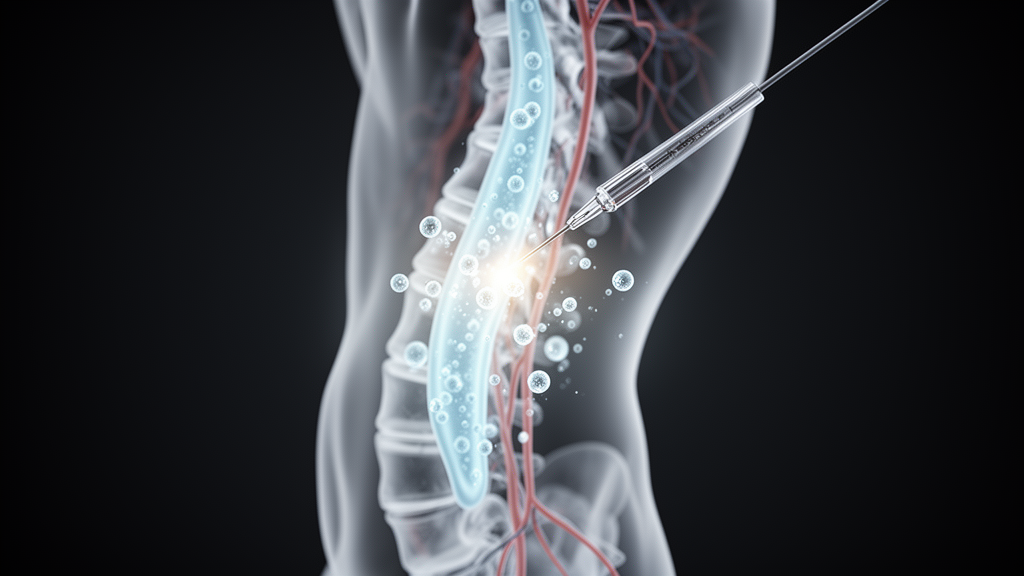
Therapeutic options for progressive multiple sclerosis remain limited, and the mechanisms engaged by intrathecal mesenchymal stem cell (MSC) therapy are still incompletely understood.
The study’s central finding is a striking compartmentalization of the response. MSC exposure was not associated with broad remodelling of peripheral immune-cell composition or of marker-derived functional programs across circulating lymphocyte, monocyte, B-cell, and NK-cell populations. Instead, the most consistent treatment-associated changes appeared within the CSF proteome, where exposure was linked to coordinated extracellular-matrix-associated protein changes, including fibrillar collagens and matrix-regulatory proteins, together with changes in innate, vascular, metabolic, and cytoskeletal pathways.
MSCs are proposed to exert immunomodulatory and trophic effects, yet most previous studies have relied on targeted biomarkers and lacked systems-level analysis across immune compartments. To address this gap, the researchers applied a framework that simultaneously profiled circulating immune cells and CSF proteins in the same participants, allowing them to ask whether signals in the blood mirror signals in the central nervous system after treatment.
The analysis drew on the 18-participant SMART-MS cohort. Peripheral blood mass cytometry was analysed longitudinally across baseline, six months, and 12 months, while matched CSF proteomics used paired baseline and six-month samples from the first treatment period. Immune phenotypes and marker-derived functional program scores were quantified using mixed-effects modelling, an approach that accounts for the repeated measures and crossover design of the trial.
To summarize the CSF proteomic changes, the team generated exploratory composite scores reflecting extracellular matrix/interface-associated, innate/vascular inflammatory, metabolic/cytoskeletal, and reactivity-associated proteins. These scores enabled exploratory integration with the circulating immune programs measured in parallel, providing a common language for comparing the two compartments.
Importantly, the trial itself did not demonstrate a neuro-regenerative signal for its primary endpoint. However, exploratory MRI findings and adverse events, including fever and back pain, suggested localized responses after intrathecal administration. This context matters for interpreting the molecular data: the proteomic changes observed in the CSF may reflect localized biological activity at the site of administration rather than a proven therapeutic mechanism.
Consistent with that idea of heterogeneous local responsiveness, inflammatory, metabolic, and reactivity-associated CSF protein signatures tended to show greater changes in exploratory analyses of patients who experienced adverse events or spinal MRI reactivity, rather than a uniform response across all participants. This pattern suggests that individual patients may differ substantially in how their central nervous system reacts to intrathecal MSC exposure.
Cross-compartment analyses showed weak and heterogeneous coupling between circulating immune programs and CSF proteomic changes. In other words, what happens in the blood after treatment does not reliably predict what happens in the CSF, underscoring the value of measuring both compartments directly rather than inferring central nervous system effects from peripheral samples.
Together, these findings suggest that intrathecal MSC exposure in progressive MS is associated with compartmentalized CSF proteomic changes rather than broad systemic immune alterations. The authors position the study as a demonstration of the value of integrated blood-CSF profiling for dissecting treatment-associated biology in CNS-targeted interventional trials, offering a template for future studies of cell therapies aimed at the central nervous system.
As with any exploratory multi-omics analysis in a small randomized crossover cohort, the composite scores and cross-compartment associations reported here are hypothesis-generating rather than confirmatory, and the trial’s lack of a neuro-regenerative signal on its primary endpoint means the proteomic findings should be understood as descriptive of treatment-associated biology, not as evidence of clinical benefit.
Subject of Research: Multi-omics profiling of blood and cerebrospinal fluid responses to intrathecal mesenchymal stem cell therapy in progressive multiple sclerosis.
Article Title: Intrathecal mesenchymal stem cell therapy in progressive multiple sclerosis: integrated blood and CSF profiling in the SMART-MS randomized trial
Article References: Kleftogiannis, D., Gavasso, S., Eidem, L. E., Haugsøen, J. B., Holmøy, T., Steffensen, L., Wesnes, K., Rojewski, M., Barsnes, H., Al-Sharabi, N., Mohamed-Ahmed, S., Ytterdal, M., Sandvik, C. E., Torkildsen, Ø., Schrezenmeier, H., Mustafa, K., Berven, F. S., Bø, L., Kråkenes, T., & Kvistad, C. E. (2026). Intrathecal mesenchymal stem cell therapy in progressive multiple sclerosis: integrated blood and CSF profiling in the SMART-MS randomized trial. Fluids and Barriers of the CNS. https://doi.org/10.1186/s12987-026-00886-3
Image Credits: AI Generated
DOI: 10.1186/s12987-026-00886-3
Keywords: multiple sclerosis, mesenchymal stem cells, intrathecal therapy, CSF proteomics, mass cytometry, SMART-MS trial, blood-CSF profiling, randomized crossover trial, extracellular matrix, neuroimmunology, Intrathecal, mesenchymal
Cite Scienmag News
Drew Townsend. (October 29, 2026). Intrathecal Stem Cell Therapy Reshapes CSF Proteins, Not Blood Immune Cells, in Progressive MS Trial. Scienmag. https://scienmag.com/intrathecal-stem-cell-therapy-reshapes-csf-proteins-not-blood-immune-cells-in-progressive-ms-trial/
Drew Townsend. "Intrathecal Stem Cell Therapy Reshapes CSF Proteins, Not Blood Immune Cells, in Progressive MS Trial." Scienmag, 29 October 2026, https://scienmag.com/intrathecal-stem-cell-therapy-reshapes-csf-proteins-not-blood-immune-cells-in-progressive-ms-trial/. Accessed 4 November 2026.
Drew Townsend. "Intrathecal Stem Cell Therapy Reshapes CSF Proteins, Not Blood Immune Cells, in Progressive MS Trial." Scienmag. October 29, 2026. https://scienmag.com/intrathecal-stem-cell-therapy-reshapes-csf-proteins-not-blood-immune-cells-in-progressive-ms-trial/




