


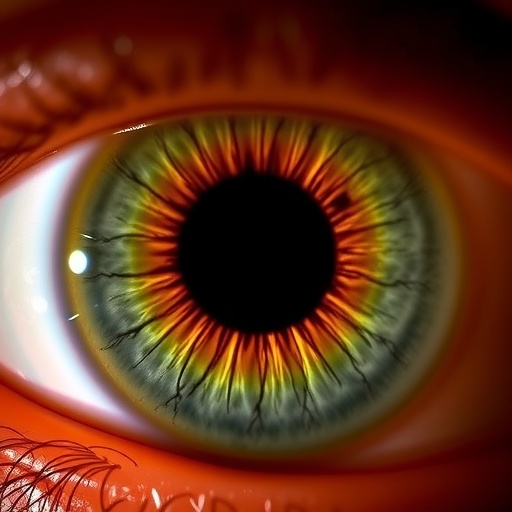
In a groundbreaking study that promises to reshape our understanding of glaucoma and its underlying mechanisms, researchers have unveiled compelling evidence linking elevated intraocular pressure (IOP) to the disturbance of the blood-retinal barrier (BRB) in both mouse models and human subjects. This discovery, spearheaded by Zhang, Lim, Ballheim, and colleagues, provides an unprecedented glimpse into the vascular vulnerabilities of the retina amidst glaucoma progression, and could spearhead novel therapeutic strategies aimed at protecting vision.
Glaucoma is often dubbed the “silent thief of sight” because it asymptomatically leads to irreversible optic nerve damage and visual field loss, frequently culminating in blindness. Central to its pathophysiology is the elevation of intraocular pressure, historically understood as the primary modifiable risk factor. However, the precise cascade from pressure dysregulation to retinal cellular damage has remained enigmatic. The latest study illuminates a critical intermediary—the blood-retinal barrier, a specialized vascular interface essential for maintaining retinal homeostasis.
The blood-retinal barrier performs a vital function akin to the blood-brain barrier, regulating molecular exchange between the retinal vasculature and neural tissue, thereby safeguarding the retina from harmful substances while ensuring nutrient flow. Its disruption signals a compromise in retinal microenvironment integrity and can exacerbate neurodegenerative processes. Zhang and colleagues’ research demonstrates for the first time how sustained intraocular pressure elevation directly compromises the BRB, setting off a cascade of pathological events within the retinal tissue.
Utilizing sophisticated mouse models genetically engineered to mimic human glaucoma, the team administered controlled intraocular pressure elevations and monitored the resultant blood-retinal barrier integrity through advanced imaging and molecular assays. They documented significant leakage and altered vascular permeability metrics post-IOP elevation, confirming that pressure stress alone can breach the normally impermeable BRB. These findings have profound implications because they isolate intraocular pressure as a causative factor in vascular barrier breakdown rather than a mere associated symptom.
Corroborating the animal model data, post-mortem retinal tissue from glaucoma patients was examined and revealed similar defects in the blood-retinal barrier structure. The research employed immunohistochemical staining techniques to visualize the tight junction proteins, such as occludin and claudin, which are crucial for barrier function. A marked reduction and disorganization of these proteins were observed, mirroring the perfusion anomalies documented in mice. This cross-species parallelism lends robust translational strength to the findings.
From a mechanistic standpoint, the study delves into how elevated IOP mechanotransduction pathways instigate cellular signaling disruptions that weaken vascular endothelial tight junctions. Increased pressure is hypothesized to induce shear stress forces on retinal vascular endothelial cells, triggering inflammatory cytokine release and oxidative stress responses. These molecular perturbations compromise tight junction integrity, permitting extravasation of serum components and immune cells into retinal parenchyma, which further exacerbates neuronal injury.
The implications of blood-retinal barrier dysfunction extend beyond immediate cellular damage; the infiltrating plasma proteins and inflammatory factors can activate microglial cells within the retina, promoting chronic neuroinflammation. This neuroinflammatory milieu accelerates retinal ganglion cell apoptosis—the very cells responsible for transmitting visual signals to the brain—thereby contributing to the irreversible vision loss characteristic of glaucoma.
Significantly, the revelations from this research recalibrate potential therapeutic approaches. Traditional glaucoma treatments primarily focus on lowering intraocular pressure through pharmacological or surgical means. While these remain essential, the discovery that BRB integrity is directly impaired by pressure elevation opens avenues for interventions aimed at fortifying or restoring the barrier function itself. Therapies targeting endothelial tight junction stabilization, anti-inflammatory modalities, or antioxidant administration might complement pressure-lowering interventions to yield more holistic neuroprotection.
Furthermore, the study suggests the potential for blood-retinal barrier biomarkers to serve as early diagnostic indicators or prognostic tools for glaucoma progression. Non-invasive imaging technologies like optical coherence tomography angiography (OCTA) or fluorescein angiography could be refined to detect subtle vascular leakage or tight junction abnormalities preceding overt neuropathy, allowing for timely intervention.
The research also encourages reconsideration of glaucoma as a neurovascular disorder rather than an exclusively neurodegenerative disease. This paradigm shift underscores the complexity of glaucoma pathology, involving intricate interactions between mechanical stress, vascular integrity, immune activation, and neuronal survival. A deeper appreciation of this multifactorial nature can stimulate multidisciplinary research endeavors, blending ophthalmology, vascular biology, and neuroimmunology.
Interestingly, the blood-retinal barrier’s susceptibility to systemic conditions such as hypertension and diabetes, which often coexist with glaucoma, raises important questions about compounded risks and patient stratification. Therapeutic regimens might need tailoring based on vascular comorbidities, emphasizing vascular protection alongside IOP control.
While the study’s insights mark a transformative leap, Zhang and colleagues also acknowledge limitations, including variability in human tissue sample quality and the necessity for longitudinal studies to assess causality and progression over time. Future research aimed at identifying molecular signals that mediate endothelial vulnerability to pressure and testing candidate drugs to reinforce barrier integrity in vivo is critical.
In summation, this pioneering investigation not only elucidates a pivotal link between intraocular pressure and blood-retinal barrier compromise but also reframes glaucoma within a neurovascular context. The neuroprotective potential unlocked by targeting vascular barriers promises to accelerate innovation in glaucoma management, offering renewed hope for millions at risk of vision loss worldwide. As the study propels forward, it galvanizes the scientific community to rethink therapeutic designs and embrace a vascular-centric vision preservation paradigm.
Cite Scienmag News
Ophelia Keating. (April 8, 2026). Intraocular Pressure Damages Blood Retinal Barrier. Scienmag. https://scienmag.com/intraocular-pressure-damages-blood-retinal-barrier/
Ophelia Keating. "Intraocular Pressure Damages Blood Retinal Barrier." Scienmag, 8 April 2026, https://scienmag.com/intraocular-pressure-damages-blood-retinal-barrier/. Accessed 4 September 2026.
Ophelia Keating. "Intraocular Pressure Damages Blood Retinal Barrier." Scienmag. April 8, 2026. https://scienmag.com/intraocular-pressure-damages-blood-retinal-barrier/


