


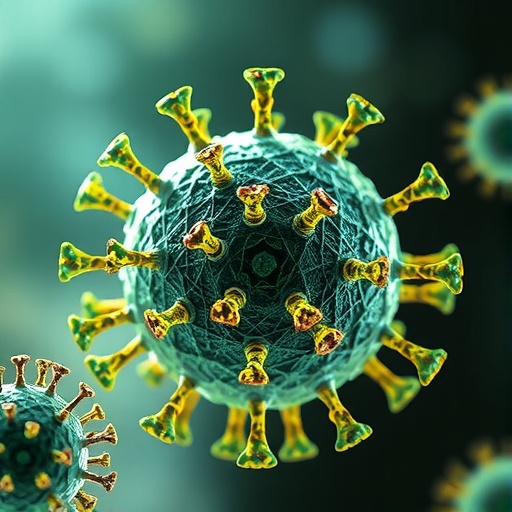
Scientists have unveiled a revolutionary method that dramatically advances single-cell genetic sequencing, enabling rapid, efficient, and cost-effective decoding of genomes from individual environmental cells and viral particles. This breakthrough paves the way for unprecedented insights into the vast and diverse microbial communities inhabiting our planet, particularly within the complex marine ecosystems. The technique, termed environmental microcompartment genomics, leverages cutting-edge microfluidic innovations to overcome limitations inherent in previous approaches.
Traditionally, single-cell genomics has relied heavily on flow cytometry, which isolates individual particles into microplate wells for sequencing. While transformative, this method is constrained by throughput, processing roughly 384 particles per run, and requires size-based pre-sorting that excludes smaller entities. The newly developed microcompartment method significantly elevates throughput, enabling the sequencing of over 2,000 particles from as little as 300 nanoliters of seawater — less than a millionth of a liter — illustrating unmatched sensitivity and efficiency.
The technology is founded on microfluidics, where seawater samples are partitioned into thousands of microscopic semipermeable droplets, each harboring a trillionth of a liter of fluid. This encapsulation randomly distributes single microbial cells or viral particles into discrete microbubbles. Inside each bubble, reagents stimulate the amplification of DNA to high levels, and subsequent barcoding uniquely tags the amplified genetic material. When sequenced en masse after bubble dissolution, barcodes enable precise reconstruction of individual genomes with impressive fidelity.
Environmental microcompartment genomics sidesteps the reliance on flow cytometry, thereby eliminating the need for size-based particle sorting. This inclusive approach captures the full spectrum of microbial entities, ranging from large prokaryotes to minuscule viruses and even naked extracellular DNA fragments. As a result, researchers can holistically survey the entire microbial ecology within a given environment, revolutionizing studies that were previously hindered by methodological selection biases.
A prime demonstration involved applying the method to surface seawater samples from the Gulf of Maine, a region known for rich marine biodiversity. The approach not only replicated known microbial community structures observed with conventional methods but also revealed unique viral genomes previously undetectable. Notably, the technique uncovered members of the recently characterized and unusual Naomiviridae virus family, which had eluded detection due to their atypical DNA configurations incompatible with standard sequencing workflows.
The improved genome completeness and quality produced by the microcompartment approach surpass those obtained through widely utilized metagenomic protocols. Where metagenomics pools entire community DNA, often generating fragmented or incomplete assemblies, this single-particle technology yields comprehensive complete genomes for individual viral and cellular entities. This advancement holds promise for resolving viral-host interactions and understanding microbe ecology with unprecedented clarity.
In addition to marine water, preliminary tests indicate the method’s adaptability to challenging sample types such as sediment and soil, notorious for containing mixtures of biological and inorganic particles that complicate traditional cell isolation and sequencing. This broad applicability suggests extensive utility across diverse environmental settings, enabling new explorations of microbial dynamics in complex and previously inaccessible ecosystems.
Despite foregoing the phenotypic and size distribution data offered by flow cytometry, the microcompartment technique’s unparalleled inclusivity and scalability represent a net gain for microbial genomic research. By increasing throughput tenfold and lowering per-genome costs without compromising data quality, it democratizes high-resolution microbial genomics and fuels discovery in environmental microbiology, virology, and molecular ecology.
Marine viruses, which dominate oceanic microbial biomass yet exhibit tremendous size and genomic diversity, stand to benefit greatly. Many are too small for standard cytometric isolation, hampering their study. The new method captures viruses of all sizes simultaneously, painting a fuller picture of viral diversity and abundance in natural environments and shedding light on their ecological roles and evolutionary dynamics.
This innovative genomic platform exemplifies how microfluidic technologies can be harnessed to surmount longstanding challenges in microbial science. By facilitating comprehensive and unbiased single-particle investigations, environmental microcompartment genomics opens doors to uncovering the hidden intricacies of microbial life, from oceanic viromes to terrestrial microbiomes, thus accelerating the pace of microbial discovery and expanding our understanding of Earth’s microbial frontiers.
The research was spearheaded by a multidisciplinary team from Bigelow Laboratory for Ocean Sciences and Atrandi Biosciences, in collaboration with Vilnius University, combining expertise in microbiology, genomics, and bioengineering. Their findings, published in Nature Microbiology, underscore the transforming potential of novel single-cell analysis methodologies to push the boundaries of microbial ecology and environmental genomics.
Moving forward, the method promises to refine viral classification, unravel pathogen-host relationships at the single-particle scale, and inform biogeochemical modeling by providing detailed genomic data previously out of reach. As sequencing technologies and microfluidic platforms continue advancing, environmental microcompartment genomics stands as a beacon for future breakthroughs in microbiome research.
News Publication Date: 5-Nov-2025
Web References: https://doi.org/10.1038/s41564-025-02167-5
Cite Scienmag News
Kristina Jarvis. (November 5, 2025). Innovative Method Broadens Opportunities for Environmental Virus Research. Scienmag. https://scienmag.com/innovative-method-broadens-opportunities-for-environmental-virus-research/
Kristina Jarvis. "Innovative Method Broadens Opportunities for Environmental Virus Research." Scienmag, 5 November 2025, https://scienmag.com/innovative-method-broadens-opportunities-for-environmental-virus-research/. Accessed 4 September 2026.
Kristina Jarvis. "Innovative Method Broadens Opportunities for Environmental Virus Research." Scienmag. November 5, 2025. https://scienmag.com/innovative-method-broadens-opportunities-for-environmental-virus-research/


