


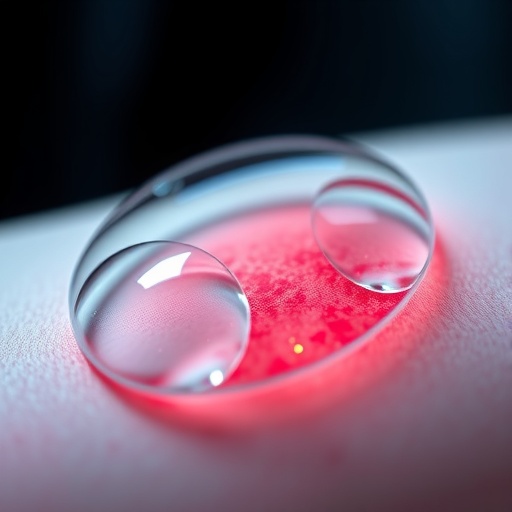
A groundbreaking advancement in wound care has emerged from an international collaboration of researchers at the Chinese PLA General Hospital, Beijing Institute of Radiation Medicine, Qinghai University, and Peking Union Medical College Hospital. Their innovative creation, an injectable hydrogel composed of sodium alginate and gelatin infused with ε-poly-L-lysine (ε-PLL), known as PSG15, offers a sophisticated dual-function approach to healing infected wounds. Unlike conventional treatments that often hinge on systemic antibiotics—now increasingly compromised by resistance—the PSG15 hydrogel delivers potent antibacterial activity alongside regulation of the skin’s microbial ecosystem and immune response, positioning it as a transformative material in clinical wound management.
At the heart of this novel hydrogel lies ε-poly-L-lysine, a natural antimicrobial peptide recognized for its broad-spectrum bactericidal properties. By embedding ε-PLL within a biocompatible matrix of sodium alginate and gelatin, the researchers engineered a material that not only physically covers wounds but actively combats infections caused by common and dangerous pathogens such as Escherichia coli and Staphylococcus aureus. This is a critical advancement given the rising toll of chronic wound infections, which often culminate in antibiotic-resistant strains and delayed tissue regeneration.
The physical characteristics of PSG15 demonstrate remarkable suitability for clinical deployment. Its injectability ensures precise, minimally invasive application even in irregular wound topographies. Meanwhile, the hydrogel’s self-adhesive nature promotes effective retention at the injury site, mitigating frequent dressing changes and associated discomfort. Moreover, its mechanical robustness ensures resilience under physiological stresses without compromising flexibility. These features collectively underscore PSG15’s potential to improve patient compliance and therapeutic outcomes in wound care settings.
Experimental evaluations reveal PSG15’s impressive antibacterial efficacy, achieving bacterial load reductions exceeding 89% for E. coli and over 92% for S. aureus. Such potent antimicrobial effects are indispensable for halting infection progression and preventing biofilm formation, a notorious barrier to healing. Importantly, this localized bactericidal action circumvents systemic antibiotic exposure, reducing adverse effects and mitigating the emergence of resistant microorganisms—a growing global health concern.
Beyond bactericidal activity, PSG15 exhibits a remarkable ability to influence immune cell dynamics, particularly macrophage polarization. Wound healing critically depends on the balance between pro-inflammatory (M1) and anti-inflammatory, tissue-repair promoting (M2) macrophage phenotypes. In vivo studies in murine models showed that PSG15 treatment shifts this balance by elevating M2 marker expression (CD206) while suppressing M1 markers (CD80). This immunomodulatory effect attenuates inflammation, thereby expediting the transition to tissue regeneration phases essential for effective wound closure.
Complementing immune regulation, PSG15 exerts modulatory effects on the skin microbiota, preserving microbial diversity and preventing pathogenic overgrowth. This aspect is particularly novel, as dysbiosis of skin microbiota is increasingly recognized as a critical factor contributing to chronic wound pathology. By stabilizing the microbial community, PSG15 not only prevents reinfection but also supports homeostatic processes necessary for sustained tissue repair.
Histological analyses further elucidate the regenerative potential of PSG15. Compared with untreated wounds, PSG15-treated tissue displayed enhanced angiogenesis—a pivotal process that restores blood supply and oxygenation to regenerating tissues. The hydrogel also promoted more organized collagen fiber deposition, laying a robust extracellular matrix scaffold to restore skin integrity. These histopathological improvements translate into accelerated wound closure and reduced scar formation, addressing critical clinical goals.
The synthesis of PSG15 employs calcium chloride as a crosslinking agent, facilitating the formation of a stable, three-dimensional hydrogel network integrating ε-PLL within the sodium alginate/gelatin framework. This method enhances the hydrogel’s mechanical stability while ensuring controlled release of the antimicrobial peptide. The controlled release is essential to maintaining effective antibacterial concentrations at the wound site over extended periods, thereby maximizing therapeutic benefit without cytotoxicity.
Biocompatibility assays confirm that PSG15 exhibits minimal cytotoxic effects on mammalian cells, ensuring its suitability for in vivo application. Its injectable and self-adhesive properties further improve ease of use in clinical settings, enabling healthcare providers to deliver personalized and targeted therapies. The non-toxic nature of the hydrogel also opens the door to long-term applications, especially for chronic wounds where repeated treatments are often necessary.
Dr. Chaoji Huangfu, a lead researcher on the project, emphasized the hydrogel’s dual-action strategy as a significant advancement in wound therapeutics. By integrating antimicrobial efficacy with microbiota regulation and immune modulation, PSG15 addresses the multifactorial challenges of infected wounds in a holistic manner. This approach could redefine treatment paradigms, particularly in cases complicated by persistent infections and disrupted skin homeostasis.
The broader significance of PSG15 extends to global health challenges related to antibiotic resistance. As systemic antibiotic administration faces increasing limitations, local treatments like PSG15 that reduce systemic exposure while ensuring focused antibacterial action are critical for sustainable healthcare. In addition, by fostering wound microenvironment normalization and immune balance, PSG15 may reduce the incidence of chronic, non-healing wounds that impose heavy economic and social burdens worldwide.
Future investigations are poised to explore PSG15’s efficacy in chronic wound models, including diabetic ulcers and pressure sores, where complex pathophysiology often impedes healing. These studies will also delve deeper into the molecular mechanisms by which the hydrogel modulates macrophage polarization and microbiota dynamics. Understanding these pathways could facilitate further optimization and personalization of hydrogel formulations for diverse clinical scenarios.
In conclusion, the multifunctional ε-poly-L-lysine-loaded sodium-alginate/gelatin hydrogel PSG15 integrates potent antibacterial capacity, immune modulation, and microbiota stabilization within a biocompatible, injectable scaffold. Its demonstrated acceleration of infected wound healing and restoration of skin integrity in preclinical models positions it as a promising candidate for next-generation wound management solutions. This innovation represents a critical step forward in bridging infection control with tissue regeneration, promising safer and more effective therapies for patients worldwide.
News Publication Date: 31-May-2025
Web References:
References:
- DOI: 10.1093/burnst/tkaf037
Cite Scienmag News
Morgan Morrow. (August 8, 2025). Innovative Hydrogel Therapy Speeds Up Infected Wound Healing and Restores Skin Microbiota Balance. Scienmag. https://scienmag.com/innovative-hydrogel-therapy-speeds-up-infected-wound-healing-and-restores-skin-microbiota-balance/
Morgan Morrow. "Innovative Hydrogel Therapy Speeds Up Infected Wound Healing and Restores Skin Microbiota Balance." Scienmag, 8 August 2025, https://scienmag.com/innovative-hydrogel-therapy-speeds-up-infected-wound-healing-and-restores-skin-microbiota-balance/. Accessed 3 September 2026.
Morgan Morrow. "Innovative Hydrogel Therapy Speeds Up Infected Wound Healing and Restores Skin Microbiota Balance." Scienmag. August 8, 2025. https://scienmag.com/innovative-hydrogel-therapy-speeds-up-infected-wound-healing-and-restores-skin-microbiota-balance/


