

Wednesday, July 1, 2026
Science
No Result
View All Result
  • Login
  • HOME
  • SCIENCE NEWS
  • CONTACT US
  • HOME
  • SCIENCE NEWS
  • CONTACT US
No Result
View All Result
Scienmag
No Result
View All Result
Home Science News Agriculture

Humans occupied a lava tube in Saudi Arabia for thousands of years

April 17, 2024
in Agriculture
Reading Time: 3 mins read
0
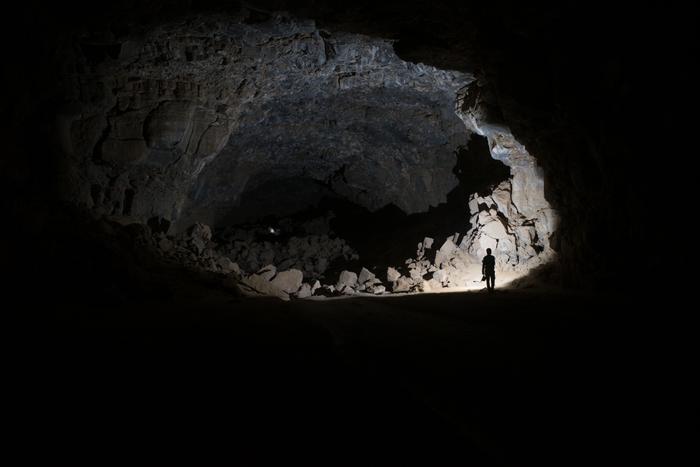
First evidence for human occupation of a lava tube in Arabia: The archaeology of Umm Jirsan Cave and its surroundings, northern Saudi Arabia
68
SHARES
616
VIEWS
Share on FacebookShare on Twitter
ADVERTISEMENT

A large lava tube in Saudia Arabia provided valuable shelter for humans herding livestock over at least the past 7,000 years, according to a study published April 17, 2024 in the open-access journal PLOS ONE by Mathew Stewart of Griffith University, Brisbane and colleagues.

First evidence for human occupation of a lava tube in Arabia: The archaeology of Umm Jirsan Cave and its surroundings, northern Saudi Arabia

Credit: PALAEODESERTS Project, CC-BY 4.0 (

A large lava tube in Saudia Arabia provided valuable shelter for humans herding livestock over at least the past 7,000 years, according to a study published April 17, 2024 in the open-access journal PLOS ONE by Mathew Stewart of Griffith University, Brisbane and colleagues.

Research in northern Arabia over the last decade has highlighted a diverse Holocene archaeological record. However, the timing of human occupations and their connections with the nearby Levant remain poorly understood, primarily due to poor preservation of organic remains in the region’s arid conditions. To circumvent this problem, Stewart and colleagues focused investigations on caves and other underground settings where ancient materials are sheltered from sun, wind and high fluctuations in temperature. In this study, they analyze an archaeological site from a lava tube called Umm Jirsan located in the volcanic field of Harrat Khaybar in Saudi Arabia, approximately 125km north of Medina.

Within the lava tube are artifacts, rock art, and skeletal remains that document repeated human occupation over at least the past 7,000 years. The lava tube seems to have been an important resource for pastoralists keeping and herding livestock, as evidenced by rock art and animal bones representing domesticated sheep and goats. Isotopic analysis of human remains reveals an increase over time in C3 plants such as cereal and fruit in the diet, possibly linked to a rise in oasis agriculture in the Bronze Age.

The authors conclude that Umm Jirsan was likely not a permanent home, but instead a valuable stopping point for people traveling between oasis settlements. Lava tubes and other natural shelters were valuable resources for communities surviving in a challenging environment, and with further investigation, they present a key source of archaeological information about the history of human occupation in Arabia.

The authors add: “Exploring Arabia’s hidden past, our study uncovers millennia of human occupation within and around the Umm Jirsan lava tube, shedding light on ancient lifestyles and adaptations to environmental change in this harsh desert environment.”

#####

In your coverage please use this URL to provide access to the freely available article in PLOS ONE:

Citation: Stewart M, Andrieux E, Blinkhorn J, Guagnin M, Fernandes R, Vanwezer N, et al. (2024) First evidence for human occupation of a lava tube in Arabia: The archaeology of Umm Jirsan Cave and its surroundings, northern Saudi Arabia. PLoS ONE 19(4): e0299292.

Author Countries: Australia, Germany, UK, Poland, Czechia, USA, Saudi Arabia

Funding: We acknowledge the Saudi Commission for Tourism and National Heritage (SCTH) and the Max Planck Society for funding this study.


Journal

PLoS ONE

DOI

10.1371/journal.pone.0299292

Method of Research

Observational study

Subject of Research

People

Article Title

First evidence for human occupation of a lava tube in Arabia: The archaeology of Umm Jirsan Cave and its surroundings, northern Saudi Arabia

Article Publication Date

17-Apr-2024

COI Statement

The authors have declared that no competing interests exist.

Share27Tweet17
Previous Post

Plant sensors could act as an early warning system for farmers

Next Post

Artificial Intelligence beats doctors in accurately assessing eye problems

Related Posts

Broccoli’s Eastward Shift Offers Insight into the Future of Produce — Agriculture
Agriculture

Broccoli’s Eastward Shift Offers Insight into the Future of Produce

June 30, 2026
Scientists Uncover Novel Mechanism to Weaken Bacterium Causing Food Poisoning — Agriculture
Agriculture

Scientists Uncover Novel Mechanism to Weaken Bacterium Causing Food Poisoning

June 24, 2026
Caution for Consumers: How “Green” Are Your Sustainable Shopping Choices Really? — Agriculture
Agriculture

Caution for Consumers: How “Green” Are Your Sustainable Shopping Choices Really?

June 24, 2026
Neuroscience Breakthrough: How Different Species Independently Evolved Similar Strategies for Spatial Navigation — Agriculture
Agriculture

Neuroscience Breakthrough: How Different Species Independently Evolved Similar Strategies for Spatial Navigation

June 23, 2026
European Researchers Warn of Risks in EU Commission’s Proposed Pesticide Legislation — Agriculture
Agriculture

European Researchers Warn of Risks in EU Commission’s Proposed Pesticide Legislation

June 23, 2026
Innovative Biochar Model Enhances Site-Specific Climate-Smart Agriculture for Farmers and Policymakers — Agriculture
Agriculture

Innovative Biochar Model Enhances Site-Specific Climate-Smart Agriculture for Farmers and Policymakers

June 22, 2026
Next Post
Dr Arun Thirunavukarasu

Artificial Intelligence beats doctors in accurately assessing eye problems

  • Mothers who receive childcare support from maternal grandparents show more parental warmth, finds NTU Singapore study

    Mothers who receive childcare support from maternal grandparents show more parental warmth, finds NTU Singapore study

    27656 shares
    Share 11059 Tweet 6912
  • University of Seville Breaks 120-Year-Old Mystery, Revises a Key Einstein Concept

    1061 shares
    Share 424 Tweet 265
  • Bee body mass, pathogens and local climate influence heat tolerance

    682 shares
    Share 273 Tweet 171
  • Researchers record first-ever images and data of a shark experiencing a boat strike

    546 shares
    Share 218 Tweet 137
  • Groundbreaking Clinical Trial Reveals Lubiprostone Enhances Kidney Function

    531 shares
    Share 212 Tweet 133
Science

Embark on a thrilling journey of discovery with Scienmag.com—your ultimate source for cutting-edge breakthroughs. Immerse yourself in a world where curiosity knows no limits and tomorrow’s possibilities become today’s reality!

RECENT NEWS

  • New Study Reveals How “Junk DNA” Fuels Cancer Growth
  • Boosted 1525 nm Luminescence Achieved via Dye-Sensitized Cascaded Energy Transfer in Lanthanide Nanoparticles
  • Adolescent Peer Diagnoses and Genetic Predispositions Linked to Elevated Risk of Mental Disorders
  • Subtle Behavioral Cues Boost Animal Welfare: Insights from Recent Research

Categories

  • Agriculture
  • Anthropology
  • Archaeology
  • Athmospheric
  • Biology
  • Biotechnology
  • Blog
  • Bussines
  • Cancer
  • Chemistry
  • Climate
  • Earth Science
  • Editorial Policy
  • Marine
  • Mathematics
  • Medicine
  • Pediatry
  • Policy
  • Psychology & Psychiatry
  • Science Education
  • Social Science
  • Space
  • Technology and Engineering

Subscribe to Blog via Email

Enter your email address to subscribe to this blog and receive notifications of new posts by email.

Join 5,147 other subscribers

© 2025 Scienmag - Science Magazine

Welcome Back!

Login to your account below

Forgotten Password?

Retrieve your password

Please enter your username or email address to reset your password.

Log In
No Result
View All Result
  • HOME
  • SCIENCE NEWS
  • CONTACT US

© 2025 Scienmag - Science Magazine

Discover more from Science

Subscribe now to keep reading and get access to the full archive.

Continue reading
