


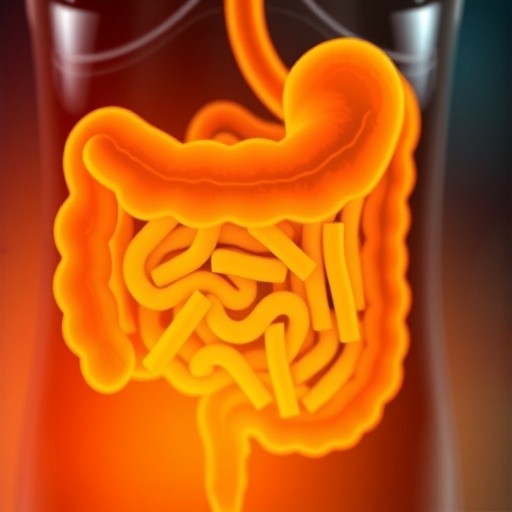
In a groundbreaking study poised to reshape our understanding of environmental toxicology and human health, researchers have uncovered that human gut bacteria possess the remarkable ability to bioaccumulate per- and polyfluoroalkyl substances (PFAS). These synthetic chemicals, widely known for their persistence and adverse health impacts, are now shown to interact directly with the complex microbial ecosystem residing in the human gastrointestinal tract. This newly discovered bioaccumulation mechanism suggests that gut microbiota may serve as an unrecognized reservoir and biointerface for PFAS, with profound implications for exposure, toxicity, and detoxification strategies.
Per- and polyfluoroalkyl substances have long been a concern due to their extraordinary chemical stability, earning them the nickname “forever chemicals.” These compounds are extensively used in industrial applications ranging from non-stick cookware coatings to firefighting foams and water-resistant fabrics. Their environmental ubiquity, combined with a pronounced tendency to bioaccumulate up the food chain, has raised alarms worldwide. Epidemiological data have linked PFAS exposure to a variety of adverse health outcomes, including immunotoxicity, endocrine disruption, and even carcinogenicity. However, the role of the human gut microbiome in modulating PFAS exposure has remained largely unexplored—until now.
The international research team, led by Lindell, Grießhammer, Michaelis, and colleagues, utilized an integrative approach combining metagenomic sequencing, advanced mass spectrometry, and in vitro microbial culturing. By analyzing fecal samples from diverse human populations, they detected significant concentrations of PFAS localized within specific bacterial taxa. This suggests not only environmental exposure but active bioaccumulation processes within gut microbes rather than passive transit. These findings challenge the previously held notion that PFAS primarily accumulate in human tissues such as liver and blood plasma, highlighting the gut microbiome as a dynamic and potentially influential PFAS sink.
Mechanistically, the study provides compelling evidence that certain gut bacterial species possess biochemical pathways enabling the absorption and retention of PFAS molecules. Structural analysis revealed that these microbes express unique membrane transport proteins with affinities for fluorinated compounds. This bioaccumulation may alter the physicochemical microenvironment of the gut, influencing both microbial community composition and metabolic functions. Given the gut microbiome’s critical role in host metabolism and immune modulation, such interactions could be a previously unrecognized vector for PFAS-induced health effects.
Moreover, the bioaccumulation by bacteria raises intriguing questions about the downstream fate of PFAS within the gut ecosystem. The bacterial sequestration might reduce systemic exposure by trapping PFAS locally, but alternatively, it could facilitate prolonged gastrointestinal retention or even microbial biotransformation. Preliminary metabolomics data from the research suggest that some bacterial species may partially degrade PFAS into novel fluorinated metabolites with unknown bioactivity. This microbial metabolism of resistant synthetic chemicals has parallels in other environmental systems, but its occurrence in the human gut reveals a complex interplay demanding further investigation.
The impact on human health extends beyond mere chemical retention. By altering the microbial community through PFAS accumulation, shifts in gut ecology could contribute to dysbiosis, disrupting essential microbial-host symbioses. Inflammatory bowel diseases, metabolic syndromes, and neurodevelopmental disorders have all been linked to gut microbiome perturbations. If PFAS bioaccumulation imposes selective pressures favoring resilient but potentially pathogenic bacteria, this could partly explain epidemiological correlations between PFAS exposure and these chronic conditions.
From a toxicological perspective, this discovery challenges existing risk assessment paradigms. Traditionally, PFAS exposure metrics rely on plasma concentrations and environmental reservoirs. The identification of gut microbes as bioaccumulative compartments suggests that human PFAS body burdens have been underestimated, particularly regarding localized gut effects. Future toxicology models will need to integrate microbial bioaccumulation kinetics, host-microbiota interactions, and the emergent chemical metabolome within the gut environment.
Environmental scientists and public health experts will need to reassess remediation and exposure prevention strategies in light of these findings. It becomes imperative to understand how dietary factors, antibiotics, probiotics, and other interventions influence gut bacterial PFAS accumulation. Could modulating the microbiome reduce PFAS bioavailability systemically? Conversely, does antibiotic-induced depletion of certain bacterial populations increase PFAS absorption into tissues? These questions open new avenues for cross-disciplinary research combining microbiology, chemistry, and epidemiology.
Furthermore, the development of analytical techniques capable of quantifying PFAS within microbial communities represents a technological leap forward. The team employed cutting-edge nanoscale secondary ion mass spectrometry (NanoSIMS) alongside targeted liquid chromatography-mass spectrometry to achieve spatially resolved detection. These methodologies allow unprecedented insight into how trace environmental contaminants interact with complex biological matrices, setting a new standard for environmental health sciences.
The societal implications are considerable. PFAS exposure is widespread, with detected concentrations in drinking water, food, and consumer products. Human populations worldwide, particularly those in industrial or contaminated areas, face chronic low-level exposure. Recognizing that gut bacteria can bioaccumulate these substances implies that conventional exposure assessments based solely on serum or urine levels may miss critical internal compartments. This necessitates revisiting public health guidelines, acceptable exposure limits, and potentially vaccine safety protocols where immune function may be affected.
Intriguingly, the study also hints at opportunities for innovative bioremediation techniques leveraging gut microbes or their enzymatic machinery. If specific bacterial strains capable of degrading PFAS or facilitating their removal from the gut environment can be identified and cultivated, this could pave the way for probiotic or microbial therapies targeted at mitigating PFAS toxicity. Such a notion aligns with emerging trends in microbiome therapeutics but requires rigorous validation and safety assessments.
In conclusion, the discovery that human gut bacteria bioaccumulate per- and polyfluoroalkyl substances represents a paradigm shift in our understanding of chemical exposure and microbiome interplay. It underscores the gut microbiota not just as passive inhabitants but active participants influencing the toxicokinetics and biotransformation of persistent environmental pollutants. This research opens expansive new frontiers demanding integrated scientific inquiry, innovative methodologies, and translational efforts to tackle the pervasive challenges posed by PFAS contamination.
As the global community grapples with the environmental and health consequences of these "forever chemicals," insights from this study illuminate a hidden biological interface—one that might ultimately shape future strategies for mitigation, treatment, and regulation. The synergy between microbial ecology and chemical toxicology promises to transform preventive medicine and environmental health policies, emphasizing the vital importance of the trillions of microbes residing within each of us.
Cite Scienmag News
Morgan Morrow. (July 1, 2025). Human Gut Bacteria Accumulate Toxic PFAS Chemicals. Scienmag. https://scienmag.com/human-gut-bacteria-accumulate-toxic-pfas-chemicals/
Morgan Morrow. "Human Gut Bacteria Accumulate Toxic PFAS Chemicals." Scienmag, 1 July 2025, https://scienmag.com/human-gut-bacteria-accumulate-toxic-pfas-chemicals/. Accessed 4 September 2026.
Morgan Morrow. "Human Gut Bacteria Accumulate Toxic PFAS Chemicals." Scienmag. July 1, 2025. https://scienmag.com/human-gut-bacteria-accumulate-toxic-pfas-chemicals/


