


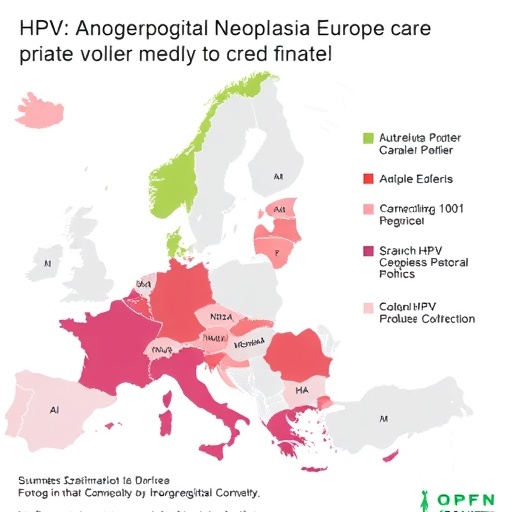
Human papillomavirus (HPV) remains a significant contributor to cancer development across various anogenital regions, posing a persistent challenge to healthcare providers in Europe. A recent extensive survey published in BMC Cancer sheds light on current clinical management practices concerning HPV-related anogenital neoplasia, encompassing anal, vulval, vaginal, and cervical neoplasias. This research reveals a complex landscape marked by variability in practitioner collaboration, diagnostic techniques, and treatment modalities, urging a unified approach towards optimal patient care.
HPV’s causal link to anogenital neoplasias is well-established, particularly in women experiencing cervical neoplasia, who face heightened vulnerability to multiple second primary cancers in the anogenital region. Despite this recognized interrelationship, coordinated multidisciplinary care remains inconsistently applied across Europe. The survey engaged 430 healthcare specialists across relevant fields, with 73.5% indicating some form of collaborative effort but a mere 27% participating in formal multidisciplinary team meetings (MDTs). This discrepancy points to significant gaps in structured multidisciplinary engagement critical for complex case management.
Analyzing the survey data reveals a concerning fragmentation in care pathways. While a majority of respondents have observed second cancers arising not only within the same anatomical zone (56.5%) but also across different anogenital sites (45.3%), there is no standardized protocol for screening or follow-up in many settings. This fragmentation likely contributes to inconsistent patient outcomes and underscores the necessity for evidence-based, harmonized guidelines that encompass the multizonal nature of HPV-driven disease.
A pivotal technical aspect undergoing scrutiny is the utilization of high-resolution anoscopy (HRA), a specialized diagnostic tool critical for detecting early anal neoplasia. The survey’s findings demonstrate that only 14.9% of specialists regularly employ HRA, while 12.7% expressed interest in gaining expertise through training. This limited adoption signals a lack of widespread access to or proficiency in this advanced diagnostic modality, which is alarming given recent advances that highlight the efficacy of HRA in the early detection and management of anal intraepithelial neoplasia.
Treatment strategies for HPV-associated anogenital neoplasia appear similarly heterogeneous. Nearly a quarter of respondents (24.4%) reported not offering any treatment, while those actively managing cases employed a spectrum of therapeutic approaches without consensus on best practices. This variability likely reflects disparities in training, resource availability, and institutional protocols, further complicating efforts to deliver standardized care. The absence of unified treatment pathways may hinder the ability to compare outcomes and implement quality improvements at a pan-European level.
This extensive dataset underscores the pressing need for enhanced professional training, particularly in specialized diagnostic techniques such as HRA. By upskilling clinicians across Europe, healthcare systems could substantially improve early detection, leading to better prognosis and reduced incidence of invasive cancers. This evolution requires concerted efforts from academic institutions, professional societies, and health authorities to develop accessible, standardized training curricula and certification processes.
Furthermore, the survey advocates for the establishment and implementation of comprehensive guidelines that address the challenges posed by multizonal anogenital neoplasia. Existing protocols often emphasize cervical cancer screening, overlooking the risk of concurrent or sequential neoplasias in other anogenital regions. Guidelines that integrate screening, diagnosis, treatment, and follow-up across these zones can facilitate holistic management and consistent clinical decision-making.
Robust follow-up protocols are another critical recommendation emerging from this analysis. Given the increased risk of second primary cancers in patients with a prior history of cervical neoplasia, intensive surveillance strategies must be adopted to monitor all at-risk anogenital sites. This approach requires scaling infrastructure and resources, including expanding access to diagnostic expertise and multidisciplinary care teams, to ensure longitudinal patient engagement and timely intervention.
The survey also highlights disparities in clinical workload and experience among specialists, which can impact patient outcomes. Areas with low case volumes may face challenges in maintaining proficiency in advanced diagnostic and treatment techniques. Addressing these disparities could involve centralizing care within specialized centers of excellence or fostering telemedicine collaborations to extend expertise to underserved regions, thereby creating networks that support shared knowledge and best practices.
From a policy perspective, aligning professional development frameworks and clinical practice standards across Europe could harmonize care delivery. This alignment should emphasize not only clinical competencies but also system-level support structures including funding, staffing, and quality assurance mechanisms. Such systemic integration is vital to sustaining improvements in HPV-related anogenital neoplasia management.
Importantly, this study’s findings resonate with recent clinical advances, particularly the promising outcomes associated with timely treatment of anal neoplasia. Recognizing and disseminating these successes can motivate wider adoption of enhanced diagnostic and therapeutic protocols, fostering a culture of continual improvement and innovation in oncology care.
In conclusion, the survey reveals critical opportunities and challenges in the management of HPV-related anogenital neoplasia throughout Europe. Stabilizing and standardizing practices require multifaceted strategies encompassing education, guideline development, resource allocation, and collaborative care models. Driving these changes forward can significantly enhance the quality of life for affected women, reduce cancer burden, and optimize healthcare resource utilization.
As Europe’s healthcare landscape confronts the complex dynamics of HPV-driven anogenital neoplasia, this comprehensive assessment serves as both a call to action and a roadmap for transformation. By embedding multidisciplinary expertise, embracing cutting-edge diagnostics such as HRA, and enforcing rigorous follow-up frameworks, the vision of equitable, effective cancer care can be realized.
Such innovation and alignment are essential to tame the persistent threat of HPV and its oncogenic consequences. The study elegantly elucidates the gaps and potentials in current care paradigms, offering a data-driven foundation upon which to build consistent, evidence-based management across diverse clinical settings.
Ultimately, through coordinated professional development, enhanced communication among specialists, and patient-centered strategies, Europe can make significant strides in curbing HPV-related anogenital neoplasia morbidity and mortality. This endeavor embodies the broader pursuit of translating scientific advances into meaningful clinical impact.
Cite Scienmag News
Nathaniel Bowman. (August 5, 2025). HPV Anogenital Neoplasia Care: Europe Survey. Scienmag. https://scienmag.com/hpv-anogenital-neoplasia-care-europe-survey/
Nathaniel Bowman. "HPV Anogenital Neoplasia Care: Europe Survey." Scienmag, 5 August 2025, https://scienmag.com/hpv-anogenital-neoplasia-care-europe-survey/. Accessed 8 September 2026.
Nathaniel Bowman. "HPV Anogenital Neoplasia Care: Europe Survey." Scienmag. August 5, 2025. https://scienmag.com/hpv-anogenital-neoplasia-care-europe-survey/


