


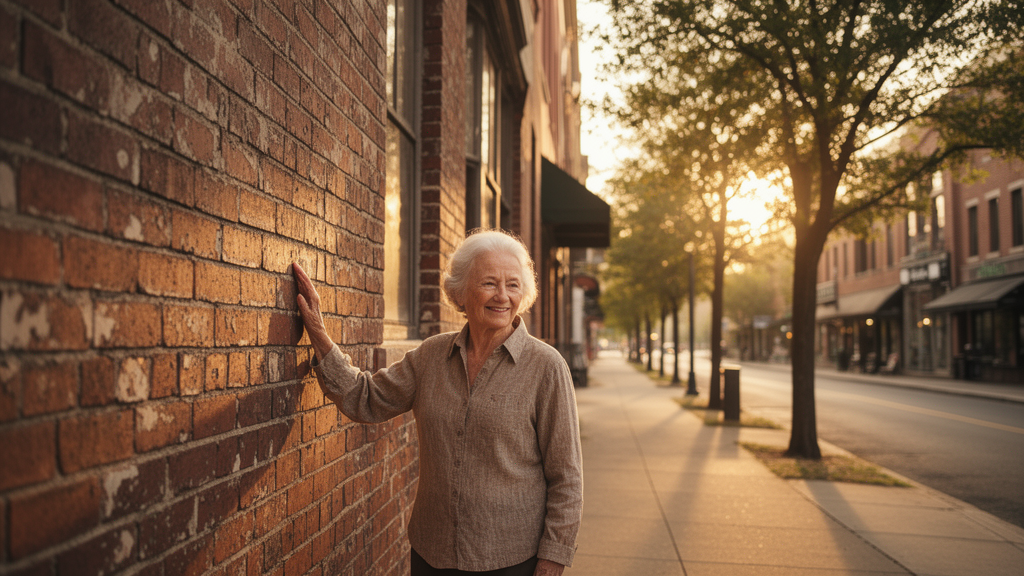
What happens inside the mind and body of an elderly resident who stands once more at the waterfront where she grew up, watching a skyline that has changed almost beyond recognition yet somehow remains hers? A new experimental study, discussed by Bin Jiang of the University of Hong Kong in a News & Views commentary published in Nature Cities, suggests that the answer may carry real clinical weight. Using multimodal psychophysiological measurements, the research found that urban memory could significantly improve mental health in older lifelong residents, offering some of the most direct physiological evidence to date that the remembered city is not merely a sentimental backdrop but an active ingredient in human well-being.
The study, led by Huang and colleagues and published in Nature Cities, set out to test a question that has hovered at the edges of environmental psychology for decades: to what extent does the memory of historic urban spaces benefit the mental health of the people who have lived alongside them their entire lives? Rather than relying solely on questionnaires, the researchers deployed multimodal psychophysiological measurement, capturing simultaneous streams of data on how participants’ bodies and nervous systems responded to encounters with places layered with personal and collective history. This approach matters because self-reported well-being, while valuable, is vulnerable to recall bias, social desirability and the difficulty of articulating feelings that are often pre-verbal. Physiological signals, by contrast, register the response as it unfolds.
The technical logic behind such measurements draws on a long tradition in environmental psychology and neuroscience. Since Roger Ulrich’s influential work in the early 1990s on how natural and built scenes affect stress recovery, researchers have used indicators such as skin conductance, heart rate variability and electroencephalography to gauge the autonomic and central nervous system correlates of restorative experience. Later studies, including the well-known work by Gregory Bratman and colleagues published in PNAS in 2015, showed that walks in natural settings can reduce rumination and activity in a region of the prefrontal cortex associated with negative self-focus. The new study extends this psychophysiological toolkit into territory that restoration research has largely overlooked: not green space, but the historic, memory-saturated fabric of the city itself.
Urban memory, as the concept has developed in the literature, encompasses more than individual recollection. It includes place attachment, the emotional bond between person and setting described in foundational work by Scannell and Gifford, and the collective dimension of place memory explored by Maria Lewicka, who has argued that the past of a place, whether experienced directly or inherited through stories, shapes present-day identity and attachment. For older adults, these bonds can be especially consequential. Research on ageing in place, including studies by Power and Smyth on older people’s experiences of neighbourhood change, has documented how disruption of familiar environments can undermine well-being, while continuity of place supports identity, autonomy and social connection. The new experimental findings give this correlational picture a sharper causal edge: when older lifelong residents engaged with spaces that carry their memories, measurable indicators of mental health improved.
The setting of the research is itself instructive. Hong Kong, where both the underlying study’s context and Jiang’s commentary are rooted, is a city undergoing relentless transformation, its harbourfronts and historic districts remade decade after decade. The commentary is accompanied by paired images of Victoria Harbour, one historical and one contemporary, a visual juxtaposition that captures the central tension of the research: the same place can be simultaneously continuous and unrecognisable. In cities like this, the question of what is lost, retained or reinvented in the urban memory of long-term residents is not academic. It bears directly on planning decisions about heritage conservation, waterfront redevelopment and the pace of renewal in neighbourhoods where the same families have lived for generations.
Methodologically, the use of virtual and mediated environments deserves attention. The study’s approach aligns with a body of work on virtual reality as a scientific instrument, described in a Nature Reviews Neuroscience article by Bohil, Alicea and Biocca on how immersive virtual environments allow researchers to control stimuli with experimental precision while preserving ecological validity. For research on urban memory, this is a crucial methodological advance. Historic places may be physically altered or demolished, and older participants may face mobility constraints, so the ability to present controlled, reproducible encounters with remembered urban spaces, whether through imagery, immersive displays or carefully staged field settings, opens a path to experiments that would otherwise be impossible. The multimodal measurement strategy then links these controlled exposures to objective psychophysiological outcomes rather than relying on retrospective self-report alone.
The findings also speak to a broader and sometimes uneasy literature on how urban environments affect the brain and mind. A landmark 2011 study by Lederbogen and colleagues in Nature found that city living and urban upbringing were associated with differential stress processing in the brain, including heightened amygdala activity, and subsequent work by Tost and colleagues argued that urbanicity should be treated as a substantive factor in mental health research. Much of this literature frames the city as a stressor, a source of noise, crowding and social strain. The new study complicates that narrative in an important way. The city is not only a source of stress; for those who have accumulated a lifetime of memory within it, the urban environment can also be a reservoir of psychological resource. The same streets that may strain a newcomer can steady a lifelong resident, because memory transforms mere space into place.
Jiang’s commentary situates the findings within a research programme that connects landscape architecture, public health and environmental psychology, and frames them as a stimulus for further work and for practice. That framing points toward several open questions. The mechanisms linking remembered places to improved mental health remain to be fully specified: is the effect driven by restored attention, as attention restoration theory would predict; by reduced stress reactivity, consistent with stress recovery theory; by reinforcement of identity and social continuity; or by some combination of these pathways operating in parallel? The dose-response relationship is also unknown, as is the question of whether the benefits extend to residents whose neighbourhoods have changed so completely that the remembered city survives only in fragments. And while the study focused on older lifelong residents, it remains to be seen whether urban memory confers measurable benefits across the life course, or whether its protective effects accumulate with decades of residence.
The practical implications, if the findings replicate, are substantial. Heritage conservation is usually justified on cultural, historical and economic grounds, but this research suggests a public health rationale that is rarely invoked in planning documents: preserving the memory-bearing fabric of neighbourhoods may be a form of preventive mental health care for ageing populations. As cities worldwide urbanise and age simultaneously, with growing numbers of older residents who have spent their entire lives in rapidly changing environments, the intersection of urban memory and mental health is likely to move from a niche topic to a central concern of urban policy. Design approaches that retain landmarks, maintain social spaces and layer new development onto legible historic structure, rather than erasing and replacing wholesale, could be evaluated not only for their cultural value but for their measurable physiological effects on the people who live among them.
For now, the study stands as an early but consequential demonstration that the remembered city is a therapeutic object. By bringing multimodal psychophysiological measurement to bear on the question, the researchers have moved urban memory from the realm of memoir and nostalgia into the domain of testable, quantifiable health science. The image of an older resident standing at a harbour that is both the same and entirely different, body and mind responding in measurable ways to the accumulated past, captures a direction for the field: cities should be understood not only as environments that act on health from the outside, but as archives that residents carry within, and that can, under the right conditions, give something back.
Subject of Research: The effect of urban memory of historic city spaces on the mental health of older lifelong residents
Article Title: Urban memory and mental health
Article References: Jiang, B. (2026). Urban memory and mental health. Nature Cities. https://doi.org/10.1038/s44284-026-00526-9
Image Credits: AI Generated
DOI: 10.1038/s44284-026-00526-9
Keywords: urban memory, mental health, psychophysiology, place attachment, ageing, heritage, urban planning, environmental psychology, Hong Kong, Nature Cities, restoration, public health
Cite Scienmag News
Glenn Wilkins. (October 9, 2026). How Urban Memory Could Protect the Mental Health of Lifelong City Residents. Scienmag. https://scienmag.com/how-urban-memory-could-protect-the-mental-health-of-lifelong-city-residents/
Glenn Wilkins. "How Urban Memory Could Protect the Mental Health of Lifelong City Residents." Scienmag, 9 October 2026, https://scienmag.com/how-urban-memory-could-protect-the-mental-health-of-lifelong-city-residents/. Accessed 9 October 2026.
Glenn Wilkins. "How Urban Memory Could Protect the Mental Health of Lifelong City Residents." Scienmag. October 9, 2026. https://scienmag.com/how-urban-memory-could-protect-the-mental-health-of-lifelong-city-residents/


