


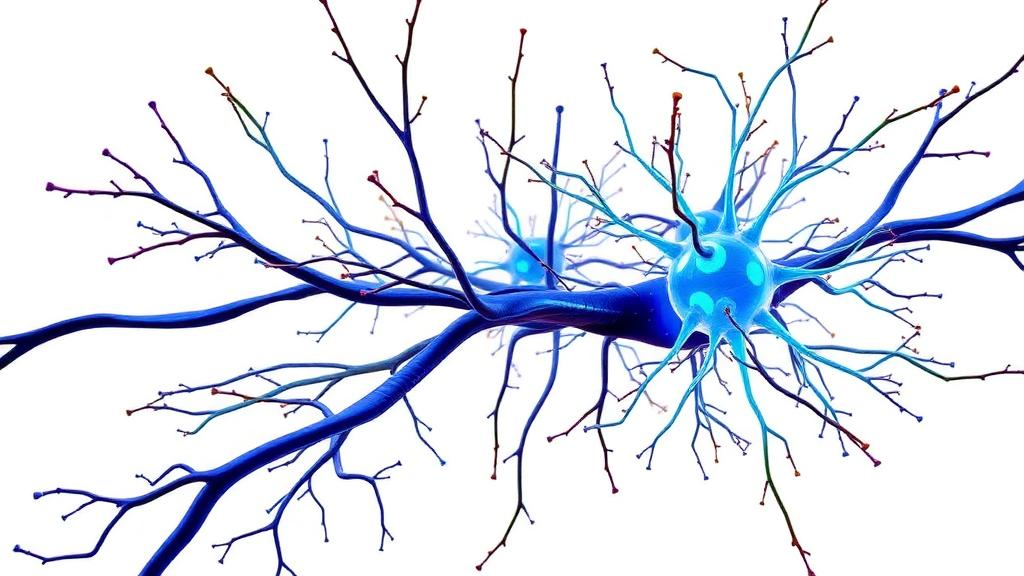
In the basement of the brain’s memory circuit, a single type of neuron has just received the most thorough digital makeover it has ever had. A team of computational neuroscientists has built and rigorously validated a new biophysical model of the hippocampal CA1 pyramidal cell, one of the most intensively studied neurons in the mammalian brain. Unlike most previous models, which were tuned to reproduce one narrow slice of cellular behavior, this new model was designed from the ground up to capture a wide range of experimental observations at once, making it a general-purpose tool for studying how these cells process information and how their properties change during learning.
Detailed neuronal models have become essential instruments in modern neuroscience. They allow researchers to examine the mechanisms behind observed electrical behavior and to predict how neurons respond under conditions that are difficult or impossible to study directly in experiments. They also serve as the fundamental building blocks of large-scale network models of brain regions. Yet many earlier models suffered from significant limitations: they were often fitted to a narrow set of experimental conditions, leaving little information about how they would behave outside the scope of the original study. Because multiple parameter combinations can fit limited data equally well, such underconstrained models can produce unrealistic parameter values and incorrect predictions when applied to new situations.
The motivation for the new work came in part from a sobering assessment published a few years ago. Using the HippoUnit validation tool, researchers compared several available rat CA1 pyramidal cell models against experimental data from a variety of paradigms and found that although some models captured certain aspects of the cells’ behavior—typically those they were originally built to replicate—none could simultaneously reproduce all the relevant behaviors. A thoroughly validated, accurate, general-purpose model of this crucial cell type was simply missing. The new study set out to fill that gap by leveraging the extraordinary wealth of anatomical, biophysical, and physiological data available for CA1 pyramidal cells.
The construction process was systematic and iterative. The team started with a high-quality morphological reconstruction of a real CA1 pyramidal cell, complete with detailed soma and dendrites, and added axonal compartments from a separate reconstruction. They then curated a new set of ion channel models, carefully re-evaluating each one against the latest experimental data on channel kinetics and distribution. The final model contains thirteen distinct active voltage- and calcium-gated ion channels, including sodium channels with different kinetics for the soma, axon, and dendrites; multiple types of potassium channels; and four types of calcium channels. Calcium currents were described using the Goldman-Hodgkin-Katz equation, which provides a better fit for calcium-mediated currents than the traditional conductance-based formalism.
Parameters that were not sufficiently constrained by experimental data were determined through automated optimization using the Neuroptimus tool, which employs the Covariance Matrix Adaptation Evolution Strategy algorithm. The researchers ran twenty independent optimizations simultaneously from different random starting points to avoid getting stuck in local minima. The optimization targeted electrophysiological features extracted from somatic whole-cell recordings of real rat CA1 pyramidal cells, including spike counts, interspike intervals, action potential shapes, and voltage responses to both positive and negative current injections. When a parameter consistently drifted toward the edge of its allowed range, the team expanded the boundary and re-ran the search.
Validation was equally rigorous. The team used all five built-in tests of the HippoUnit framework, which automatically simulates experimental protocols and compares model behavior against experimental data. The Somatic Features Test examined voltage responses to current injections; the Backpropagating Action Potential Test evaluated how action potentials propagate from the soma into the dendrites; the Post-synaptic Potential Attenuation Test measured how synaptic signals diminish as they travel toward the soma; the Depolarization Block Test probed the cell’s response to strong sustained stimulation; and the Oblique Integration Test assessed nonlinear synaptic integration in thin dendritic branches. The models performed well on four of the five tests, with the depolarization block test revealing an interesting discrepancy that the researchers traced to the simplified axonal morphology in their model.
One of the most consequential findings concerned the NMDA receptor, a type of glutamate receptor critical for nonlinear dendritic integration. The team systematically evaluated eight different published models of NMDA receptor voltage dependence and found that none produced fully satisfactory results in their cell model. Some showed far too much supralinear summation of synaptic inputs, others remained sublinear, and none matched the experimental observations of how clustered synaptic inputs on oblique dendrites produce dendritic spikes. By systematically tuning the parameters of a sigmoid function describing the voltage-dependent magnesium block of the receptor, they identified a voltage dependence that matched experimental data both qualitatively and quantitatively. The result suggests that the precise voltage dependence of NMDA receptors has a major impact on how CA1 pyramidal cells integrate their inputs.
A second major contribution concerned dendritic spines, the tiny protrusions that receive most excitatory synaptic input. Modeling all 29,602 spines explicitly increases computational cost by more than an order of magnitude, so the team compared three approaches: merging spine properties into the parent dendrite using a surface-correction factor, explicitly modeling only the spines that receive synaptic input, and explicitly modeling every spine. Remarkably, for somatic current responses, backpropagating action potentials, and synaptic potential attenuation, all three versions behaved almost identically. But for nonlinear synaptic integration in oblique dendrites, the version without explicit spines produced clearly different results, because the high electrical resistance of the spine neck amplifies local voltage transients and strongly activates voltage-dependent mechanisms in the spine head. The hybrid approach—explicitly modeling only spines that receive synapses—offered a practical compromise.
The researchers also systematically blocked each ion channel in the model and compared the effects against what is known from experimental pharmacology. Blocking sodium channels prevented firing entirely; blocking A-type potassium channels eliminated the distance-dependent attenuation of backpropagating action potentials; blocking the hyperpolarization-activated current abolished the voltage sag during negative current injections. These channel-by-channel validations confirmed that the model’s components behave like their biological counterparts. The team also performed gradual perturbations, shifting each parameter by small amounts to probe how sensitive the model’s behavior is to precise parameter values, finding that a few critical parameters—particularly those governing sodium channels—had dominant effects across all tests.
The new model, along with all optimization scripts and validation results, has been made publicly available, and the researchers hope it will serve as a reliable component of detailed hippocampal network models as well as a platform for studying synaptic plasticity and dendritic computation. Just as importantly, the systematic workflow they developed—combining curated biophysical mechanisms, automated parameter fitting, and multi-paradigm validation—should generalize to other cell types. As the authors note, the most critical requirement for building faithful data-driven models of any neuron is the availability of comprehensive experimental data, and their approach provides a template for how such data can be transformed into models that are accurate, reusable, and broadly applicable across the computational neuroscience community.
Subject of Research: Development and validation of a detailed biophysical model of hippocampal CA1 pyramidal neurons
Article Title: How to train your neuron: developing a detailed, up-to-date, multipurpose model of hippocampal CA1 pyramidal cells
Article References: Tar, L., Sáray, S., Mohácsi, M., Freund, T. F., & Káli, S. (2026). How to train your neuron: developing a detailed, up-to-date, multipurpose model of hippocampal CA1 pyramidal cells. Frontiers in Computational Neuroscience, 20, Article 1897214. https://doi.org/10.3389/fncom.2026.1897214
Image Credits: AI Generated
DOI: 10.3389/fncom.2026.1897214
Keywords: CA1 pyramidal cells, hippocampus, computational neuroscience, biophysical modeling, ion channels, dendritic spines, NMDA receptors, Neuroptimus, HippoUnit, parameter optimization, synaptic integration, dendritic computation
Cite Scienmag News
Cassandra Pierce. (October 16, 2026). How to train your neuron: building a detailed, up-to-date, multipurpose model of hippocampal CA1 pyramidal cells. Scienmag. https://scienmag.com/how-to-train-your-neuron-building-a-detailed-up-to-date-multipurpose-model-of-hippocampal-ca1-pyramidal-cells/
Cassandra Pierce. "How to train your neuron: building a detailed, up-to-date, multipurpose model of hippocampal CA1 pyramidal cells." Scienmag, 16 October 2026, https://scienmag.com/how-to-train-your-neuron-building-a-detailed-up-to-date-multipurpose-model-of-hippocampal-ca1-pyramidal-cells/. Accessed 16 October 2026.
Cassandra Pierce. "How to train your neuron: building a detailed, up-to-date, multipurpose model of hippocampal CA1 pyramidal cells." Scienmag. October 16, 2026. https://scienmag.com/how-to-train-your-neuron-building-a-detailed-up-to-date-multipurpose-model-of-hippocampal-ca1-pyramidal-cells/


