


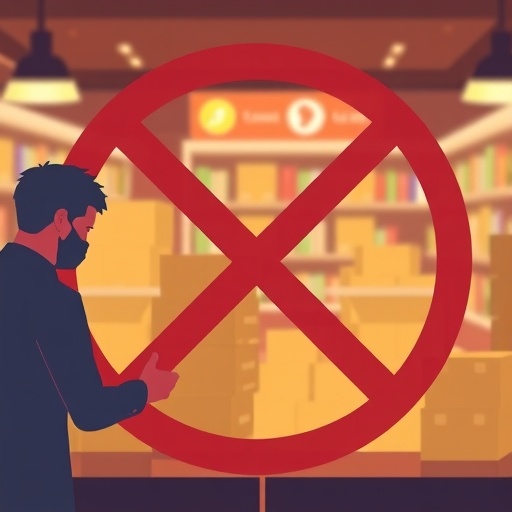
Panic buying is a phenomenon that not only responds to perceived or actual shortages but also actively generates them, creating a self-fulfilling cycle of scarcity. Recent research led by Dr. Karina Rune, a behavioural scientist at the University of the Sunshine Coast, provides groundbreaking insights into why panic buying occurs and, crucially, how it can be mitigated. Drawing from extensive study during the COVID-19 pandemic, this research reveals that panic buying is less about individual traits and more about collective social signals and risk perceptions communicated during crises.
During the height of the COVID-19 lockdowns, many Australian supermarkets witnessed unprecedented spikes in consumer demand, leading to the rapid depletion of essential items such as toilet paper, sanitizers, and long-life food products. This pattern of stockpiling behavior resurfaced repeatedly not only during health crises but also amid fuel shortages and extreme weather events. Such behavioral dynamics challenge supply chain stability, posing a significant problem for retailers and policymakers alike. Understanding the underlying drivers of these buying frenzies is essential for crafting more effective communication strategies that can prevent such occurrences.
Dr. Rune emphasises that panic buying is not a manifestation of individual anxiety or poor planning but is deeply rooted in social and psychological cues. The belief that hoarding is a rational and necessary response arises from observing others’ behavior and interpreting the available information about supply risks. This social contagion effect fuels a sense of urgency and fear of missing out, compelling many to purchase excess quantities of goods ‘just in case.’ This collective behaviour transforms what might otherwise be a manageable surge in demand into chaotic shortages.
The research team conducted a randomized controlled trial, meticulously designed to test interventions aimed at altering these risk and social norm perceptions. Participants, representative of Australian consumers, were exposed to online messages crafted to challenge the assumptions underpinning panic buying. These messages addressed three key areas: the actual risk of stock depletion, the social approval of stockpiling, and the perceived intelligence behind buying in bulk during crises. The impact was clear and measurable—people’s intention to buy excessively diminished, particularly concerning hygiene products and non-perishable food items.
A pivotal discovery was that demographic variables traditionally assumed to influence panic buying—such as age, gender, income, and household size—were not reliable predictors. Nor did personality traits like intolerance of uncertainty or prior hoarding tendencies explain the behaviour. This shifts the focus from blaming individual consumers to recognising panic buying as a systemic issue, rooted in collective psychology and communication failures.
The implications for crisis management and public communication are profound. Conventional messages urging the public “not to panic” often fail precisely because they do not address the cognitive mechanisms driving panic buying. Instead, successfully reducing panic purchasing requires transparent, evidence-based messaging that explains how hoarding behaviour harms society as a whole. By reinforcing the notion that most people are purchasing responsibly and preemptively addressing unfounded risk concerns, authorities can effectively dampen the onset of panic.
Moreover, the study highlights the critical timing of information dissemination. Interventions are most effective when implemented before panic buying escalates and shelves begin to empty. Proactive communication that frames panic buying as counterproductive can break the cycle before fear-driven purchasing spirals out of control.
In light of increasing global disruptions fueled by climate change, natural disasters, and geopolitical instability, the lessons from this research are timely and vital. Supply chains worldwide remain vulnerable, and the risk of panic buying in response to sudden shocks remains high. Behavioural science-based strategies offer a robust toolset to anticipate and contain such consumer behaviours.
The research underscores the importance of integrating behavioural insights into public policy and crisis communication plans. Policymakers and retailers can leverage these findings to develop targeted campaigns that preempt panic buying by shifting social norms and risk perceptions. Doing so not only safeguards supply chains but also fosters community resilience in times of crisis.
Dr. Rune’s collaborative study represents a significant advancement in understanding the psychological and social drivers of panic buying. By elucidating the mechanisms behind this collective behaviour and demonstrating a practical intervention, the research provides a blueprint for mitigating future crises. The study’s publication in the journal Behavioral Sciences marks a critical step towards evidence-based solutions to an age-old challenge exacerbated by contemporary global crises.
In conclusion, panic buying emerges not from individual defects but from complex social and cognitive interactions triggered by uncertainty. Addressing these issues through carefully designed communication strategies can break the cycle of fear-induced stockpiling. As we confront ongoing and future crises, embracing these behavioural science insights offers a pathway to more stable and equitable resource distribution.
News Publication Date: 24-Dec-2025
Web References:
References:
Rune, K., et al. (2025). Reducing Panic Buying During Crisis Lockdowns: A Randomized Controlled Trial of a Theory-Based Online Intervention. Behavioral Sciences, 16(1), 42. https://doi.org/10.3390/bs16010042
Cite Scienmag News
Courtney Benton. (March 18, 2026). How to Prevent Panic Buying? Research Reveals COVID-19 Insights. Scienmag. https://scienmag.com/how-to-prevent-panic-buying-research-reveals-covid-19-insights/
Courtney Benton. "How to Prevent Panic Buying? Research Reveals COVID-19 Insights." Scienmag, 18 March 2026, https://scienmag.com/how-to-prevent-panic-buying-research-reveals-covid-19-insights/. Accessed 5 September 2026.
Courtney Benton. "How to Prevent Panic Buying? Research Reveals COVID-19 Insights." Scienmag. March 18, 2026. https://scienmag.com/how-to-prevent-panic-buying-research-reveals-covid-19-insights/


