


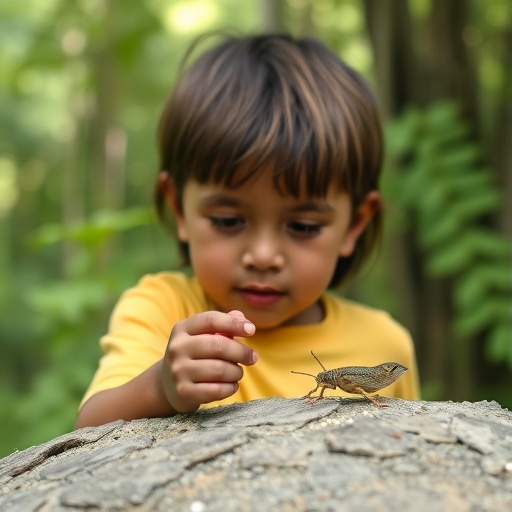
In the sprawling urban sprawl of Tokyo, a city teeming with life and technological advancement, an intriguing investigation has cast light on an often-overlooked aspect of environmental education—the pedagogy of biodiversity within local schools. Researchers from Tokyo Metropolitan University embarked on an ambitious study to unravel how the complexity of biodiversity is conveyed in classrooms, focusing specifically on the schools of Hachioji City, a densely populated area with a rich ecological context. The study uncovers how biodiversity, an essential pillar in environmental science, is interpreted and taught by elementary and junior high school educators, revealing both strengths and gaps in current educational practices.
Biodiversity education stands as a fundamental cornerstone of contemporary environmental awareness and conservation efforts. Nevertheless, its inherently broad and sometimes ambiguous scope renders it a challenging topic for instructors entrusted with the task of shaping young minds. Official educational frameworks often leave significant discretion to teachers, which can result in diverse, and potentially inconsistent, interpretations. Against this backdrop, the Tokyo Metropolitan University research team, led by Professor Shinya Numata, sought to decode the dynamics behind curricular choices related to biodiversity, emphasizing how teachers’ personal backgrounds shape the narratives and emphasis they bring to the classroom.
The research was conducted across 69 public elementary schools and 37 junior high schools, targeting a comprehensive cross-section of educators. By deploying psychological assessment tools, the researchers measured two critical indices: Nature Relatedness (NR) and Childhood Nature Experiences (CNE). These metrics gauge an individual’s emotional and experiential connection to the natural environment, positing that such connections may influence pedagogical decisions. This methodological approach provided an unprecedented lens through which to view the intersection of personal experience, psychological makeup, and educational content selection.
Findings from the survey revealed a clear prioritization of biodiversity topics within the broader exposé of environmental science issues across the surveyed schools. Teachers consistently incorporated the four key subtopics: the conceptual definition of biodiversity, threats facing ecosystems, conservation strategies, and the benefits biodiversity confers to human society. However, the coverage wasn’t uniformly distributed. Notably, subjects such as mass extinctions and the protection of endangered species received comparatively less attention. This imbalance suggests an educational preference favoring tangible, localized phenomena over more abstract, global ecological crises.
A striking outcome of the study was the significant role of Nature Relatedness and Childhood Nature Experiences in shaping curricular content. Educators with a high degree of NR were more likely to emphasize environmental threats and conservation efforts, reflecting an emotional investment that translates into teaching priorities. Similarly, teachers who reported richer childhood experiences in natural settings tended to present biodiversity topics with greater depth and engagement. These psychological factors, therefore, emerge as pivotal determinants in the educational narratives surrounding biodiversity.
Interestingly, the concept of ecosystem services—the direct and indirect benefits nature provides to humanity—was frequently taught regardless of a teacher’s NR or CNE scores. This finding points to the power of explicit curriculum mandates to standardize coverage of critical topics. The inclusion of ecosystem services in the official syllabus may serve as a counterbalance, ensuring foundational concepts receive consistent attention despite individual differences among educators. This policy mechanism underscores the influence educational authorities wield in shaping environmental literacy.
Beyond psychological influences, other demographic and professional characteristics of teachers also intersected with biodiversity education. Age, academic background, gender, and the specific grade or school level appeared to correlate with how certain themes were approached or emphasized in lessons. Such correlations hint at layered complexities in education that transcend singular explanations, indicating a multifaceted interplay between experience, expertise, and pedagogical choices.
The Tokyo study also ripened a broader discourse about the challenges intrinsic to biodiversity education. The vastness and diversity of the topic necessitate a delicate balance between localized relevancy and the imparting of global ecological literacy. Educators must navigate a landscape filled with scientific nuance and political importance, striving to instill both factual knowledge and environmental stewardship in students. This delicate endeavor is further complicated by variations in teacher experience and personal connection to nature.
On a policy level, the research signals the potential benefits of integrating psychological and experiential factors into teacher training and curriculum development. By fostering stronger connections to nature among educators—either through targeted experiences or professional development—there lies the possibility to enhance biodiversity education’s impact. Such strategies may serve as catalysts, enriching how complex environmental issues are communicated to the next generation.
Moreover, the findings spark a contemplation of the future trajectory of environmental science education. In an era where ecological threats loom large, and biodiversity loss accelerates, equipping educators with robust tools and frameworks is critical. The Tokyo Metropolitan University team advocates for curricula that weave together foundational scientific knowledge with the richness of localized observation and emotional engagement. This dual approach could empower students to grasp the urgency and relevance of biodiversity conservation with both intellectual rigor and personal resonance.
The research was supported by a JST-JICA-SATREPS Grant, underscoring the collaborative effort between scientific communities and policy bodies to enhance environmental education. As educators and policymakers digest these insights, the hope is to foster a more cohesive, effective, and inspiring approach to biodiversity teaching—one that equips students not only with knowledge but also with the empathy and motivation necessary for environmental stewardship.
Ultimately, the Tokyo study illuminates the profound influence of teachers’ personal experiences and psychological connections to nature on biodiversity education. It reveals the pressing need for systemic approaches that harmonize individual differences and curricular mandates. As the world grapples with relentless biodiversity challenges, educating future generations with clarity and passion remains an indispensable part of the global conservation strategy—a lesson this research eloquently brings to the fore.
News Publication Date: 7-Apr-2026.
Web References: http://dx.doi.org/10.1111/csp2.70265
Cite Scienmag News
Courtney Benton. (May 16, 2026). Survey Uncovers How Biodiversity Education Shapes Classroom Learning. Scienmag. https://scienmag.com/survey-uncovers-how-biodiversity-education-shapes-classroom-learning/
Courtney Benton. "Survey Uncovers How Biodiversity Education Shapes Classroom Learning." Scienmag, 16 May 2026, https://scienmag.com/survey-uncovers-how-biodiversity-education-shapes-classroom-learning/. Accessed 4 September 2026.
Courtney Benton. "Survey Uncovers How Biodiversity Education Shapes Classroom Learning." Scienmag. May 16, 2026. https://scienmag.com/survey-uncovers-how-biodiversity-education-shapes-classroom-learning/


