


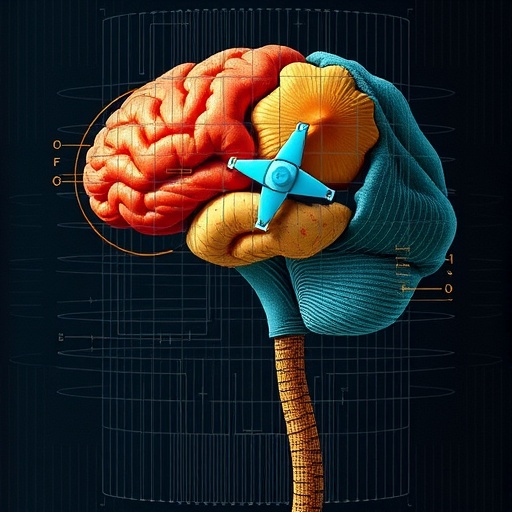
In a groundbreaking new study set to reshape our understanding of how memories are formed and judged, Morales-Torres, Davis, and Cabeza explore the intricate dance between perception and conceptual thinking in shaping memory judgments. This research, published in Communications Psychology in 2026, delves deep into the cognitive processes that determine not just how we remember, but why we sometimes remember inaccurately. Their findings have significant implications across psychology, neuroscience, artificial intelligence, and even legal systems where memory reliability plays a critical role.
Memory, a marvel of the human brain, is far from a passive storage system. Instead, it is an active, dynamic process influenced by multiple factors, including sensory input and higher-order cognitive frameworks. Morales-Torres and colleagues emphasize that memory judgments—how individuals evaluate whether something is familiar or recognized—are not solely reliant on the clarity or strength of the perceptual details stored. These judgments are equally and sometimes more influenced by conceptual knowledge and schemas embedded within the brain.
The study meticulously dissects the dual role that both perceptual and conceptual information play in memory recall. Perception refers to the raw sensory details encoded during an experience—visual patterns, sounds, textures. On the other hand, conceptual factors involve the semantic or meaningful context that the brain applies upon retrieval. The researchers highlight that an imbalance or interaction between these two can explain why people remember certain details vividly yet err on others.
Using advanced neuroimaging techniques combined with behavioral experiments, the researchers demonstrated that specific brain regions are differently engaged depending on whether memory judgments rely on perceptual cues or conceptual frameworks. The visual cortex is more active when perceptual detail is paramount, while areas linked to semantic processing, such as parts of the prefrontal cortex, dominate when conceptual information guides memory decisions. This neural dissociation underscores the complexity of memory judgments and paves the way for new models that integrate both perceptual and conceptual contributions.
A particularly striking insight from Morales-Torres et al. is how conceptual influences can override perceptual inputs, sometimes leading to false memories or distorted recollections. For instance, when participants were presented with items or scenarios that fit a common schema, they were more likely to erroneously recognize related but unexperienced items. This phenomenon is linked to the brain’s predictive nature—it tends to fill gaps in perception based on prior knowledge, which can be both adaptive and misleading.
This research not only enhances theoretical models of memory but also has practical applications. Understanding how conceptual knowledge impacts memory accuracy equips legal professionals with better frameworks to evaluate eyewitness testimonies. It can also inform educational strategies where memory reliability is crucial, suggesting that balancing detailed sensory information with broader meaning enhances learning retention without compromising accuracy.
An intriguing avenue the study explores concerns memory distortions in aging populations. Older adults often show a decline in perceptual acuity but maintain or even increase reliance on conceptual memory frameworks. Morales-Torres and colleagues propose that this shift could explain susceptibility to certain types of memory errors while preserving functional memory use. This aspect bridges cognitive aging research with their findings, opening pathways for targeted interventions that could mitigate age-related memory inaccuracies.
Furthermore, the study delves into the computational modeling of memory, where integrating both perceptual and conceptual dimensions can lead to more robust artificial intelligence systems capable of human-like memory judgments. These systems could revolutionize technologies ranging from virtual assistants to autonomous robots, enabling them to process information contextually and reduce erroneous outputs.
The innovative methodological approach of combining behavioral data with brain imaging and computational models significantly advances the field of cognitive neuroscience. By not treating perception and conceptualization as isolated phenomena, Morales-Torres and co-authors establish a holistic framework that accounts for the nuanced interplay between these domains. Their work challenges past research which often emphasized one at the expense of the other, setting a new standard for future explorations.
Ethical considerations emerge from these insights as well, particularly about the reliability of memory in high-stakes environments like courts or psychological assessments. As the research clarifies mechanisms leading to memory distortions, it underscores the need for caution when relying on recollections that may be conceptually biased. This calls for development of better diagnostic tools to distinguish between perceptual truth and conceptual inference in memory testimonies.
Equally compelling is the study’s implication for therapeutic settings. Cognitive therapies targeting memory-related disorders could be enhanced by strategies that recalibrate the balance between perceptual and conceptual memory processing. In conditions such as post-traumatic stress disorder (PTSD) or schizophrenia, where false memories and delusions can be prominent, these findings offer hopeful avenues for intervention and symptom management.
Morales-Torres and colleagues also touch upon the evolutionary perspective, proposing that such a dual-process memory system likely conferred adaptive advantages. The brain’s ability to use conceptual frameworks allows rapid inference and generalization in complex environments, crucial for survival. However, this power comes at a cost—the potential for false memories, which are a by-product of a memory system optimized not just for accuracy but for efficiency and relevance.
The depth and breadth of this research reinforce the importance of interdisciplinary collaboration. Insights from psychology, neuroscience, computer science, and even philosophy converge in their study to provide a comprehensive understanding of memory judgments. This synthesis serves as a model of how tackling complex cognitive phenomena benefits from diverse scientific perspectives.
Looking forward, the authors propose expanding these findings through longitudinal studies and varied populations, including developmental cohorts and individuals with neurologic conditions. Such work will shed further light on how perceptual and conceptual memory interactions evolve across the lifespan and in pathological states.
In conclusion, Morales-Torres, Davis, and Cabeza’s 2026 study marks a significant leap in cognitive science by elucidating the subtle yet powerful influences that shape memory judgments. Their findings challenge simplistic notions of memory accuracy, revealing a sophisticated neural and cognitive architecture that balances raw sensory data with deep conceptual understanding. This balance is not only a hallmark of human intelligence but also a potential key to advancing technology, improving legal systems, and enhancing mental health care worldwide.
Cite Scienmag News
Glenn Wilkins. (March 26, 2026). How Perception and Concepts Shape Memory Judgments. Scienmag. https://scienmag.com/how-perception-and-concepts-shape-memory-judgments/
Glenn Wilkins. "How Perception and Concepts Shape Memory Judgments." Scienmag, 26 March 2026, https://scienmag.com/how-perception-and-concepts-shape-memory-judgments/. Accessed 3 September 2026.
Glenn Wilkins. "How Perception and Concepts Shape Memory Judgments." Scienmag. March 26, 2026. https://scienmag.com/how-perception-and-concepts-shape-memory-judgments/


