


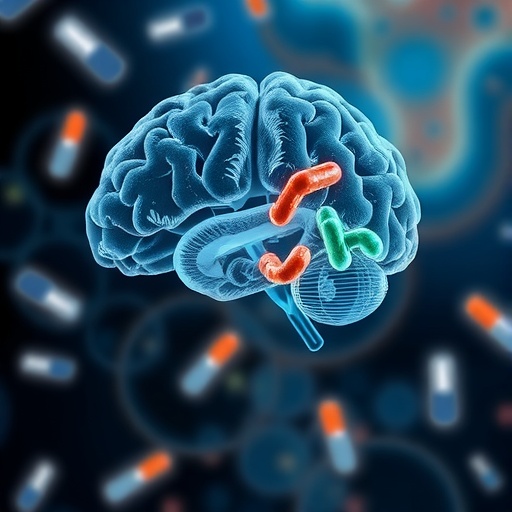
In a groundbreaking clinical trial that could revolutionize treatment approaches for complex psychiatric disorders, researchers have unveiled promising results from a study investigating the effects of glutamate- and GABA-targeted pharmacotherapies on individuals suffering from both bipolar disorder and alcohol use disorder. This dual-diagnosis population, notoriously challenging to treat due to overlapping neurochemical disruptions and behavioral manifestations, was the focus of an innovative randomized, double-blind, placebo-controlled crossover trial assessing N-acetylcysteine (NAC), gabapentin, and placebo efficacy.
The study, conducted by Prisciandaro, Mellick, Hix, and colleagues, delves into the mechanistic underpinnings of co-occurring bipolar and alcohol use disorders by targeting two critical neurotransmitter systems: glutamatergic excitatory pathways and GABAergic inhibitory circuits. Both systems are intricately implicated in mood regulation, impulse control, and addictive behaviors, making them attractive candidates for therapeutic intervention. Previous research hinted at the potential of NAC—a precursor to the antioxidant glutathione with modulatory effects on glutamate levels—and gabapentin, originally developed as an anticonvulsant and anxiolytic, for attenuating symptoms in these populations. However, direct comparative evidence in co-morbid bipolar and alcohol use disorders remained scarce until now.
Employing a crossover design ensured that each participant received all interventions—NAC, gabapentin, and placebo—ensuring robust within-subject comparisons and minimizing confounding variability due to individual differences. This methodological rigor strengthens confidence in observed effects and provides nuanced insights into the therapeutic profiles of each agent. Participants were monitored extensively using validated clinical scales, biochemical markers, and neurocognitive assessments to capture multifaceted treatment impacts.
Results indicated that NAC administration led to significant stabilization of mood fluctuations characteristic of bipolar disorder while concurrently reducing craving intensity and frequency of alcohol use episodes. The glutamatergic modulation by NAC appears to recalibrate the excitatory-inhibitory balance in neural circuits implicated in emotional dysregulation and reward processing. This dual action underlines NAC’s potential as a multifaceted therapeutic agent addressing both mood pathology and addictive behavior through oxidative stress reduction and glutamate homeostasis restoration.
Gabapentin, targeting the GABAergic system to enhance inhibitory neurotransmission and dampen neural hyperexcitability, demonstrated notable anxiolytic effects and improvements in sleep quality among participants. Moreover, gabapentin reduced alcohol intake, possibly by mitigating withdrawal symptoms and craving states mediated in part by deficient GABA signaling. While mood stabilization effects were less pronounced compared to NAC, gabapentin’s beneficial impact on anxiety comorbid with bipolar disorder underscores its adjunctive potential in comprehensive treatment paradigms.
Intriguingly, the placebo arm, essential for distinguishing true pharmacodynamic effects, revealed modest but notable improvements in subjective mood ratings and alcohol consumption metrics, illustrating the complex interplay of expectation, clinical care, and symptomatic fluctuations inherent in psychiatric trials. This highlights the necessity of robust control conditions to accurately interpret therapeutic gains attributed to active treatment.
Biomarker analyses shed light on underlying neurochemical changes paralleling clinical outcomes. NAC treatment was associated with normalization of glutamate levels measured through proton magnetic resonance spectroscopy, supporting the hypothesized mechanism of restoring excitatory neurotransmission balance. Gabapentin recipients exhibited increased GABA concentrations correlating with anxiety symptom reduction, bolstering evidence for its modulatory role on inhibitory tone.
Neurocognitive assessments revealed differential effects on executive function domains crucial for impulse control and decision-making, often impaired in bipolar disorder and substance use conditions. NAC improved cognitive flexibility and working memory performance, potentially linked to enhanced glutamatergic neurotransmission and neuroplasticity. Gabapentin’s impact was more apparent in attention and processing speed tasks, reflecting its sedative and anxiolytic properties facilitating cognitive resource allocation.
Safety and tolerability profiles were favorable across both active treatments, with adverse events primarily mild and transient. The absence of serious side effects is encouraging, especially given the vulnerability of the studied population to medication intolerance and polypharmacy complications. These findings support continued exploration of NAC and gabapentin as viable options within integrated treatment frameworks for complex dual diagnoses.
This study’s implications extend beyond clinical practice into neuropharmacological research realms, emphasizing the therapeutic potential of targeting neurotransmitter systems implicated in both mood and addictive disorders. It underscores the importance of personalized medicine approaches that consider overlapping pathophysiologies and leverage pharmacological agents with multifunctional neurochemical effects.
Future research directions could explore longer-duration trials to assess sustained efficacy, combinatorial therapies to harness synergistic effects, and translational studies integrating neuroimaging and molecular techniques to pinpoint biomarkers predictive of treatment response. Moreover, investigating these agents in diverse demographic and clinical subpopulations will be essential to broaden applicability and optimize individualized care strategies.
In conclusion, the trial by Prisciandaro and team elucidates critical advances in treating co-occurring bipolar and alcohol use disorders through strategic modulation of glutamate and GABA neurotransmitter systems. The demonstration of both NAC and gabapentin’s efficacy in managing mood symptoms and reducing alcohol consumption presents a beacon of hope for patients entangled in the complex web of dual diagnosis. As mental health care continues evolving, such rigorously designed pharmacological studies pave the way for more effective, targeted, and holistic interventions addressing multifactorial neuropsychiatric challenges.
The study emerges at a pivotal time when the psychiatric community increasingly recognizes the shortcomings of monotherapy and the necessity for innovative strategies catering to comorbidities. By dissecting the neurochemical bases of disorder overlap and therapeutic response, this research sets a new paradigm in neuropsychiatric pharmacotherapy, potentially influencing clinical guidelines and standard of care in coming years.
Overall, the articulation of glutamate- and GABA-targeted pharmacology in addressing the intersection of affective and addictive disorders marks a significant leap forward. It offers tangible prospects for improving patient outcomes, decreasing relapse rates, and fostering sustained recovery pathways. As ongoing investigations build on these findings, the horizon for managing challenging dual diagnoses looks considerably brighter.
Cite Scienmag News
Glenn Wilkins. (June 3, 2026). Drugs Targeting Glutamate, GABA Treat Bipolar and Alcohol. Scienmag. https://scienmag.com/drugs-targeting-glutamate-gaba-treat-bipolar-and-alcohol/
Glenn Wilkins. "Drugs Targeting Glutamate, GABA Treat Bipolar and Alcohol." Scienmag, 3 June 2026, https://scienmag.com/drugs-targeting-glutamate-gaba-treat-bipolar-and-alcohol/. Accessed 5 September 2026.
Glenn Wilkins. "Drugs Targeting Glutamate, GABA Treat Bipolar and Alcohol." Scienmag. June 3, 2026. https://scienmag.com/drugs-targeting-glutamate-gaba-treat-bipolar-and-alcohol/


