


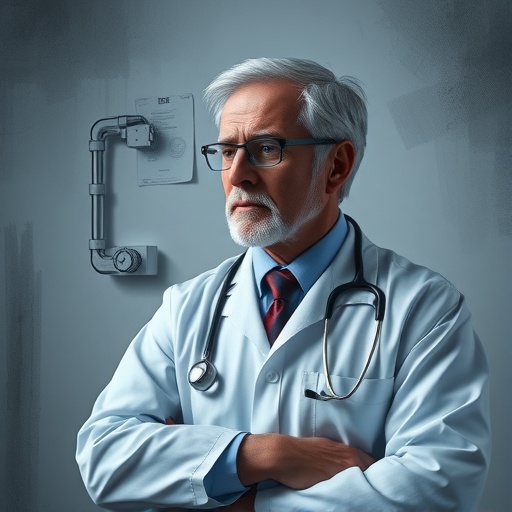
A psychiatrist at Stanford University School of Medicine has published a strikingly personal account arguing that the experiences that forge a physician’s identity are not the planned milestones of a medical career but the ruptures that break it open: a mother’s death on the eve of residency, months of exile from clinical practice, a brush with life-threatening illness, and a father’s final delirium. The essay, written by consultation-liaison psychiatrist Filza Hussain, appears as a Viewpoint in the peer-reviewed journal Academic Psychiatry, published online on June 10, 2026, and makes an unflinching claim: grief and illness are not detours from professional formation but its most honest curriculum. Hussain, who manages the psychiatric dimensions of medical disease at the bedsides of hospitalized patients, argues that medical training’s habit of narrating careers as sequences of deliberate choices misses where identity is actually made. Her proposal to medical educators is quietly radical: teachers who have been changed by loss can offer trainees something no conventional syllabus can — permission to make meaning of their own disruptions.
Hussain’s account begins with the paradox of decisiveness. Trainees describe her as decisive, and her record bears it out: she decided at age three that she would become a physician, chose psychiatry in her second year of medical school, and committed early in residency to consultation-liaison psychiatry, the subspecialty that manages the psychiatric complications of medical and surgical illness. From the outside, the trajectory appears deliberate. “It was not,” she writes. The observation cuts to the center of professional identity formation, a concept that dominates contemporary medical education research and describes how trainees gradually internalize the values, behaviors and self-understanding of a physician, typically through mentorship, role modeling and graduated clinical responsibility. Hussain’s essay turns that framework inside out. What shaped her professional identity most profoundly, she argues, were the moments when the armor of certainty was useless: illness, grief and lost agency. These experiences did not derail her career — “They are my career,” she writes. The piece, a personal narrative with no datasets or funding behind it, asks educators to reconsider what actually counts as formative in the making of a doctor.
The first rupture came a week before Match Day — the annual ceremony at which graduating medical students learn where they will spend their residency years — when Hussain’s mother died of advanced pulmonary fibrosis. The disease is among the most unforgiving in pulmonary medicine: a progressive, largely irreversible scarring of the lung’s interstitial tissue, in which the walls of the alveoli, the microscopic air sacs where oxygen passes into the blood, thicken and stiffen until gas exchange begins to fail. Breathlessness worsens relentlessly, and in advanced disease the decline toward respiratory failure can be swift. Hussain’s mother, a proud and deeply private woman, was terrified. On a single day, five different clinical teams told the family she was dying. Each team led with data; none made room for fear. The conversations were efficient, clinically accurate — and devastating, Hussain recalls. She understood the medicine. What she could not reconcile was the absence of gentleness: no space for grief, for questions, or for the fact that this dying woman was her mother. In that moment, she made a quiet commitment never to speak to patients or families that way.
That commitment has hardened into a teaching principle threaded through the essay: what clinicians call a difficult patient is often a frightened one, and fear requires care rather than efficiency. In consultation-liaison psychiatry, where psychiatrists are summoned to the bedsides of the delirious, the dying and the depressed in the middle of cancer treatment, the pull toward data-first communication is constant, and conversations about prognosis are among the most consequential acts a clinician performs. Hussain now asks her trainees to attend not only to what is said in those moments, but to what space is made for fear when certainty is limited. Her framing aligns with decades of work in clinical communication showing that the way serious news is delivered shapes how families remember a death. In her telling, the bedside conversation is not merely an exchange of information but an act of identity formation: every delivery of bad news teaches the clinician what kind of physician they are becoming.
The second formative scene is quieter. After her mother died, a nurse arrived to remove her urinary catheter. Hussain half expected to be scolded for allowing a male nurse to attend to her mother’s body. Instead, the nurse spoke to her gently, explaining each step as though the woman were still alive, with no expectation of acknowledgement. He simply treated her with the dignity she would have demanded for herself. That nurse, Hussain writes, taught her more than any curriculum had. Dignity, she concluded, is not declared but practiced — in ordinary moments, with patients who cannot thank you, and with families watching more closely than clinicians realize. Today, she speaks to comatose patients and explains what she is doing, and she shares this story with trainees because that is where dignity lives: in the ten seconds it takes to speak to a patient who may or may not hear you. The practice carries ethical weight as well, since families judge care by how unconscious and dying patients are addressed.
The third rupture was administrative. After completing her training, visa requirements took Hussain back to England, where she was unable to practice medicine for seven months after her application to the medical register was rejected, in part over bureaucratic minutiae. Her first response was anger: years of rigorous training rendered invisible by an administrative threshold. Beneath the anger she found something clarifying — without clinical work, she did not know who she was. “Medicine was not what I did,” she writes. “It was how I located myself in the world.” The episode supplies the essay’s conceptual core: being kept from medicine did not teach her its value; it confirmed it. For international medical graduates, who must repeatedly prove hard-won competence to licensing systems that can render their credentials suddenly illegible across borders, the experience is far from rare, yet its psychological toll is rarely named in the literature on physician wellbeing. Hussain compresses the lesson into a warning she issues to her trainees: “the day it feels like just a job is the day to ask yourself why you chose it.”
The fourth rupture put her on the other side of the clinical encounter. After four years of practicing general psychiatry in an underserved community on a visa-waiver job, Hussain returned to academic medicine and consultation-liaison psychiatry. Within a week of joining, she developed a life-threatening illness that led to hospitalization. Those three days, she writes, were a crash course in the illness experience: how the rhythms of institutional care and the loss of autonomy erode a person’s sense of self. Hospitals were no longer neutral spaces. Symptoms were no longer abstractions. Her description echoes a large body of research on the patient experience, which documents how institutional routines — scheduled medications, monitoring alarms, waiting for results, decisions made over the patient’s head — can strip away control precisely when a person most needs a sense of agency. Hussain now asks her trainees to attend not only to the diagnosis but to what it feels like to be the person carrying it, a shift she regards as the heart of competent, humane consultation work.
The most recent rupture cut closest to her daily work. Her father died after days of delirium, the acute, fluctuating disturbance of attention and awareness that Hussain treats and teaches every day. Delirium is one of the most common neuropsychiatric syndromes in hospitalized and terminally ill patients, arising when acute illness, drugs, metabolic derangement or systemic inflammation disrupt brain chemistry; current models implicate cholinergic deficiency, dopaminergic excess, imbalanced GABAergic and glutamatergic signaling, and inflammatory cascades that destabilize the large-scale neural networks governing attention. Hussain understood the neurobiology completely. What she struggled with was witnessing what delirium took from her father: in his final days he was no longer fully himself; his priorities shifted; his way of relating changed. For a time after his death, she was unsure whether she could sit at another bedside without seeing him there, or return to treating delirium at all. With time, that fear softened into something more useful. When she teaches delirium now, she teaches not only the diagnosis but what it takes from a person and what it asks of those who love them. “Grief has not made this work easier,” she writes. “It has made it more honest.”
The essay’s synthesis is a direct challenge to how medical culture talks about resilience. Training, Hussain observes, celebrates resilience while rarely naming what produced it. Many physicians are formed not by uninterrupted progress but by rupture — a sudden removal of the certainties around which they built their identities. Her own professional identity, she writes, was shaped by being an international medical graduate, a daughter who lost both parents, and a physician who became a patient; these are not incidental biographical details but the source of whatever clinical wisdom she has to offer. Her method is narrative: using story to shift the frame from the consult question to the human one. What is the family at the bedside experiencing? What has this illness taken? What would dignity look like in this room right now? Within narrative medicine, this kind of reframing is understood to counteract the emotional detachment that clinical training can instill, restoring the patient’s personhood, and the family’s grief, to the center of the encounter.
The implications are the essay’s most provocative claim. The disruptions that shape physicians, Hussain argues, are not detours from becoming physician-educators — they are the curriculum, and clinicians cannot choose them, but they can choose what they do with them. In doing so, educators offer trainees not a template to follow but permission to make meaning of their own. The argument lands amid intensifying concern over burnout and moral injury in the medical workforce, and it suggests that educators’ own histories of loss — long treated as private matters to be bracketed at the hospital door — can be mobilized as teaching assets rather than liabilities. For a profession searching for ways to humanize training without diluting rigor, the message of this Stanford essay is disarmingly simple: the most powerful instructor in a medical school may be the teacher who has been a patient, a mourner and a stranger to her own profession, and who is willing to say so out loud.
Cite Scienmag News
Glenn Wilkins. (August 30, 2026). How Disruption, Loss, and Care Shape Physician Identity. Scienmag. https://scienmag.com/how-disruption-loss-and-care-shape-physician-identity/
Glenn Wilkins. "How Disruption, Loss, and Care Shape Physician Identity." Scienmag, 30 August 2026, https://scienmag.com/how-disruption-loss-and-care-shape-physician-identity/. Accessed 3 September 2026.
Glenn Wilkins. "How Disruption, Loss, and Care Shape Physician Identity." Scienmag. August 30, 2026. https://scienmag.com/how-disruption-loss-and-care-shape-physician-identity/


