


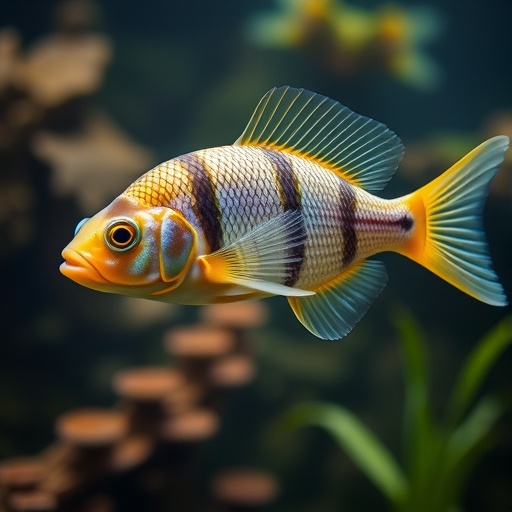
In a groundbreaking study published in the prestigious journal Nature, a team of international researchers, spearheaded by Dr. Edward Ricemeyer, computational biologist at Ludwig-Maximilians-Universität München (LMU), has uncovered the genetic secret behind the remarkable longevity and genomic integrity of the Amazon molly (Poecilia formosa), a clonal fish species that defies evolutionary expectations. All individuals of this species are female and propagate asexually, yet the genome remains surprisingly robust over thousands of generations despite lacking the benefits of sexual reproduction.
The Amazon molly’s reproductive strategy is unusual: although it requires males from closely related species to stimulate reproduction, these males contribute no genetic material to the offspring. Conventional evolutionary theory predicts that without genetic recombination—an inherent feature of sexual reproduction—deleterious mutations should accumulate over time in clonal lineages, leading inevitably to genomic decay and species extinction. The persistent survival of the Amazon molly, however, suggests there is a hitherto undiscovered mechanism safeguarding its genome integrity.
Leveraging state-of-the-art genomic sequencing technologies, Ricemeyer and colleagues generated high-quality genome assemblies from multiple Amazon molly individuals. This comprehensive dataset allowed the researchers to conduct a detailed analysis of mutation patterns and underlying evolutionary forces. Contrary to the expected genetic deterioration typical of clonal organisms, the team found extensive evidence of gene conversion—a genetic process that effectively preserves genome health by copying sequences from one DNA strand to another.
Gene conversion works by overwriting mutated, harmful versions of genes with intact copies sourced from homologous sequences. This mechanism operates independently of sexual recombination and enables the removal of deleterious mutations while simultaneously maintaining functional versions of essential genes. Dr. Ricemeyer explains that gene conversion allows natural selection to remain effective, even in a species where traditional genetic reshuffling is absent, thus preventing the genomic burden expected to accumulate in asexual lineages.
This revelation has substantial implications for evolutionary biology. It challenges the prevailing paradigm that sexual reproduction—and the associated recombination—is indispensable for long-term genomic viability. Instead, the Amazon molly appears to inhabit an evolutionary “sweet spot,” harnessing somatic gene conversion to retain many of the adaptive advantages typically reserved for sexual species without the genetic involvement of males.
The ramifications of these findings extend beyond just understanding the Amazon molly. They provide valuable insights into one of the longstanding enigmas in evolutionary science: why clonal and asexual organisms, although relatively rare, seem more widespread and persistent than classical theory predicts. This research suggests alternative evolutionary strategies, such as gene conversion, might be more broadly employed to maintain genome integrity across diverse taxa.
Further genomic analyses conducted by the research team revealed that gene conversion not only suppresses harmful mutation accumulation but may also facilitate the spread of advantageous genetic variants within clonal populations. This dynamic is strikingly reminiscent of the genetic benefits conferred by recombination in sexually reproducing species, suggesting gene conversion partially compensates for the absence of sex in this lineage.
Senior author Professor Wesley Warren from the University of Missouri highlights that the Amazon molly “has the best of both worlds,” combining the clonal reproductive mode with molecular mechanisms that sustain genetic diversity and health. This unique balance underpins the species’ extraordinary evolutionary success and prompts reevaluation of the biological constraints associated with asexual reproduction.
The collaborative study, involving experts from multiple institutions, including the University of Würzburg and the University of California, San Francisco, exemplifies the power of combining computational genomics, evolutionary theory, and molecular biology to unravel complex biological phenomena. The interdisciplinary approach was crucial for detecting subtle gene conversion signatures amidst vast genomic data.
By revealing the role of gene conversion in mitigating the mutational load widely held as an inevitable consequence of asexuality, this research invites a reconsideration of how genomes evolve and maintain functionality in the absence of sexual reproduction. It also opens new avenues for exploring genetic stability mechanisms in other clonal organisms, potentially impacting fields ranging from conservation biology to human medicine.
Finally, this study underscores the importance of investigating “non-model” and unusual species to deepen our understanding of genome evolution. The Amazon molly, with its extraordinary life history, emerges not merely as a biological curiosity but as a key to decoding fundamental genomic processes that shape life across the tree of life. As Dr. Ricemeyer reflects, studying these exceptional systems broadens our comprehension of the evolutionary forces preserving genome integrity far beyond the traditional paradigms.
News Publication Date: 11 March 2026.
Web References: DOI: 10.1038/s41586-026-10180-9
References: Ricemeyer et al., Nature, 2026.
Cite Scienmag News
Juliet Wilcox. (March 13, 2026). How a Clonal Fish Prevents Genetic Deterioration. Scienmag. https://scienmag.com/how-a-clonal-fish-prevents-genetic-deterioration/
Juliet Wilcox. "How a Clonal Fish Prevents Genetic Deterioration." Scienmag, 13 March 2026, https://scienmag.com/how-a-clonal-fish-prevents-genetic-deterioration/. Accessed 3 September 2026.
Juliet Wilcox. "How a Clonal Fish Prevents Genetic Deterioration." Scienmag. March 13, 2026. https://scienmag.com/how-a-clonal-fish-prevents-genetic-deterioration/


