


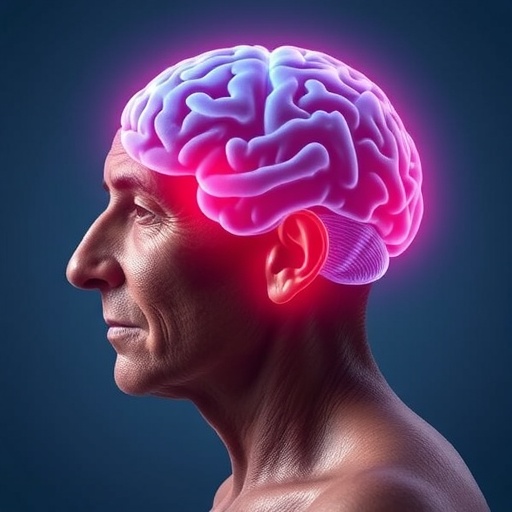
In a groundbreaking advance that could reshape approaches to managing cognitive decline, a team of neuroscientists has unveiled a pioneering study combining home-delivered transcranial direct current stimulation (tDCS) with cognitive training in older adults diagnosed with mild cognitive impairment (MCI) due to Alzheimer’s disease. Published in the 2026 edition of BMC Geriatrics, this randomized, single-blind, sham-controlled trial offers robust evidence supporting the safety and efficacy of at-home neuromodulation technology coupled with structured cognitive exercises. This innovative approach may herald a new era of accessible, non-invasive interventions aimed at delaying the progression of Alzheimer’s disease in its earliest symptomatic stages.
Mild cognitive impairment is widely acknowledged as a critical transitional phase between normal cognitive aging and dementia, particularly Alzheimer’s disease. Addressing cognitive deficits during this window is of paramount importance, as it presents a strategic opportunity to intervene before irreversible neurodegeneration takes hold. Traditionally, therapeutic options have been limited and largely focused on pharmacological treatments with varying degrees of efficacy. This study introduces an alluring alternative—leveraging neuromodulation paired with cognitive rehabilitation to invigorate neural pathways, thereby potentially altering disease trajectories.
Transcranial direct current stimulation involves the delivery of low-intensity electrical currents via electrodes positioned on the scalp. This technique modulates neuronal excitability and neuroplasticity, facilitating improved synaptic efficacy and network connectivity. In this trial, participants self-administered tDCS sessions at home using specially designed devices under remote supervision. The home-delivery aspect is revolutionary, addressing longstanding barriers such as clinic accessibility, logistical challenges, and patient discomfort. By democratizing access to neuromodulatory interventions, this study pioneers a new frontier in outpatient neuroscience therapies.
Simultaneously, participants engaged in tailored cognitive training regimens targeting memory, attention, and executive function—domains frequently compromised in MCI and early Alzheimer’s disease. These computerized cognitive exercises were calibrated to adapt dynamically to individual performance levels, thereby optimizing engagement and challenge. The synergistic combination of tDCS with cognitive training is hypothesized to capitalize on enhanced neuroplastic states induced by electrical stimulation, amplifying the restorative effects of cognitive tasks.
The rigorously designed trial incorporated a sham-controlled methodology to uphold scientific validity. The sham group received placebo stimulation indistinguishable from active tDCS, ensuring that placebo effects were accounted for. Over the course of several weeks, clinical outcomes were monitored using validated neuropsychological assessments and functional scales. Results unequivocally demonstrated that participants receiving active combined intervention exhibited significant improvements compared to the sham group, including measurable gains in memory recall, attention span, and processing speed.
Crucially, the study confirmed the safety and tolerability of at-home tDCS administration. No serious adverse events were reported, and compliance rates remained high throughout the intervention period. This augurs well for future scalability and widespread adoption. It is noteworthy that the protocol incorporated remote monitoring protocols and user-friendly interfaces, empowering participants while maintaining rigorous oversight—an ideal balance in telemedicine paradigms.
The neurobiological underpinnings behind these findings likely involve tDCS-induced increases in cortical excitability and long-term potentiation-like mechanisms, fostering synaptic strength within affected neural circuits. Coupled with repetitive cognitive stimulation, these mechanisms synergistically promote functional reorganization and compensation. Such plastic changes may counterbalance early Alzheimer’s pathology, thereby forestalling functional decline. This mechanistic insight underscores the therapeutic potential inherent in combining neuromodulation with behavioral interventions.
Beyond the clinical implications, the home-based delivery platform represents a significant stride in patient-centered care. Elderly individuals, often burdened by mobility constraints or geographic isolation, stand to benefit immensely from interventions that circumvent traditional clinic visits. Furthermore, this approach encourages autonomy and active participation in one’s own cognitive health maintenance—a psychological boon that can enhance quality of life and motivation.
The study’s innovative design, integrating cutting-edge technology with cognitive neuroscience principles, exemplifies the rapidly evolving landscape of non-pharmacological treatments. As Alzheimer’s disease continues to impose a global health challenge, scalable, cost-effective, and minimally invasive therapies will be crucial. This research provides a compelling blueprint for harnessing neuromodulation synergistically with cognitive training, potentially delaying symptom progression and improving patient outcomes.
While promising, the researchers emphasize that further longitudinal studies with larger sample sizes and diverse populations are necessary to consolidate these findings. Exploration of optimal stimulation parameters, long-term durability of cognitive gains, and integration into comprehensive care models remain ongoing priorities. Nonetheless, this trial sets a formidable precedent, encouraging deeper investigation into multi-modal intervention strategies.
Excitingly, the convergence of neuroscience, engineering, and digital health embodied in this work sets the stage for personalized cognitive enhancement protocols. Advances in real-time monitoring, adaptive stimulation algorithms, and AI-driven cognitive assessments could refine therapy delivery, maximizing effectiveness while minimizing burden. Such innovations signal a transformative shift towards precision neuromodulation aimed at neurodegenerative conditions.
In conclusion, the revelation that combined home-delivered tDCS and cognitive training can safely and effectively improve cognitive function in older adults with MCI due to Alzheimer’s disease opens tantalizing avenues for early intervention. This approach not only holds promise for attenuating cognitive decline but also elevates patient empowerment and accessibility. As research progresses, integrating neuromodulatory techniques into routine clinical practice may fundamentally alter how we combat Alzheimer’s disease and related dementias.
This landmark study exemplifies how merging technology with neuroscience-driven therapies creates unprecedented opportunities, transcending conventional limitations of time, place, and cost. By illuminating a feasible pathway to neurocognitive preservation at home, it inspires hope and actionable strategies for millions facing the daunting realities of Alzheimer’s disease worldwide.
Cite Scienmag News
Cassandra Pierce. (April 11, 2026). Home Brain Stimulation Boosts Memory Training in Alzheimer’s. Scienmag. https://scienmag.com/home-brain-stimulation-boosts-memory-training-in-alzheimers/
Cassandra Pierce. "Home Brain Stimulation Boosts Memory Training in Alzheimer’s." Scienmag, 11 April 2026, https://scienmag.com/home-brain-stimulation-boosts-memory-training-in-alzheimers/. Accessed 4 September 2026.
Cassandra Pierce. "Home Brain Stimulation Boosts Memory Training in Alzheimer’s." Scienmag. April 11, 2026. https://scienmag.com/home-brain-stimulation-boosts-memory-training-in-alzheimers/


