

Tuesday, October 20, 2026
Science
No Result
View All Result
  • Login
  • HOME
  • SCIENCE NEWS
  • CONTACT US
  • HOME
  • SCIENCE NEWS
  • CONTACT US
No Result
View All Result
Scienmag
No Result
View All Result
Home Science News Agriculture

Higher maize density linked to weaker grain filling in apical grains

October 20, 2026
in Agriculture
Alan Morgan
By Alan Morgan Scienmag Editorial Profile - Precision Agriculture
Reading Time: 3 mins read
0
Higher maize density linked to weaker grain filling in apical grains

Higher maize density linked to weaker grain filling in apical grains

65
SHARES
587
VIEWS
Share on FacebookShare on Twitter
ADVERTISEMENT

A two-year field trial in Heilongjiang Province, China, found that increasing maize planting density generally reduced early sugar availability, the measured activity of key starch-biosynthetic enzymes, and the potential and rate of starch accumulation during grain filling. The reductions were more pronounced in apical grains—the kernels toward the top of the ear—than in basal-middle grains. The study tested three maize hybrids at three densities: D1, 82,500 plants per hectare; D2, 93,800 plants per hectare; and D3, 105,000 plants per hectare.

Researchers separated grains according to their position on the ear and measured sucrose and soluble-sugar levels during early grain filling. They also assessed the activities of ADP-glucose pyrophosphorylase, starch synthase, and starch branching enzyme, then tracked starch accumulation through the filling period and recorded harvest-stage traits. Across planting densities and cultivars, basal-middle grains consistently had higher early sugar supply, higher activities of these three enzymes, and stronger starch accumulation than apical grains. The results therefore identified a consistent difference in grain-filling physiology between the two ear-position groups.

Planting density mainly changed the intensity of starch accumulation rather than its timing. Logistic analysis indicated that higher density reduced the intensity of the accumulation process without markedly shifting its temporal pattern. In practical terms, the measured starch-accumulation curve was not evidence of a radically different filling schedule; instead, grain-filling strength declined as planting density increased. This distinction came from the statistical analysis of the trial data and does not imply that the tested densities produced identical crop development in every respect.

The trial also linked several stages of the grain-filling process. Piecewise structural equation modeling showed close associations among early sugar supply, starch-biosynthetic enzyme activity, starch-accumulation kinetics, and traits recorded at harvest. Together with the field measurements, these results support a physiological explanation in which dense planting is associated with coordinated reductions in early sugar availability and starch-biosynthetic capacity. The structural model identifies relationships among those variables; it does not by itself establish that every modeled link is causal.

Responses differed among the three hybrids, and the authors associated tolerance to higher planting density with the maintenance of grain-filling physiology across ear positions. The supplied findings do not provide a universal ranking of the hybrids or demonstrate that any one cultivar produced a specific yield advantage. The experiment was a field-based physiological study conducted at one location over two years, with three hybrids and three density levels, so its scope is narrower than a comparison across regions, seasons, or management systems. The activity-based enzyme measurements should also not be read as a direct inventory of every metabolic pathway involved in grain filling. Within this trial, however, the evidence consistently associates higher planting density with lower early sugar supply, reduced starch-biosynthetic enzyme activity, and weaker starch accumulation, with apical grains showing the stronger response.

Subject of Research: Effects of maize planting density on grain filling, starch accumulation, and harvest traits at different ear positions

Article Title: Effects of increased planting density on carbon metabolism, starch accumulation, and yield formation of maize grains at different ear positions

Article References: Kong, D., Kong, L., Zhang, X., Li, X., Zheng, S., Li, W., Duan, Z., Sun, Y., Sun, H., & Guo, W. (2026). Effects of increased planting density on carbon metabolism, starch accumulation, and yield formation of maize grains at different ear positions. BMC Plant Biology. https://doi.org/10.1186/s12870-026-09795-x

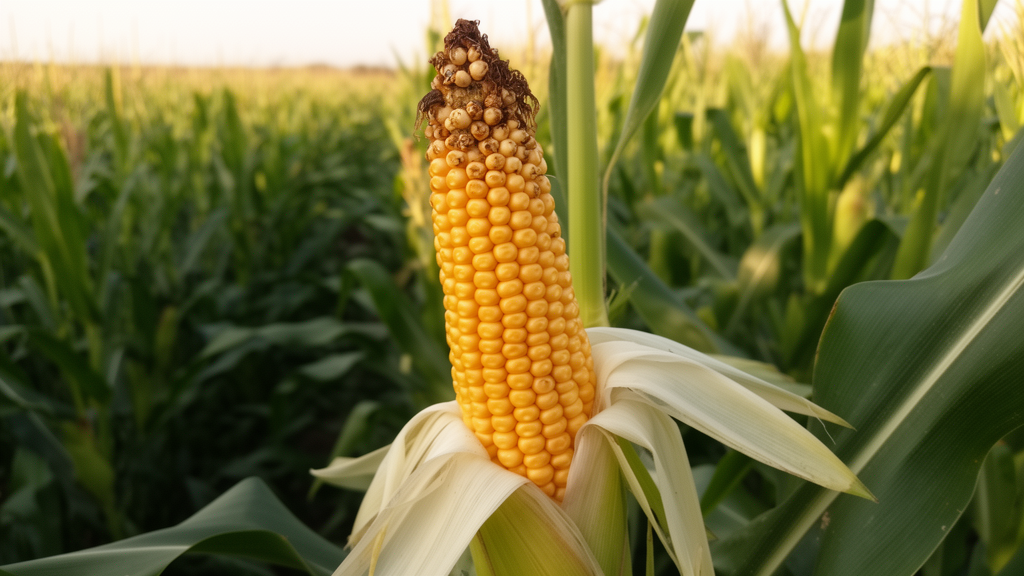
Image Credits: AI Generated

DOI: 10.1186/s12870-026-09795-x

Keywords: maize, planting density, grain filling, starch accumulation, ear position, sucrose, starch biosynthesis, field trial, Heilongjiang, maize hybrids, Effects, increased

Cite Scienmag News

Alan Morgan. (October 20, 2026). Higher maize density linked to weaker grain filling in apical grains. Scienmag. https://scienmag.com/higher-maize-density-linked-to-weaker-grain-filling-in-apical-grains/

Alan Morgan. "Higher maize density linked to weaker grain filling in apical grains." Scienmag, 20 October 2026, https://scienmag.com/higher-maize-density-linked-to-weaker-grain-filling-in-apical-grains/. Accessed 20 October 2026.

Alan Morgan. "Higher maize density linked to weaker grain filling in apical grains." Scienmag. October 20, 2026. https://scienmag.com/higher-maize-density-linked-to-weaker-grain-filling-in-apical-grains/


Tags: apical vs basal grain developmentear positionEffectseffects of high planting density on maize yield componentsfield trialgrain fillinggrain filling physiology in maizegrain position-related differences in maize kernel developmentHeilongjiangimpact of planting density on starch accumulation rateimplications for maize crop management and yield optimizationincreasedinfluence of plant density on early sugar supplymaizemaize hybrid response to planting densitymaize hybridsMaize planting density effects on grain fillingplanting densitystarch accumulationstarch biosynthesisstarch biosynthesis enzyme activitysucrosesugar availability during grain fillingvariations in starch biosynthesis enzymes in maize grains
Share26Tweet16
Previous Post

Application of machine learning to identify risk factors for bloodstream infections caused by different antimicrobial resistance phenotypes in chemotherapy patients

Next Post

Legal Anonymity Raised Personal Injury Settlements by 12–17%

Related Posts

Multimodal semantic segmentation measurement of shank length in live chickens based on SegFormer and geometric positioning strategy
Agriculture

Multimodal semantic segmentation measurement of shank length in live chickens based on SegFormer and geometric positioning strategy

October 20, 2026
Protein–polysaccharide co-assembly stabilizes epicatechin nanoparticles in laboratory study
Agriculture

Protein–polysaccharide co-assembly stabilizes epicatechin nanoparticles in laboratory study

October 20, 2026
Fenugreek trades water savings for lower yield and richer seed antioxidants
Agriculture

Fenugreek trades water savings for lower yield and richer seed antioxidants

October 20, 2026
Synthetic wheat reveals broad and isolate-specific blotch resistance loci
Agriculture

Synthetic wheat reveals broad and isolate-specific blotch resistance loci

October 20, 2026
Fused UAV data improve winter wheat biomass estimates in two-season field study
Agriculture

Fused UAV data improve winter wheat biomass estimates in two-season field study

October 20, 2026
New lytic phage curbs Bacillus cereus in food matrices
Agriculture

New lytic phage curbs Bacillus cereus in food matrices

October 20, 2026
Next Post
Legal Anonymity Raised Personal Injury Settlements by 12–17%

Legal Anonymity Raised Personal Injury Settlements by 12–17%

  • Mothers who receive childcare support from maternal grandparents show more optimized

    Mothers who receive childcare support from maternal grandparents show more parental warmth, finds NTU Singapore study

    27656 shares
    Share 11059 Tweet 6912
  • University of Seville Breaks 120-Year-Old Mystery, Revises a Key Einstein Concept

    1061 shares
    Share 424 Tweet 265
  • Bee body mass, pathogens and local climate influence heat tolerance

    682 shares
    Share 273 Tweet 171
  • Researchers record first-ever images and data of a shark experiencing a boat strike

    546 shares
    Share 218 Tweet 137
  • Groundbreaking Clinical Trial Reveals Lubiprostone Enhances Kidney Function

    531 shares
    Share 212 Tweet 133
Science

Embark on a thrilling journey of discovery with Scienmag.com—your ultimate source for cutting-edge breakthroughs. Immerse yourself in a world where curiosity knows no limits and tomorrow’s possibilities become today’s reality!

RECENT NEWS

  • Working-memory signal changes sides as remembered objects cross the midline
  • Legal Anonymity Raised Personal Injury Settlements by 12–17%
  • Higher maize density linked to weaker grain filling in apical grains
  • Application of machine learning to identify risk factors for bloodstream infections caused by different antimicrobial resistance phenotypes in chemotherapy patients

Categories

  • Agriculture
  • Anthropology
  • Archaeology
  • Athmospheric
  • Biology
  • Biotechnology
  • Blog
  • Bussines
  • Cancer
  • Chemistry
  • Climate
  • Earth Science
  • Editorial Policy
  • Marine
  • Mathematics
  • Medicine
  • Pediatry
  • Policy
  • Psychology & Psychiatry
  • Science Education
  • Science News
  • Social Science
  • Space
  • Technology and Engineering

Subscribe to Blog via Email

Enter your email address to subscribe to this blog and receive notifications of new posts by email.

Join 5,150 other subscribers

© 2025 Scienmag - Science Magazine

Welcome Back!

Login to your account below

Forgotten Password?

Retrieve your password

Please enter your username or email address to reset your password.

Log In
No Result
View All Result
  • HOME
  • SCIENCE NEWS
  • CONTACT US

© 2025 Scienmag - Science Magazine

Discover more from Science

Subscribe now to keep reading and get access to the full archive.

Continue reading