


In the rapidly evolving field of geroscience, the quest to translate scientific breakthroughs into tangible clinical benefits has encountered a formidable obstacle: the challenge of selecting trial outcomes that comprehensively reflect the multifaceted effects of geroprotective interventions while satisfying rigorous clinical and regulatory benchmarks. Despite the surge in research advancing our understanding of aging and potential therapies to extend healthspan, clinical trials often struggle to identify endpoints that are simultaneously robust, feasible, and accepted by regulators. This conundrum has impeded the pace at which promising discoveries transition from the bench to bedside.
Traditional endpoints in clinical trials for aging-related therapies have heavily relied on mortality as the gold standard outcome. Mortality is undeniably objective and resonates with regulatory agencies due to its clear clinical significance. However, using mortality as a primary endpoint is frequently impractical in geromedicine trials. The extended timelines required, the large participant populations needed, and ethical considerations make mortality a difficult measure for many intervention studies focused on aging. Given the complexity and prolonged nature of aging processes, mortality-based outcomes often limit the feasibility of clinical research into interventions designed to slow or reverse age-associated decline.
As an alternative, surrogate measures aimed at capturing the quality of extended life, often termed healthspan, have gained attention. Healthspan encompasses diverse dimensions such as physical function, cognitive performance, and biomarker profiles that collectively reflect an individual’s biological and functional status. These measures present a more practical and nuanced depiction of aging’s trajectory and the impact of geroprotective treatments. Nevertheless, healthspan-related endpoints are frequently regarded as “soft” or indirect, necessitating further validation to convince stakeholders of their reliability and clinical relevance. Their subjective nature and variability introduce challenges in affirming their predictive value and regulatory acceptance.
In response to these challenges, researchers have proposed an innovative methodological framework that seeks to harmonize the strengths of both mortality and healthspan measures while mitigating their respective weaknesses. This novel strategy employs hierarchical composite endpoints analyzed through a time-to-worst-event approach, leveraging win statistics to facilitate a pragmatic and scientifically grounded compromise. The essence of this methodology lies in comparing participant pairs within clinical trials based on a predefined, clinically justified hierarchy of events, prioritizing the most severe and objective endpoints such as mortality and major morbidity.
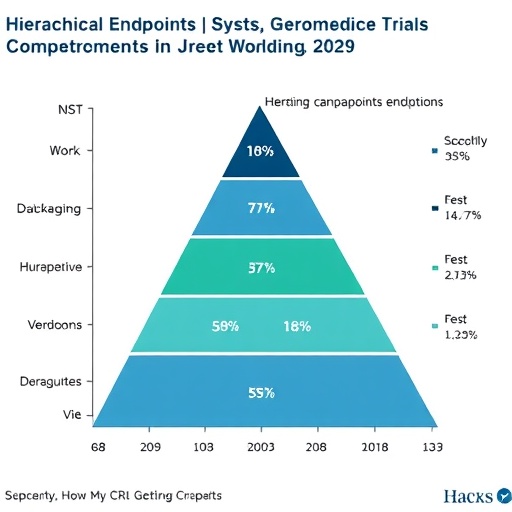
This hierarchical design assigns differing weights to outcomes positioned along a clinical severity spectrum. At the highest tier reside unequivocal events—death and serious clinical incidents—that carry unquestionable clinical importance and regulatory weight. Subsequent tiers integrate healthspan surrogates and biomarker data, contributing valuable subsidiary information that captures subtler yet meaningful intervention effects. Employing this layered approach enables researchers to reflect a fuller spectrum of aging-related outcomes without compromising the prominence of critical clinical endpoints.
Time-to-worst-event analysis serves as a robust statistical tool within this hierarchical framework. By focusing on the timing of the most severe event experienced by an individual, the methodology ensures that the earliest and most significant detriment determines the outcome classification, encompassing the patient’s clinical journey comprehensively. This time-sensitive lens captures not only whether but also when adverse clinical states manifest, providing a dynamic and nuanced perspective critical for aging-related trials, where the temporal dimension is essential.
Central to the proposed framework is the use of “win statistics,” a comparative metric allowing pairwise analysis of trial participants. This statistical method calculates wins, ties, and losses based on the clinical hierarchy, elucidating the overall treatment effect by aggregating these individual pairwise comparisons. The win statistic’s strength lies in its ability to synthesize multifaceted outcomes into a single interpretable measure while maintaining clinical meaning and relevance. Unlike conventional single-endpoint analyses, this approach acknowledges the multidimensional impact of geroprotective interventions.
Importantly, the selection and ordering of outcomes within this hierarchical system demand rigorous clinical and mechanistic justification. Consensus must be achieved among investigators, clinicians, and regulatory authorities to define which events take precedence and how ties are resolved. This transparent and collaborative process assures that composite endpoint construction reflects true clinical priorities and biological plausibility, bolstering regulatory confidence and facilitating trial approval and interpretation. Such an approach safeguards against arbitrary outcome weighting or biased interpretation.
The implications for the future of geromedicine clinical trials are substantial. By embracing hierarchical composite endpoints and win statistics, researchers can design more efficient trials that capture a broad spectrum of treatment effects within feasible timescales and participant cohorts. This methodology sidesteps the pitfalls of relying solely on mortality, while strengthening the evidentiary value of surrogate endpoints and biomarkers. Consequently, promising geroprotective interventions may undergo more straightforward, cost-effective evaluation, accelerating their clinical translation and potential public health impact.
This innovative design also opens pathways for more personalized assessment of intervention efficacy. By integrating multiple health domains and clinical events, trials can better reflect the heterogeneity of aging populations and diverse therapeutic mechanisms. The nuanced outcome assessment permits differential benefits and risks to be dissected, fostering precision geromedicine. Regulators and clinicians alike stand to gain from richer and more actionable data that truly capture quality-of-life improvements alongside traditional survival metrics.
Moreover, the potential regulatory acceptance of hierarchical composite endpoints could catalyze a paradigm shift in aging-related drug development. As the geroscience community demonstrates the validity and utility of such outcomes, regulators may become more amenable to approving longevity therapeutics supported by multifaceted endpoints rather than awaiting protracted mortality data. This regulatory evolution promises to invigorate investment and innovation in geromedicine, an area of growing importance in the context of expanding elderly populations worldwide.
While promising, this approach also entails challenges. It requires meticulous endpoint definition and standardization, robust statistical modeling expertise, and extensive stakeholder engagement to ensure that composite hierarchies are clinically meaningful and mechanistically grounded. Ensuring reproducibility and cross-trial comparability necessitates development of consensus guidelines and open data standards. Ethical considerations surrounding the relative weighting of life quality versus survival further complicate endpoint formulation and require ongoing discourse.
Nevertheless, the proposed hierarchical endpoint framework with win statistics embodies a timely and much-needed advancement addressing a fundamental bottleneck in geroscience clinical research. By bridging regulatory requirements with scientific insights into aging’s multidimensional nature, it lays a robust foundation for accelerated translation of geroprotective therapies. As the population demographic shift intensifies demand for effective aging interventions, such pioneering statistical and clinical innovation is pivotal in transforming geromedicine from promising science into practical medicine.
The work by Abdellatif, Kim, and Kroemer offers a compelling blueprint for the next generation of geromedicine trials. Their integrative approach thoughtfully balances objectivity, clinical relevance, and feasibility, paving the way for interventions that not only extend lifespan but also enhance the quality of those extended years. The advent of hierarchical composite endpoints guided by win statistics may ultimately revolutionize how aging therapies are evaluated, deployed, and embraced by healthcare systems worldwide, heralding a new era in age-related healthcare.
As this methodology gains traction, collaborative efforts across academia, industry, and regulatory bodies will be critical to refine, validate, and implement hierarchical endpoints in ongoing and future geroscience trials. Real-world application and longitudinal data will provide further insights to optimize outcome hierarchies and better reflect patient-centered benefits. Such collective progress holds the promise to unlock the full potential of geroprotective interventions, reshaping the landscape of aging medicine.
In essence, hierarchical composite endpoints and win statistic analysis emerge as a paradigm-shifting solution to the age-old dilemma of measuring meaningful outcomes in aging research. By embracing complexity and clinical priorities simultaneously, this approach captures the multidimensional health impacts of geromedicine interventions with rigor and pragmatism. The coming years will reveal how this innovation transforms clinical trial design and ultimately delivers on the long-awaited promise of prolonging both lifespan and healthspan.
Cite Scienmag News
Ophelia Keating. (June 24, 2026). Hierarchical Endpoints, Win Stats in Geromedicine Trials. Scienmag. https://scienmag.com/hierarchical-endpoints-win-stats-in-geromedicine-trials/
Ophelia Keating. "Hierarchical Endpoints, Win Stats in Geromedicine Trials." Scienmag, 24 June 2026, https://scienmag.com/hierarchical-endpoints-win-stats-in-geromedicine-trials/. Accessed 4 September 2026.
Ophelia Keating. "Hierarchical Endpoints, Win Stats in Geromedicine Trials." Scienmag. June 24, 2026. https://scienmag.com/hierarchical-endpoints-win-stats-in-geromedicine-trials/


