


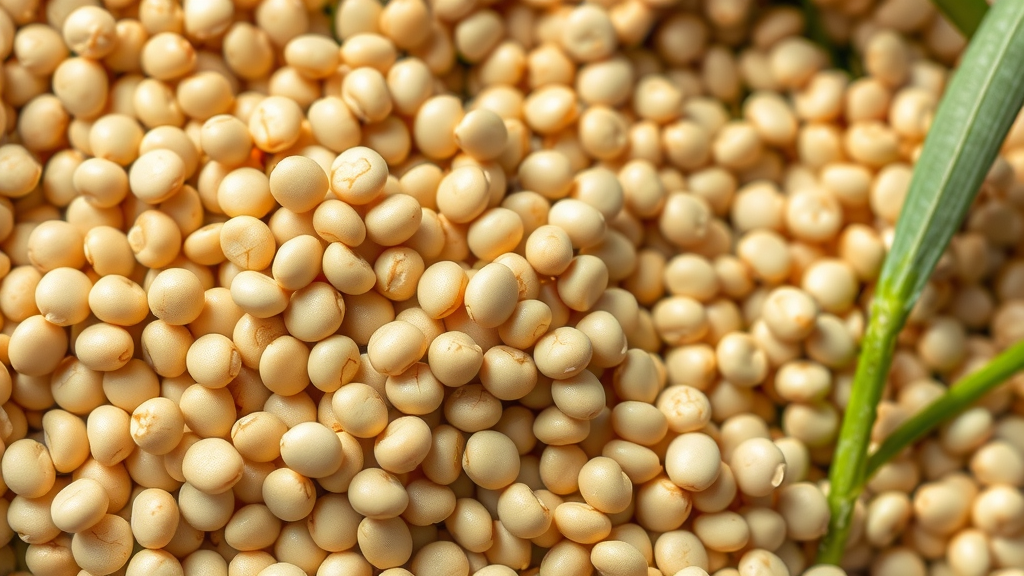
Deep inside the seeds and roots of Ethiopia’s mung bean plants, researchers have uncovered a collection of bacteria that may reshape how farmers protect and grow crops in some of the world’s toughest farming conditions. A new study published in International Microbiology describes twenty-eight endophytic bacterial strains isolated from the Shewa-type mung bean cultivar (Vigna radiata L.), several of which combine remarkable tolerance to heat, salt, acidity, and heavy metals with the ability to suppress the dangerous aflatoxin-producing fungus Aspergillus flavus and dramatically boost seedling growth in unrelated crops. The work, led by Endeshaw Abatenh, Misrak Kebede, and Ebrahim M. Abda at Addis Ababa Science and Technology University, offers one of the first systematic looks at the functional diversity of mung bean endophytes in Ethiopian agroecosystems, a gap that has persisted even as interest in microbiome-based agriculture accelerates worldwide.
The significance of the findings begins with the crop itself. Mung bean, originally domesticated in India, is now cultivated on roughly 7.3 million hectares globally, producing an estimated 6 million tons annually, with India, Myanmar, China, and Indonesia dominating the market. As a legume, it fixes atmospheric nitrogen through symbiosis with rhizobia, improving soil fertility and providing nitrogen inputs for subsequent crops, which makes it especially valuable in resource-limited farming systems. In Ethiopia, mung bean is an emerging crop concentrated in the North Shewa and South Wollo zones of the Amhara region and parts of Benishangul-Gumuz. Yet productivity remains stubbornly low: traditional varieties average about 0.5 megagrams per hectare, improved varieties can exceed 1.5 megagrams under optimal conditions, and the national average of 0.9 megagrams per hectare sits roughly 20 percent below the world average. Unpredictable rainfall, fungal pathogens, pests, poor agronomic practices, and limited access to quality inputs all conspire to hold yields back.
That combination of biotic and abiotic pressures is precisely where endophytic bacteria enter the picture. Endophytes are microorganisms that live within plant tissues without causing disease, and they can benefit their hosts in two broad ways. Direct growth promotion occurs through the production of phytohormones, improved nutrient mobilization, and the induction of systemic tolerance to environmental stress. Indirect protection comes through competitive exclusion of pathogens and the secretion of antimicrobial metabolites such as lipopeptides, polyketides, and volatile organic compounds. Fungal pathogens like Aspergillus flavus pose a particularly serious threat because they produce aflatoxins that contaminate seeds and endanger human and animal health, making biocontrol agents that can target this fungus a priority for both food security and food safety.
To find candidate microbes, the team grew fifty Shewa-type mung bean seeds in vertisol soil at Addis Ababa Science and Technology University without any chemical fertilizers, irrigating weekly over three months until the plants reached the fruiting stage. They then collected fifty healthy root systems and fifty seeds and subjected them to a rigorous surface sterilization protocol involving sequential ethanol and sodium hypochlorite treatments. Crucially, the researchers validated the sterilization using two complementary methods: imprinting sterilized tissues onto nutrient agar plates and spread-plating the final rinse water. Only samples showing zero visible microbial growth after overnight incubation were used, ensuring that the bacteria recovered genuinely lived inside the plant tissues rather than on their surfaces. Macerated tissues were serially diluted and spread across four different growth media to capture as broad a range of the culturable endophytic community as possible.
The isolation effort yielded twenty-eight distinct bacterial endophytes, with more recovered from seeds, sixteen, than from roots, twelve, a distribution suggesting that seed-associated microbiomes may facilitate vertical transmission of beneficial bacteria across generations. Eight representative isolates, selected for their morphological diversity and labeled GMB R1, R2, S1 through S6, were chosen for detailed characterization. Biochemical profiling revealed that three isolates were Gram-positive while five were Gram-negative, all produced catalase, and all fermented glucose. Stress tolerance screening then uncovered a striking spectrum of resilience. Four isolates, GMB R1, R2, S5, and S6, showed robust thermotolerance, maintaining optical densities above 0.58 at 45 degrees Celsius, while others were thermosensitive and grew poorly above 37 degrees. GMB R2 displayed exceptional pH flexibility, losing less than 15 percent growth across the full range from pH 4 to pH 10, and GMB S5 proved the strongest halotolerant strain, sustaining growth at sodium chloride concentrations as high as 12 percent.
Heavy metal tolerance added another dimension to the functional portrait. When grown in media amended with lead acetate at concentrations from 50 to 300 micrograms per milliliter, all isolates grew at the baseline level, but growth inhibition increased with concentration in a strain-dependent manner. GMB R1 stood out as the most lead-tolerant, maintaining strong optical density across the entire gradient, with GMB R2 and GMB S5 close behind. The authors suggest that mechanisms such as exopolysaccharide production, metal sequestration, and efflux systems likely underpin this tolerance, and they highlight the strains as candidates for colonizing plants in heavy metal-contaminated agricultural soils, a growing problem in many intensively farmed regions.
The biocontrol results may prove the most immediately compelling. In dual culture assays on malt extract agar, GMB R1 and GMB R2 significantly suppressed Aspergillus flavus, reducing fungal mycelial growth by 66.7 percent and 73.3 percent respectively, compared with control colony diameters of 4.5 millimeters after seven days. Enzymatic profiling revealed strain-specific specialization that could contribute to this antagonism: GMB R1 showed the highest cellulase activity with an enzymatic index of 2.5, GMB R2 the highest chitinase activity at 1.6, and GMB S5 the highest protease activity at 2.0. Chitinase is particularly relevant to antifungal action because chitin is a structural component of fungal cell walls. Siderophore production, which starves pathogens of iron, was detected in seven of the eight isolates, and six isolates produced ACC deaminase, an enzyme that lowers plant ethylene levels and helps seedlings withstand stress. Notably, the study found no trade-off between stress adaptation and biocontrol capacity, meaning the hardiest strains were also among the best fungal antagonists.
Molecular identification using 16S rRNA gene sequencing confirmed the taxonomy of three key isolates: GMB R1 matched Pseudomonas fluorescens with 99.87 percent similarity, GMB R2 showed 100 percent identity with Pantoea agglomerans, and GMB S5 aligned fully with Serratia marcescens. Sequencing failed for the remaining five isolates, likely due to suboptimal DNA template quality, so those strains are currently identified only by morphological and biochemical profiles, a limitation the authors candidly acknowledge. Partial 16S rRNA sequences for the three characterized strains have been deposited in NCBI GenBank under accession numbers OR974898.1, OR974899.1, and OR974900.1, and phylogenetic analysis using the maximum-likelihood method with 1,000 bootstrap replicates supported their taxonomic placements.
Perhaps the most eye-catching numbers come from the plant growth assays, conducted not on mung bean itself but on wheat (Triticum aestivum) and rapeseed (Brassica napus), demonstrating cross-host efficacy. In germination tests, GMB S6 increased wheat seedling radicle length to 12.4 centimeters and plumule extension to 18.9 centimeters, producing a vigor index of 3,067.4, roughly 140 percent above the uninoculated control. In pot trials over 90 days, GMB S5 produced wheat roots 77 percent longer than controls with an 85 percent increase in root dry weight. On rapeseed, GMB R1 extended radicle length by 149 percent and achieved a vigor index of 2,114.6, an 82 percent improvement, while GMB R2 generated the longest plumules at 9.1 centimeters and boosted rapeseed plumule length by 127 percent. Germination rates stayed high across all treatments, between 94 and 97 percent, indicating that the bacteria enhanced post-germinative development rather than germination itself. One isolate, GMB S2, actually inhibited plumule growth, a reminder that endophyte effects are strain- and context-dependent and that not every endophyte is benign or beneficial.
The authors are careful to frame the work as an exploratory baseline rather than a field-ready prescription. The sampling came from a single site and a single cultivar, physiological assays relied on optical density rather than viable cell counts, heavy metal testing used only lead as a model contaminant, and the inoculated bacteria were not re-isolated from wheat and rapeseed tissues to confirm true endophytic establishment. Field conditions, with competition from indigenous microbiota and environmental variability, will likely produce more modest gains than the laboratory and greenhouse results suggest. Still, the combination of thermotolerance, halotolerance, heavy metal resistance, siderophore production, lytic enzymes, ACC deaminase activity, antifungal activity against aflatoxigenic fungi, and cross-host growth promotion makes GMB R1, GMB R2, and GMB S5 stand out as promising multifunctional bioinoculants. Future work, including whole-genome sequencing, testing on the native mung bean host, consortium design, and multi-location randomized field trials, will determine whether these Ethiopian endophytes can translate their laboratory performance into real yields for marginal agroecosystems, where the need for sustainable alternatives to chemical inputs has never been greater.
Subject of Research: Stress-tolerant endophytic bacteria isolated from Ethiopian mung bean with biocontrol and plant growth-promoting traits
Article Title: Stress-resilient endophytic bacteria from mung bean (Vigna radiata L.) with biocontrol and plant growth-promoting potential
Article References: Abatenh, E., Kebede, M., & Abda, E. M. (2026). Stress-resilient endophytic bacteria from mung bean (Vigna radiata L.) with biocontrol and plant growth-promoting potential. International Microbiology. https://doi.org/10.1007/s10123-026-00897-y
Image Credits: AI Generated
DOI: 10.1007/s10123-026-00897-y
Keywords: endophytic bacteria, mung bean, Vigna radiata, biocontrol, Aspergillus flavus, plant growth promotion, Pseudomonas fluorescens, Pantoea agglomerans, Serratia marcescens, abiotic stress tolerance, aflatoxin, sustainable agriculture
Cite Scienmag News
Alan Morgan. (September 24, 2026). Hidden Microbes Inside Mung Bean Show Striking Stress Tolerance and Fungal-Fighting Power. Scienmag. https://scienmag.com/hidden-microbes-inside-mung-bean-show-striking-stress-tolerance-and-fungal-fighting-power/
Alan Morgan. "Hidden Microbes Inside Mung Bean Show Striking Stress Tolerance and Fungal-Fighting Power." Scienmag, 24 September 2026, https://scienmag.com/hidden-microbes-inside-mung-bean-show-striking-stress-tolerance-and-fungal-fighting-power/. Accessed 5 October 2026.
Alan Morgan. "Hidden Microbes Inside Mung Bean Show Striking Stress Tolerance and Fungal-Fighting Power." Scienmag. September 24, 2026. https://scienmag.com/hidden-microbes-inside-mung-bean-show-striking-stress-tolerance-and-fungal-fighting-power/


