


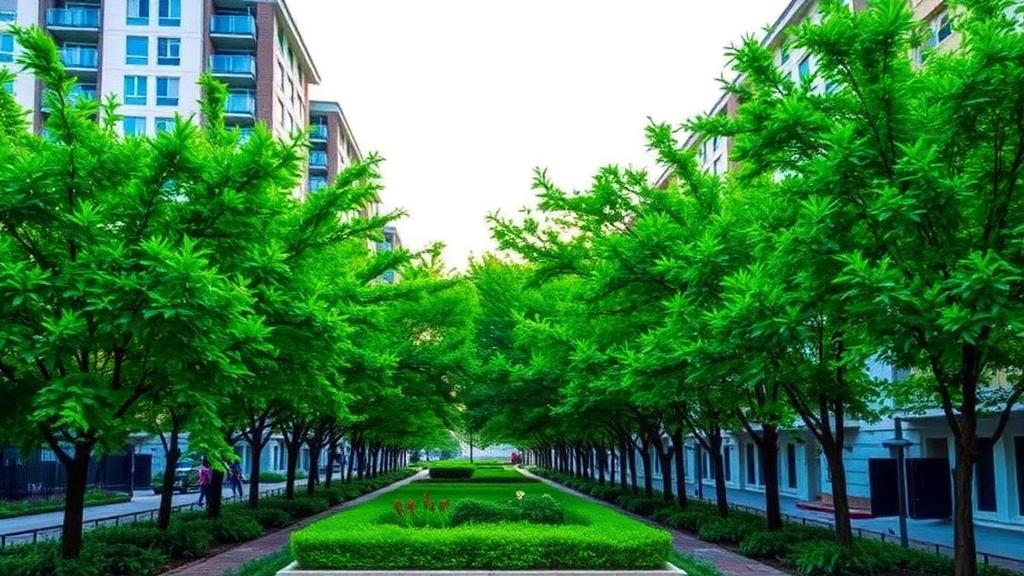
As cities around the world warm and grow greener at the same time, a multidisciplinary team of researchers from the University of Exeter and the UK Health Security Agency is urging public health decision-makers to think carefully about how urban green spaces, vector-borne diseases, and climate change interact. In a peer-reviewed article published in PLOS Climate, the group argues that the drive to expand parks, street trees, and other vegetation in towns and cities, while delivering well-documented benefits for physical and mental health, heat mitigation, and biodiversity, must also be weighed against the possibility that changing urban ecosystems could alter the conditions under which disease-carrying organisms such as mosquitoes and ticks thrive. The researchers frame this as a critical decision-making challenge for twenty-first century public health, one that requires balancing the substantial advantages of urban greening against risks that are still incompletely understood.
The central message of the work is not that green spaces are dangerous, but that their effects on vector-borne disease are complex, context-dependent, and likely to shift as the climate changes. Urban greening has become a cornerstone of city planning across the world, promoted for cooling overheated neighborhoods, absorbing stormwater, reducing air pollution, and improving residents’ wellbeing. At the same time, warming temperatures are expanding the geographic range and lengthening the active seasons of several arthropod vectors, including mosquitoes and ticks, in parts of the world where they were previously limited. The Exeter and UK Health Security Agency team contends that these two trends, greening and warming, do not operate in isolation, and that policies designed around one of them should not ignore the others.
Vector-borne diseases, in which pathogens are transmitted to humans by organisms such as mosquitoes, ticks, and other biting arthropods, already account for a large share of the global infectious disease burden. Climate change influences this burden in several ways. Temperature affects the survival, development rate, and biting behavior of vectors, as well as the replication rate of pathogens inside them. Altered rainfall and humidity patterns shape the availability of the standing water that mosquito larvae need and the moisture conditions that ticks require to survive. In urban environments, these relationships are further modified by the built landscape: drainage systems, heat islands, irrigated gardens, and green corridors all create distinctive microhabitats that can either support or suppress vector populations.
Urban green spaces sit at the heart of this interaction. Vegetated areas can provide habitat for wildlife hosts that feed ticks and mosquitoes, hold moisture that favors tick survival, and collect water in tree holes, plant containers, or poorly maintained features that mosquitoes can exploit for breeding. Yet the same spaces can also support natural enemies of vectors, reduce local temperatures in ways that push conditions outside the range some vectors tolerate, and be designed and maintained so that they harbor fewer breeding sites. The researchers emphasize that the net effect of any given green space on disease risk depends on its design, its management, the local vector species present, and the climatic trajectory of the region, which is precisely why they argue for careful, evidence-based consideration rather than blanket assumptions in either direction.
The team’s argument is framed as a call for critical decision-making. They encourage planners, public health authorities, and researchers to consider potential interactions between urban green spaces, vector-borne diseases, and climate change as part of efforts to maximize public health benefits and reduce risks. In practice, this means that when a city evaluates a proposal for new parks, tree planting schemes, wetlands, or green infrastructure, the assessment should extend beyond carbon, heat, and wellbeing outcomes to include the possible consequences for vector ecology. It also means that surveillance of mosquitoes and ticks in urban areas becomes more important as warming shifts which species can establish where, so that any emerging risks can be detected and managed early.
The multidisciplinary composition of the group is itself part of the argument. Questions about how a new urban wetland might change mosquito abundance, or how street trees might alter the microclimate experienced by ticks, cannot be answered by any single discipline. They require ecologists who understand vector and host populations, climatologists who can project local conditions, epidemiologists who can model disease transmission, and public health practitioners who know how interventions are delivered on the ground. By bringing these perspectives together, the researchers aim to move the conversation beyond a simple trade-off narrative, in which green space is either an unqualified good or a hidden hazard, toward a more nuanced framework in which design and management choices determine outcomes.
This nuance matters because the stakes are high on both sides of the ledger. The health benefits of urban vegetation are among the most consistently supported findings in environmental health research, encompassing reduced heat stress during heatwaves, opportunities for physical activity, stress reduction, and improved social cohesion. With heatwaves intensifying and cities warming faster than many surrounding areas because of the urban heat island effect, greening is widely regarded as an essential adaptation strategy. Discouraging greening out of an exaggerated fear of vectors could therefore cause real harm. Conversely, ignoring the ecological consequences of greening could allow conditions favorable to vectors to develop unnoticed, particularly in regions where warming makes previously marginal environments newly suitable for species capable of transmitting pathogens to humans.
The researchers also highlight that climate change acts as an amplifier of uncertainty in this system. As average temperatures rise and extreme weather becomes more frequent, the baseline conditions against which green space effects must be judged are themselves moving. A park that poses little vector concern under today’s climate might behave differently under warmer, wetter, or more drought-prone conditions decades from now. This dynamic character of the risk landscape is a key reason the team points to the twenty-first century as the period in which these decisions will be most consequential, and why they advocate that consideration of these interactions be built into planning processes now rather than retrofitted after problems emerge.
For the United Kingdom specifically, the involvement of the UK Health Security Agency reflects growing institutional attention to the health effects of a changing climate, including the monitoring of vector species whose ranges have been shifting northward in Europe. The agency’s participation alongside academic partners underscores the article’s premise that these questions belong squarely within the remit of public health protection, not only within environmental planning or nature conservation. The work was supported by workshop funding from the Environment and Sustainability Institute at the University of Exeter as part of its Think Tank programme, with additional support acknowledged through the Centre for Net Positive Health and Climate Solutions, funded by UKRI, and through an NIHR Population Health Career Scientist Award. The authors declared no competing interests.
Ultimately, the article in PLOS Climate, titled Balancing urban green space benefits and vector-borne disease risk under climate change: Critical decision-making for 21st century public health, is best read as a roadmap for integrated thinking rather than a warning against greening. Its authors ask decision-makers to hold three realities in view simultaneously: that urban green spaces deliver major and growing public health benefits that cities urgently need in a warming world; that climate change is altering the distribution and behavior of the organisms that transmit vector-borne diseases; and that the design, placement, and management of green infrastructure can influence which of those organisms find suitable habitat in towns and cities. Treating these as separate policy silos, the researchers suggest, risks either under-protecting communities from emerging disease risks or undermining the greening agenda on which urban health so heavily depends. The path they advocate is one of informed, multidisciplinary, and adaptive decision-making, in which surveillance, ecological understanding, and public health goals are combined so that greener cities can also be safer ones.
Subject of Research: Interactions between urban green spaces, vector-borne disease risk, and climate change in public health planning
Article Title: A multidisciplinary group of researchers from the University of Exeter and the UK Health Security Agency encourage consideration of potential interactions between urban green spaces, vector-borne diseases, and climate change
Article References: A multidisciplinary group of researchers from the University of Exeter and the UK Health Security Agency encourage consideration of potential interactions between urban green spaces, vector-borne diseases, and climate change. (n.d.). Original publication
Image Credits: AI Generated
DOI: Not provided
Keywords: urban green spaces, vector-borne diseases, climate change, public health, mosquitoes, ticks, urban planning, PLOS Climate, University of Exeter, UK Health Security Agency, disease surveillance, urban heat island
Cite Scienmag News
Gavin Prescott. (October 5, 2026). Urban Green Spaces May Shape Disease Risk in a Warming World, Researchers Warn. Scienmag. https://scienmag.com/urban-green-spaces-may-shape-disease-risk-in-a-warming-world-researchers-warn/
Gavin Prescott. "Urban Green Spaces May Shape Disease Risk in a Warming World, Researchers Warn." Scienmag, 5 October 2026, https://scienmag.com/urban-green-spaces-may-shape-disease-risk-in-a-warming-world-researchers-warn/. Accessed 5 October 2026.
Gavin Prescott. "Urban Green Spaces May Shape Disease Risk in a Warming World, Researchers Warn." Scienmag. October 5, 2026. https://scienmag.com/urban-green-spaces-may-shape-disease-risk-in-a-warming-world-researchers-warn/


