

Monday, July 27, 2026
Science
No Result
View All Result
  • Login
  • HOME
  • SCIENCE NEWS
  • CONTACT US
  • HOME
  • SCIENCE NEWS
  • CONTACT US
No Result
View All Result
Scienmag
No Result
View All Result
Home Science News Marine

Hidden Design Behind Sharks, Spines, and Diverse Swimming Styles

July 27, 2026
in Marine
Reading Time: 2 mins read
0
Hidden Design Behind Sharks, Spines, and Diverse Swimming Styles

Hidden Design Behind Sharks, Spines, and Diverse Swimming Styles

65
SHARES
587
VIEWS
Share on FacebookShare on Twitter
ADVERTISEMENT

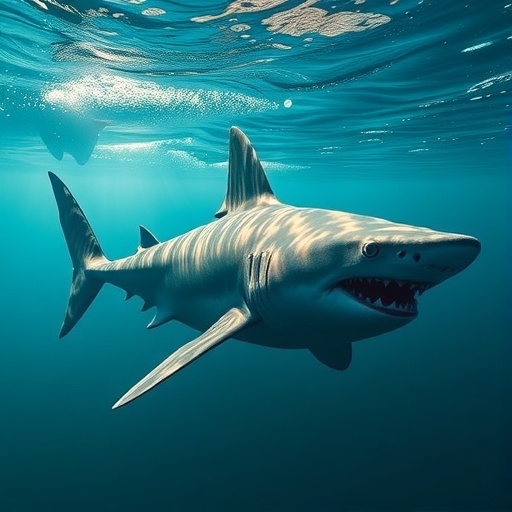
Fast-swimming sharks owe their performance not just to muscles and fins, but to a highly specialized internal blueprint embedded within their spines. A new study examines how cartilage-based vertebrae are reinforced and shaped to meet the mechanical demands of different swimming styles—turning the spine into a tuned energy-delivery system rather than a simple support structure.

Sharks have evolved for hundreds of millions of years, maintaining a skeleton built largely from cartilage. Yet their ability to sustain rapid bursts, efficient cruising, and precise maneuvers suggests that internal spinal architecture must strongly influence stiffness, flexibility, and hydrodynamic control.

Researchers from Florida Atlantic University, alongside NOAA Fisheries collaborators, investigated six shark species: great white, shortfin mako, porbeagle, common thresher, sand tiger, and basking shark. The team compared vertebrae from different regions along each body, focusing on how mineralized structures are distributed and how they vary among species.

To visualize these structures without damaging the specimens, the researchers used high-resolution micro-computed tomography (micro-CT) to generate detailed 3D reconstructions. This imaging approach allowed them to map tiny mineralized plates and branching networks inside cartilaginous vertebrae.

The results show a clear link between internal design and swimming strategy. In fast swimmers such as the great white, shortfin mako, and porbeagle, mineralized elements form arrangements that increase local stiffness, improving how forces are transferred toward the tail for propulsion at high speed.

By contrast, sand tiger sharks appear to prioritize flexibility. Their vertebral internal structure likely supports slower, more maneuverable movement in complex underwater settings where responsive turning matters more than maximum acceleration.

Common thresher sharks reveal another adaptation: they contain especially abundant mineralized plates and branching structures suited to enduring the intense side-to-side and overhead tail strikes used during hunting. Basking sharks, meanwhile, show dramatically reduced mineralization, consistent with the distinct mechanics of slow, energy-efficient filter feeding.

Along the spine, the distribution of mineralized structures changes, with the tail region showing the strongest mechanical emphasis—precisely where swimming forces peak. Closely related species also share similar internal vertebral patterns, while more distant lineages display more distinct architectural solutions.

Beyond advancing shark biology, the findings suggest design principles for engineering materials and systems that must combine lightweight flexibility with targeted stiffness. The study highlights how evolution can “optimize” internal micro-architecture to match performance requirements in real-world fluid environments.

Subject of Research: Animals
Article Title: Skeletons of swiftly swimming sharks: Three-dimensional analysis of lamniform vertebral morphology and mineral architecture
News Publication Date: 14-Jul-2026
Web References: https://onlinelibrary.wiley.com/doi/10.1111/joa.70209 , https://dx.doi.org/10.1111/joa.70209
References: Journal of Anatomy (DOI: 10.1111/joa.70209)
Image Credits: Florida Atlantic University

Keywords: sharks; vertebrae; micro-CT; biomechanics; mineral architecture; swimming locomotion; cartilage skeleton; locomotion mechanics; biomimetics

Tags: biomechanics of shark movementcartilage reinforcement in sharkscartilage-based spineevolutionary adaptation of shark skeletonshydrodynamic control in sharksinternal spine architecturemicro-CT imaging of sharksshark species comparisonshark swimming mechanicsshark swimming stylesshark vertebral structurevertebral mineralization in sharks
Share26Tweet16
Previous Post

Flaring Soil and Peat Emissions Dominated Canada’s Record 2023 Wildfire Season

Next Post

Albert Einstein World Science Award Winner Announces Breakthrough Research

Related Posts

Experienced Captains Face Conventional AI as Autonomous Navigation Charts a New Course
Marine

Experienced Captains Face Conventional AI as Autonomous Navigation Charts a New Course

July 27, 2026
Engineered Triangular Pockets Efficiently Extract Uranyl Complexes from Water
Marine

Engineered Triangular Pockets Efficiently Extract Uranyl Complexes from Water

July 27, 2026
Coral’s Swiss Army Knife: How Cilia Enable Multiple Functions
Marine

Coral’s Swiss Army Knife: How Cilia Enable Multiple Functions

July 27, 2026
Empty seashells evolved into new habitats 470 million years ago
Marine

Empty seashells evolved into new habitats 470 million years ago

July 27, 2026
Great Barrier Reef Hosts Its Own Diverse Microbiome
Marine

Great Barrier Reef Hosts Its Own Diverse Microbiome

July 27, 2026
Marine Heatwaves Extend and Intensify, New Study Finds More Extreme Reality
Marine

Marine Heatwaves Extend and Intensify, New Study Finds More Extreme Reality

July 27, 2026
Next Post
Albert Einstein World Science Award Winner Announces Breakthrough Research

Albert Einstein World Science Award Winner Announces Breakthrough Research

  • Mothers who receive childcare support from maternal grandparents show more

    Mothers who receive childcare support from maternal grandparents show more parental warmth, finds NTU Singapore study

    27656 shares
    Share 11059 Tweet 6912
  • University of Seville Breaks 120-Year-Old Mystery, Revises a Key Einstein Concept

    1061 shares
    Share 424 Tweet 265
  • Bee body mass, pathogens and local climate influence heat tolerance

    682 shares
    Share 273 Tweet 171
  • Researchers record first-ever images and data of a shark experiencing a boat strike

    546 shares
    Share 218 Tweet 137
  • Groundbreaking Clinical Trial Reveals Lubiprostone Enhances Kidney Function

    531 shares
    Share 212 Tweet 133
Science

Embark on a thrilling journey of discovery with Scienmag.com—your ultimate source for cutting-edge breakthroughs. Immerse yourself in a world where curiosity knows no limits and tomorrow’s possibilities become today’s reality!

RECENT NEWS

  • Survey Finds Native Americans Open to Indigenous Plant-Based Diets for Type 2 Diabetes
  • Combining phenology and temperature data to gauge overwintering wheat seedling health
  • Climate and land shifts reshape pastoral livelihoods across Kenya
  • Carnegie Mellon Study Finds Rideshare Launches Raise Regional GDP and Flex Jobs

Categories

  • Agriculture
  • Anthropology
  • Archaeology
  • Athmospheric
  • Biology
  • Biotechnology
  • Blog
  • Bussines
  • Cancer
  • Chemistry
  • Climate
  • Earth Science
  • Editorial Policy
  • Marine
  • Mathematics
  • Medicine
  • Pediatry
  • Policy
  • Psychology & Psychiatry
  • Science Education
  • Social Science
  • Space
  • Technology and Engineering

Subscribe to Blog via Email

Success! An email was just sent to confirm your subscription. Please find the email now and click 'Confirm Follow' to start subscribing.

Join 5,146 other subscribers

© 2025 Scienmag - Science Magazine

Welcome Back!

Login to your account below

Forgotten Password?

Retrieve your password

Please enter your username or email address to reset your password.

Log In
No Result
View All Result
  • HOME
  • SCIENCE NEWS
  • CONTACT US

© 2025 Scienmag - Science Magazine
