


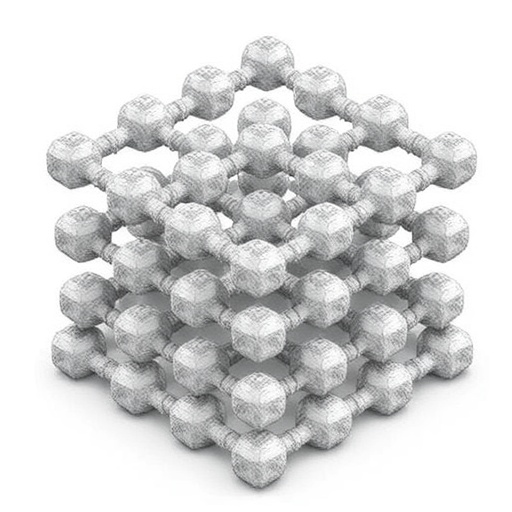
In a groundbreaking advancement poised to revolutionize environmental remediation and catalytic science, researchers have unveiled a heterointerface-engineered bimetallic catalyst system constructed from zinc oxide (ZnO) and copper oxide (CuO). This innovative material demonstrates unprecedented efficacy in pollutant-directed conversion processes while simultaneously enabling in situ catalyst regeneration—a dual functionality that holds tremendous promise for sustainable chemical technologies. The study, conducted by Zhang et al., and recently published in Nature Communications, marks a significant leap forward in the strategic design of catalysts at the atomic interface, leveraging synergistic interactions between metal oxides to tackle persistent environmental contaminants efficiently.
At the heart of this research lies the meticulous engineering of heterointerfaces between ZnO and CuO, which serve as active bimetallic sites facilitating cooperative catalytic activity. Traditional catalysts often suffer from rapid deactivation due to poisoning or structural degradation, particularly when exposed to harsh pollutant-laden environments. However, this novel ZnO/CuO system transcends such limitations by orchestrating molecular-level transformations that not only convert noxious substances into benign derivatives but also initiate self-regeneration mechanisms, effectively extending catalyst lifespan and operational stability under continuous use.
The ingenuity of the ZnO/CuO catalyst resides in the intimate contact and electronic communication across the heterointerface, which modulates the charge distribution and oxygen vacancy formation essential for catalytic function. The study reveals that the interfacial engineering enhances adsorption and activation of pollutant molecules, lowering energy barriers in key reaction pathways. This engineered microenvironment induces favorable catalytic kinetics, enabling selective conversion even under mild operational conditions. Such an approach exemplifies a paradigm shift from monometallic systems towards complex, heterostructured catalysts tailored for precise environmental applications.
Comprehensive characterization confirms that the heterointerfaces facilitate electron transfer processes crucial for catalytic activity. Advanced spectroscopic techniques highlight dynamic charge redistribution that stabilizes reactive intermediates, optimizing turnover rates and selectivity. Moreover, the presence of bimetallic sites fosters synergistic redox cycles between Zn and Cu centers, ensuring continuous catalyst performance. This intricate balance of electronic and structural properties elucidates how heterointerface engineering not only enhances catalytic efficiency but also mitigates typical degradation pathways.
One of the most remarkable features of this catalyst is its intrinsic ability to undergo in situ regeneration during pollutant conversion reactions. The researchers demonstrated that the ZnO/CuO bimetallic sites enable self-healing by regenerating active oxygen vacancies as pollutants interact with the catalyst surface. This process effectively restores catalytic activity without external intervention or harsh treatment. The regenerative mechanism was monitored through operando analyses, capturing real-time structural and electronic evolution that corroborates the dynamic rejuvenation of active sites.
The pollutant-directed conversion reactions exhibit high selectivity and conversion efficiencies for a spectrum of environmental contaminants, ranging from volatile organic compounds to persistent toxicants. The catalyst’s adaptability is attributed to the tunable nature of the ZnO/CuO interface, which can be fine-tuned to target specific pollutants by modulating the oxide composition and interfacial morphology. This versatility challenges prevailing limitations in heterogeneous catalysis where catalyst functionality is often restricted to narrow substrate scopes.
In practical applications, the catalyst’s stability and reusability were rigorously tested through extended catalytic cycles, demonstrating negligible loss in activity over time. This durability underlines the material’s potential for real-world deployment in industrial pollution control and chemical waste treatment. The sustainable aspect is further accentuated by eliminating frequent catalyst replacement or chemical regeneration protocols, thereby reducing operational costs and environmental footprint.
The implications of this research extend beyond environmental catalysis; they signify a broader potential for heterointerface-engineered materials in energy conversion, chemical synthesis, and nanotechnology. By harnessing interfacial phenomena, scientists can design next-generation catalysts with programmable properties and enhanced lifetimes, moving toward more efficient and eco-friendly chemical processes. The success of the ZnO/CuO system offers a blueprint for exploiting heterostructures in multifunctional catalyst design.
The synthesis protocol employed for fabricating the ZnO/CuO heterostructures involved precise control of nucleation and growth to achieve optimal interfacial density and uniformity. This level of control is critical, as irregular interfaces could result in diminished electronic interaction and catalytic performance. The study integrates state-of-the-art nanofabrication techniques with rational design principles, showcasing how targeted material engineering is indispensable for developing functional catalysts with tailored properties.
Moreover, the fundamental insights into surface chemistry provided by this work contribute to a deeper understanding of catalytic mechanisms at nanoscale interfaces. By correlating structural and electronic features with observed reactant behaviors, the authors elucidate how the dynamic interplay between bimetallic centers governs reaction pathways. Such knowledge can inform the design of catalysts for an array of applications beyond pollutant degradation, including renewable energy technologies and fine chemical production.
This research also underscores the potential of combining abundant and non-precious metals to create cost-effective catalytic systems. Unlike noble-metal catalysts, which are expensive and scarce, ZnO and CuO offer a more sustainable alternative without compromising performance. The success of this strategy aligns with global efforts to develop green technologies that are economically viable and environmentally responsible, setting new standards in material design for catalysis.
Notably, the real-time monitoring and advanced characterization techniques deployed throughout the study provide a comprehensive picture of catalyst behavior under operational conditions, bridging the gap between laboratory studies and industrial applications. Techniques such as in situ X-ray absorption near edge structure (XANES) and electron paramagnetic resonance (EPR) spectroscopy elucidate the evolving electronic states, offering valuable perspectives on catalyst dynamics.
The multidisciplinary approach integrating materials science, surface chemistry, and environmental engineering exemplifies the future of catalyst research. Such convergence enables tackling complex problems like pollution remediation with a holistic strategy, maximizing catalytic efficiency while promoting sustainability. The ZnO/CuO heterointerface system stands as a testament to the transformative power of interface engineering in addressing critical environmental challenges.
Looking forward, further exploration of the heterointerface could unlock additional functionalities, such as photo- or electrocatalytic activity, enhancing the catalyst’s utility. The modularity of the ZnO/CuO platform invites integration with complementary materials and supports for multifunctional applications, potentially ushering in a new class of smart catalysts with adaptive properties.
In conclusion, the heterointerface-engineered ZnO/CuO bimetallic catalyst system developed by Zhang and colleagues embodies a major stride toward sustainable and efficient pollutant conversion technologies. By leveraging atomic-level interactions and novel regeneration capabilities, this innovation paves the way for durable, high-performance catalysts that meet the demands of modern environmental challenges. The study not only provides a robust model for future catalyst design but also ignites optimism for cleaner, greener chemical processes worldwide.
Cite Scienmag News
Russell Cooper. (April 9, 2026). Heterointerface ZnO/CuO Boosts Pollutant Conversion, Self-Regenerates. Scienmag. https://scienmag.com/heterointerface-zno-cuo-boosts-pollutant-conversion-self-regenerates/
Russell Cooper. "Heterointerface ZnO/CuO Boosts Pollutant Conversion, Self-Regenerates." Scienmag, 9 April 2026, https://scienmag.com/heterointerface-zno-cuo-boosts-pollutant-conversion-self-regenerates/. Accessed 4 September 2026.
Russell Cooper. "Heterointerface ZnO/CuO Boosts Pollutant Conversion, Self-Regenerates." Scienmag. April 9, 2026. https://scienmag.com/heterointerface-zno-cuo-boosts-pollutant-conversion-self-regenerates/


