


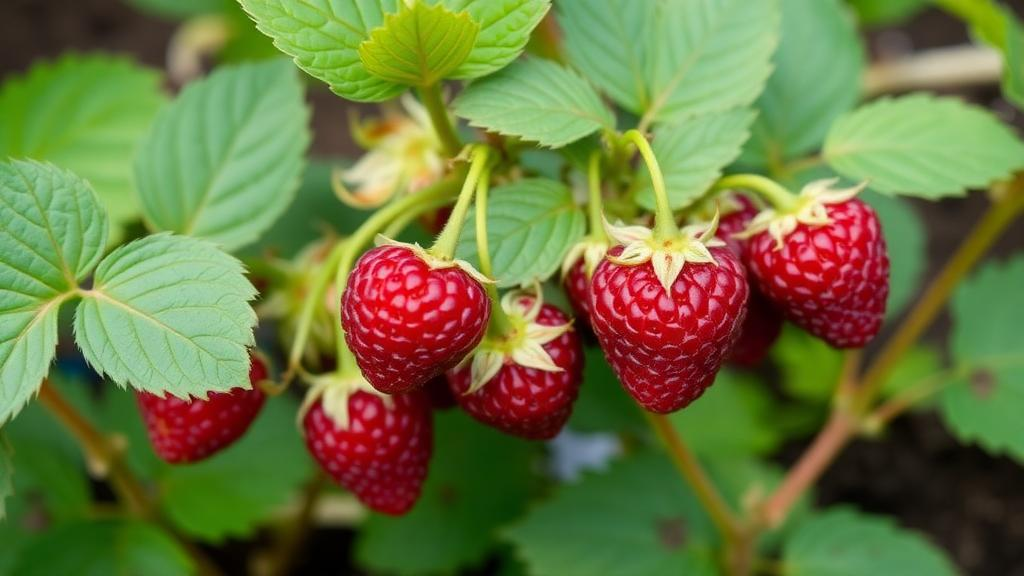
Homegrown raspberries carry a wholesome reputation that few garden fruits can match, but a new study from Poland asks a more uncomfortable question: what else, besides vitamins and antioxidants, is hiding inside those ruby-red drupelets? A research team at the University of Opole set out to measure seven trace metals—copper, cadmium, lead, manganese, zinc, nickel, and iron—in matched samples of soil, leaves, and fruit collected from red raspberry plants (Rubus idaeus) growing in private home gardens. The work, published in Environmental Monitoring and Assessment, offers one of the more methodically cautious looks yet at how metals move through the soil–plant–fruit pathway in the informal, unregulated setting of the backyard garden, where nobody tests the dirt before the harvest.
The motivation is straightforward. Red raspberry fruits are eaten fresh, frozen, and preserved across Europe, while raspberry leaves are dried for herbal teas and traditional preparations. If trace metals are present in the plant, they enter the food chain through two routes at once: the fruit that families eat and the leaves that herbalists steep. Home gardens are a particular blind spot in environmental monitoring. Allotment and garden soils in cities have long been known to accumulate metals from traffic emissions, industrial fallout, historical land use, and gardening practices themselves, yet produce from these plots rarely passes through any formal food-safety screening before it reaches the table.
Technically, the study relied on flame atomic absorption spectrometry, a workhorse analytical technique in which a digested sample is drawn into a flame and the light absorbed by atoms of the target element is measured against calibrated standards. Before measurement, soil, leaf, and fruit samples underwent microwave-assisted digestion, a closed-vessel method that uses concentrated acids and controlled heating to break down organic and mineral matrices completely, releasing metals into solution. This pairing is standard for trace-metal work, but its detection limits matter enormously for elements like cadmium, lead, and nickel, which occur at very low concentrations in uncontaminated plant tissue. Indeed, several cadmium, lead, and nickel results fell below the method quantification limit, meaning the instrument could detect something was there but could not reliably quantify how much.
That censoring problem shaped the entire statistical strategy. Rather than discarding or naively imputing the below-limit values, the researchers paired observations by site and treated the three matrices—soil, leaves, and fruit—as matched samples. Matrix differences were evaluated with Friedman tests, a non-parametric method for repeated measures that ranks values within each site, supplemented by exact paired Wilcoxon tests for focused comparisons. Detection frequencies, meaning how often each element was actually quantified in each matrix, were analysed separately using methods suited to paired proportions. Kendall’s W, a measure of agreement among rankings, ranged from 0.195 to 0.854 across elements, indicating significant matrix effects for all seven metals. In plain terms, the concentration patterns in soil, leaves, and fruit are genuinely different from one another, not statistical noise.
For the four elements that were consistently quantifiable—copper, manganese, zinc, and iron—the middle-bound medians followed a clear and biologically sensible hierarchy: soil greater than leaves greater than fruit. This descending gradient reflects how vascular plants handle essential and non-essential metals alike. Roots encounter the highest concentrations and act as a partial barrier; leaves, connected to the transpiration stream, accumulate intermediate levels; and fruits, which are physiologically sinks for sugars rather than minerals, generally retain the least. The pattern is reassuring in one sense, because it shows the raspberry plant’s own filtration architecture at work, but it also underscores that the fruit’s relative cleanliness depends on the barrier functioning as expected at each site.
One of the study’s most sobering findings is what did not appear: no targeted soil–plant concentration correlation survived correction for the false discovery rate. After applying the Benjamini–Hochberg procedure to control the expected proportion of false positives across the many correlation tests, every apparent relationship between how much metal sat in the soil and how much ended up in the plant dissolved. This is not a contradiction of plant physiology but a reminder of its complexity. Metal uptake is governed by soil pH, organic matter, cation exchange capacity, rhizosphere chemistry, and plant genotype simultaneously, so a simple linear correlation between total soil concentration and plant concentration is often too blunt an instrument to detect real transfer, especially in small heterogeneous datasets.
There was one exception worth highlighting, and it concerned acidity rather than abundance. Soil pH was negatively associated with the fruit bioaccumulation factor for manganese, with a Spearman correlation coefficient of −0.724 and a corrected q-value of 0.004. In other words, the more acidic the soil, the larger the proportion of manganese that made it from soil into the fruit. This is textbook soil chemistry: metal cations become more soluble and more bioavailable as pH drops, because hydrogen ions displace metals from binding sites on clay and organic matter. Manganese, an essential micronutrient that plants actively take up, is particularly sensitive to this effect. No such pH association was found for the other tested bioaccumulation or translocation factors, making manganese the standout case where a single, easily measured soil property predicts fruit contamination risk.
To translate the numbers into something a berry-eater can grasp, the authors estimated dietary exposure from a 100-gram portion of fresh raspberries, roughly a generous handful. Using lower-, middle-, and upper-bound scenarios to handle the censored data, the estimates ranged from 0 to 2.4 to 4.9 micrograms of cadmium and from 0 to 13.1 to 26.3 micrograms of lead per portion. The authors are explicit that these are screening scenarios, not compliance results. Moisture content had to be assumed for the fresh-weight conversion, and more than half of the fruit cadmium and lead observations were censored below the quantification limit, which is precisely why the three-tier bounding approach was used. The upper-bound figures represent a worst case; the true values for most gardens likely sit somewhere in between, and the estimates cannot be compared directly to regulatory maximum levels without that caveat.
The broader lesson extends well beyond raspberries. The study demonstrates a template for handling messy environmental data honestly: paired sampling, non-parametric statistics, separate treatment of censored values, and multiple-testing correction all appear because the underlying data demand them. It also highlights a gap in public health communication. Gardeners who would never buy produce from an unverified source happily cultivate it in soil of unknown history. Simple, low-cost interventions—testing garden soil pH and metal content, adding organic matter to immobilize metals, and liming acidic soils—could meaningfully reduce uptake, with the manganese–pH link suggesting that acidity management is a particularly concrete lever for this crop.
For now, the message is one of calibrated vigilance rather than alarm. The essential metals copper, manganese, zinc, and iron behaved exactly as plant physiology predicts, concentrating in soil and diminishing through leaf to fruit, and the handful-sized portions of homegrown berries carried only screening-level traces of the toxic elements cadmium and lead. But the absence of significant soil–fruit correlations means that clean-looking soil offers no guarantee, and the strong pH effect on manganese shows that garden chemistry can quietly shift what ends up on the dessert plate. As urban gardening continues its post-pandemic boom, studies like this one argue that the most important tool in the home garden may not be the trowel but the soil test kit.
Subject of Research: Trace metal accumulation and soil-to-plant transfer in red raspberries cultivated in Polish home gardens
Article Title: Trace metal concentrations in soil, leaves, and fruits of red raspberry (Rubus idaeus) cultivated in home gardens
Article References: Dulik, A., Rojek, J., Monastyrska, A., Hałdys, F., Tomecka, M., Jamuła, M., Świsłowski, P., & Rajfur, M. (2026). Trace metal concentrations in soil, leaves, and fruits of red raspberry (Rubus idaeus) cultivated in home gardens. Environmental Monitoring and Assessment, 198(10), Article 1111. https://doi.org/10.1007/s10661-026-15962-2
Image Credits: AI Generated
DOI: 10.1007/s10661-026-15962-2
Keywords: red raspberry, trace metals, heavy metals, soil contamination, home gardens, cadmium, lead, manganese, soil pH, bioaccumulation, food safety, atomic absorption spectrometry
Cite Scienmag News
Violet Maxwell. (October 4, 2026). Heavy Metals in Homegrown Raspberries: What Polish Garden Soils Reveal. Scienmag. https://scienmag.com/heavy-metals-in-homegrown-raspberries-what-polish-garden-soils-reveal/
Violet Maxwell. "Heavy Metals in Homegrown Raspberries: What Polish Garden Soils Reveal." Scienmag, 4 October 2026, https://scienmag.com/heavy-metals-in-homegrown-raspberries-what-polish-garden-soils-reveal/. Accessed 4 October 2026.
Violet Maxwell. "Heavy Metals in Homegrown Raspberries: What Polish Garden Soils Reveal." Scienmag. October 4, 2026. https://scienmag.com/heavy-metals-in-homegrown-raspberries-what-polish-garden-soils-reveal/


