


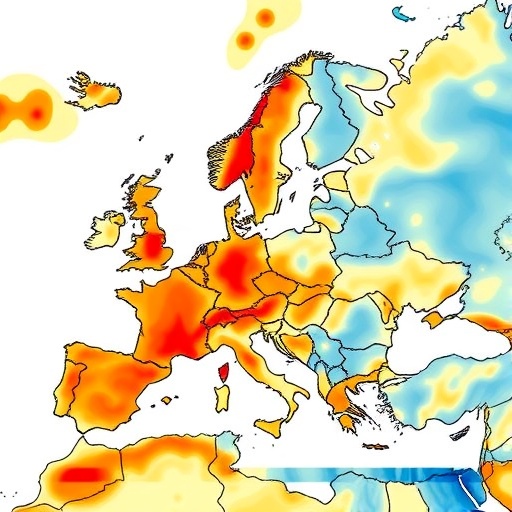
A groundbreaking study published recently in the European Respiratory Journal reveals a troubling correlation between nighttime heatwaves and an increased prevalence of obstructive sleep apnoea (OSA) across Europe. As global temperatures rise and heatwaves become more frequent and intense, understanding how these climatic shifts impact human health emerges as a crucial priority. This extensive observational study, encompassing data from over 67,500 individuals spanning 17 European countries, probes the insidious effects of heat on sleep quality and respiratory health, specifically addressing the amplification of OSA severity during warm summer nights.
Obstructive sleep apnoea is a pervasive sleep disorder characterized by repetitive interruptions in breathing due to the collapse of the upper airway during sleep. These interruptions provoke loud snoring, fragmented sleep, and intermittent hypoxia, which cumulatively elevate the risk for cardiovascular diseases, including hypertension, stroke, and heart failure, as well as metabolic conditions like type 2 diabetes. Despite its debilitating effects on quality of life and long-term health outcomes, OSA remains significantly underdiagnosed and often inadequately managed, a public health challenge exacerbated by environmental factors such as heat.
The multinational research effort, spearheaded by Dr. Lucía Pinilla from Flinders University’s Adelaide Institute for Sleep Health, leveraged advanced under-mattress sleep sensor technology to monitor patterns among a large, demographically diverse cohort. The participants’ sleep metrics—including apnoea events, snoring intensity, and heart rate variability—were meticulously recorded and correlated with localized nighttime temperature data over five consecutive European summers from early 2020 to late 2024. This innovative approach provided granular insights into the interplay between nocturnal heat exposure and respiratory disturbances.
Analyses revealed a striking 13% surge in the incidence of moderate-to-severe OSA episodes at the height of heatwave periods. More importantly, the data demonstrated a linear relationship wherein each 1°C increase in nighttime temperature during these heat events corresponded to a 1.1% rise in OSA prevalence. These findings underscore a direct physiological impact of elevated temperatures on respiratory function during sleep, a relationship further potentiated when coupled with high ambient humidity, highlighting the multifaceted climatic pressures on vulnerable populations.
From a pathophysiological perspective, Dr. Pinilla and her colleagues suggest that elevated nocturnal temperatures contribute to lighter and more fragmented sleep architecture, disrupting the body’s natural restorative processes. Heat-induced peripheral vasodilation may cause fluid redistribution toward the neck, aggravating upper airway collapsibility and consequently intensifying obstructive events. Moreover, the discomfort associated with heat often leads to reduced compliance with continuous positive airway pressure (CPAP) therapy, a cornerstone treatment for OSA, thereby compounding respiratory risks during heatwaves.
Co-author Dr. Bastien Lechat emphasized that dehydration, a common consequence of hot nights, could exacerbate airway inflammation and mucosal dryness, potentially increasing upper airway resistance. There is also speculation regarding the thermoregulatory challenges imposed by CPAP machines, which might deter their use during periods of elevated temperature. These behavioral and physiological concerns highlight the necessity of tailored management strategies to mitigate heat-related exacerbations of sleep-disordered breathing.
The study’s scope extends implications far beyond Europe, suggesting that regions with consistently higher baseline temperatures or poorer infrastructure for climate control—such as air conditioning—may witness even more pronounced negative effects on sleep and respiratory health. This global perspective is critical, as climate change-driven increases in heatwave frequency are projected to affect billions worldwide, disproportionately impacting those with preexisting sleep disorders and chronic illnesses.
Looking forward, the research team plans to delve deeper into the mechanistic pathways linking heat exposure and sleep-disordered breathing severity. Investigations will explore how nocturnal heat impacts ventilatory control and upper airway dynamics, potentially identifying biomarkers predictive of heat-induced OSA exacerbations. Additionally, trials examining the efficacy of cooling interventions—such as fans, air conditioning, or advanced CPAP humidification systems—are anticipated to inform clinical guidelines and public health policies aimed at safeguarding sleep quality under challenging environmental conditions.
Senior author Professor Danny Eckert stressed that the convergence of climate change and sleep health presents a pressing public health imperative. “The intersection between rising global temperatures and sleep apnoea severity demands urgent attention,” he stated. This is particularly poignant given sleep apnoea’s association with increased morbidity and mortality. Enhanced diagnostic efforts, expanded access to evidence-based treatments, and heightened public education are pivotal as we confront an era where heatwaves become a predictable and destabilizing influence on respiratory health.
Echoing these sentiments, Professor Sofia Schiza, a noted expert in sleep-disordered breathing unaffiliated with the study, highlighted the broader relevance of the findings. She emphasized the need for practical adaptations during hot nights, such as using fans and ensuring adequate hydration, especially for individuals known to have sleep disturbances. The study underscores the likelihood that climate change will substantially reshape the epidemiology of OSA, prompting clinicians and policymakers to integrate environmental considerations into chronic disease management frameworks.
Taken together, this compelling body of evidence necessitates a multidisciplinary approach that bridges pulmonology, sleep medicine, environmental science, and public health. As climate change accelerates, sleep apnoea and other chronic conditions exacerbated by heatwaves must be prioritized in health system preparedness, emphasizing adaptive strategies that preserve sleep quality and respiratory function even in an increasingly warm world. The integration of wearable technology, large-scale epidemiological surveillance, and environmental monitoring exemplifies the innovative methodologies essential for tackling these emerging health challenges.
News Publication Date: 29-Oct-2025
Web References:
10.1183/13993003.01631-2025
References:
European Respiratory Journal, 2025; Observational study on OSA and heatwaves
Cite Scienmag News
Russell Cooper. (October 29, 2025). Heatwaves Drive Surge in Sleep Apnoea Cases Across Europe, Study Reveals. Scienmag. https://scienmag.com/heatwaves-drive-surge-in-sleep-apnoea-cases-across-europe-study-reveals/
Russell Cooper. "Heatwaves Drive Surge in Sleep Apnoea Cases Across Europe, Study Reveals." Scienmag, 29 October 2025, https://scienmag.com/heatwaves-drive-surge-in-sleep-apnoea-cases-across-europe-study-reveals/. Accessed 4 September 2026.
Russell Cooper. "Heatwaves Drive Surge in Sleep Apnoea Cases Across Europe, Study Reveals." Scienmag. October 29, 2025. https://scienmag.com/heatwaves-drive-surge-in-sleep-apnoea-cases-across-europe-study-reveals/


