


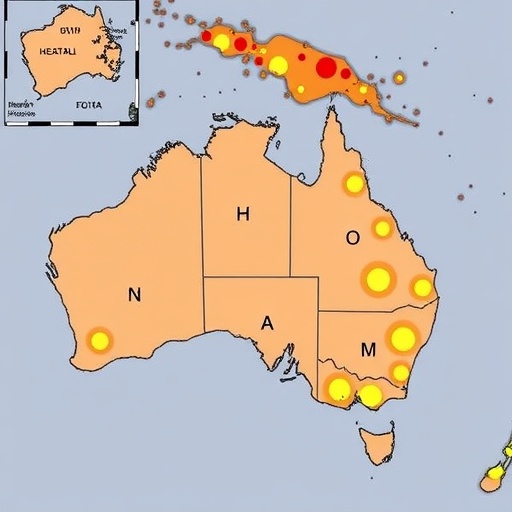
In an era defined by climate change and extreme weather patterns, new research shedding light on the health implications of heatwaves emerges as a timely focal point for public health discourse. A comprehensive retrospective study conducted in Queensland, Australia, over a decade-long span reveals a troubling correlation between rising temperatures due to heatwaves and increased emergency department visits. As the global temperature rises and heatwaves become more frequent and intense, understanding the implications for public health systems becomes critical.
The alarming findings of this study underscore the urgency for healthcare systems to adapt to the increasing burden of heat-related illnesses, especially in vulnerable populations. Researchers, led by Franklin et al., synthesized data collected over ten years, analyzing emergency department (ED) admissions that correlated with varying temperatures during heatwave events. The study offers detailed insight into the severity and frequency of heat-related cases, illustrating an undeniable pattern that could have profound implications for future healthcare resource planning.
The study meticulously categorized cases of heat exhaustion, dehydration, and other heat-related disorders. By leveraging data from Queensland’s health service records, the researchers could map out trends that emerge over time, identifying specific demographic groups most affected. Such insights highlight the intersection of climate change, public health policy, and service delivery, emphasizing the necessity for targeted interventions and preparedness strategies.
Moreover, the research goes beyond mere statistics. It examines ensuring systemic responses from healthcare services when faced with the pressures of increased patient loads during extreme weather events. The findings suggest that EDs in Queensland have often been overwhelmed during heatwaves, reflecting accurate trends where high ambient temperatures lead to a definitive surge in illnesses—particularly among the elderly and those with pre-existing health conditions, who are disproportionately affected by extreme heat.
One of the notable aspects of this investigation is how it contextualizes heat-related illness within broader climate health narratives. This aligns with global efforts to illuminate the pressing public health challenges posed by climate change. As nations grapple with sustainable strategies for health care and citizen welfare, the findings of this study serve as a crucial reminder to integrate climate resilience into health frameworks.
As this Queensland study demonstrates, the implications of rising temperatures can create a ripple effect that challenges existing health policies and resource allocations. With emergency departments at the frontline, understanding how to effectively manage increased patient inflow becomes vital. Health care systems may need to rethink triage protocols, staffing allocations, and resources to cater effectively during peak incidents like heatwaves.
Furthermore, public awareness and educational campaigns regarding the risks associated with heatwaves are paramount. The researchers advocate for new approaches that motivate communities to recognize the signs of heat-related illnesses, promoting preventive measures and encouraging timely medical intervention before conditions escalate to the point of requiring emergency care.
The evidence laid out by Franklin et al. also rallies support for reducing the prevalence of urban heat islands. By incorporating green spaces into urban planning, cities can mitigate some adverse effects of extreme temperatures. These health and environmental strategies represent multiple layers of action required to address the impending climate crisis while safeguarding vulnerable populations from the healthcare burdens posed by heatwaves.
As part of the ongoing discourse around health equity, this research positions heat-related illness as not just a medical concern but also a societal one, emphasizing that policymakers must consider socio-economic factors when responding to climate-driven health issues. The disparities here are evident; lower-income communities often lack the resources necessary to cope with extreme heat effectively, necessitating informed, equitable policy interventions.
In conclusion, the study presents a clarion call for action. It demands that stakeholders—from healthcare providers to policymakers—consider heatwaves as a significant public health challenge requiring a multifaceted response. As the world witnesses an uptick in heatwave occurrences, the repercussions on health systems must catalyze a re-evaluation of preparedness tactics.
The implications of this research extend past Queensland, serving as a harbinger for regions worldwide grappling with the dual consequences of climate change and health care management. As this pressing issue gains momentum, discussions will likely continue to evolve, positioning these findings at the forefront of climate health conversations for the years to come.
By highlighting the intricate relationship between climate patterns and public health, this study undoubtedly serves as an essential resource for future research across a myriad of interdisciplinary fields. The call for immediate action is loud and clear—gaining an in-depth understanding of the health ramifications of our changing environment is no longer optional; it is an imperative.
Franklin, R.C., Peden, A.E., King, J.C. et al. Heatwaves and emergency department utilisation in Queensland: a 10-year retrospective study.
BMC Health Serv Res (2025). https://doi.org/10.1186/s12913-025-13777-4
Cite Scienmag News
Ophelia Keating. (November 26, 2025). Heatwaves Boost Emergency Visits in Queensland: 10-Year Analysis. Scienmag. https://scienmag.com/heatwaves-boost-emergency-visits-in-queensland-10-year-analysis/
Ophelia Keating. "Heatwaves Boost Emergency Visits in Queensland: 10-Year Analysis." Scienmag, 26 November 2025, https://scienmag.com/heatwaves-boost-emergency-visits-in-queensland-10-year-analysis/. Accessed 3 September 2026.
Ophelia Keating. "Heatwaves Boost Emergency Visits in Queensland: 10-Year Analysis." Scienmag. November 26, 2025. https://scienmag.com/heatwaves-boost-emergency-visits-in-queensland-10-year-analysis/


