


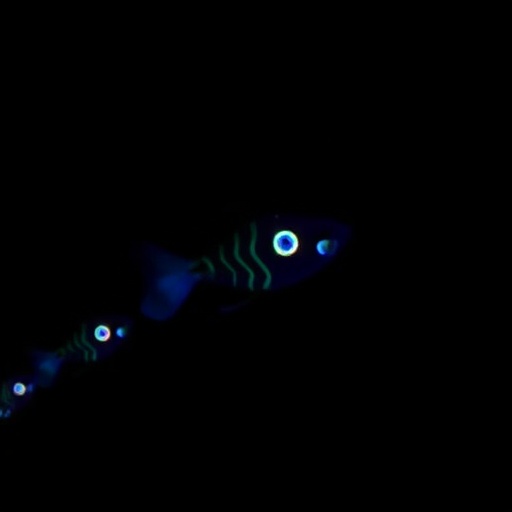
In a captivating exploration of the marine world, researchers are unveiling the intriguing behaviors of the nocturnal flashlight fish, known scientifically as Anomalops katoptron. This remarkable species, which has evolved to thrive in dark oceanic environments, is gaining attention for its unique bioluminescent abilities. Recent studies have uncovered that these fish utilize rapid bursts of light to facilitate social cohesion among their peers. This newfound understanding of how bioluminescence plays a pivotal role in their social interactions may reshape our perceptions of communication strategies in the underwater realm.
The behavior of Anomalops katoptron is particularly fascinating, as it exhibits rapid, bioluminescent blinks that function as a beacon for fellow fish. These light displays can be seen as an evolutionary adaptation, enabling the fish to signal their presence and gather in groups, crucial for their survival in the predator-rich waters where they reside. The flashes of light produced by these fish are not merely random occurrences; they are methodically employed within specific social contexts, likely influencing individual and group behavior.
Scientists have harnessed advanced observational techniques to study the intricacies of these bioluminescent displays. High-speed cameras and detailed behavioral analyses have allowed for an unprecedented understanding of how Anomalops katoptron uses its bioluminescence. Each blink of light is not only a call for companionship but serves as a crucial survival mechanism, signaling to others the safety of their environment, as well as offering a safer approach to foraging in the darkness of the deep sea.
In observing the flashlight fish, researchers noticed that the intensity and frequency of the bioluminescent flashes vary significantly depending on the social context. When grouped together, the flashes became more rapid and coordinated, indicating that these fishes are capable of intricate social interactions mediated through light communication. This lends credence to the hypothesis that the bioluminescent display serves both a social and functional purpose, as these coordinated flashes can effectively ward off predators while simultaneously attracting conspecifics.
Interestingly, understanding the mechanics behind Anomalops katoptron’s light production opens up new avenues of inquiry into other bioluminescent species. While many organisms possess the ability to emit light, the flashlight fish’s unique adaptations, including its specialized light organs, provide a remarkable model for studying the evolutionary pressures that shape such abilities. Researchers are now examining how the interplay of environmental factors and predatory threats influences the evolution of these bioluminescent mechanisms.
As scientists delve deeper into the behavioral ecology of these creatures, there lies potential for groundbreaking advancements in biomimicry—using nature’s own designs to inspire technological innovations. The principles governing the bioluminescent communication of the flashlight fish could lead to new developments in underwater communication systems, as well as more effective means of environmental monitoring in marine contexts.
Moreover, the significance of studying species like Anomalops katoptron extends beyond sheer curiosity. In an era where marine ecosystems are increasingly threatened by climate change and overfishing, understanding the roles of various species within their ecosystems is paramount. The flashlight fish not only represents an intricate piece of the marine puzzle but serves as an indicator of ecological health in their environments.
The research highlights an essential lesson about the interconnectedness of species within a habitat. As these fish use light to forge social bonds, they contribute to the dynamics of marine communities, influencing patterns of predation, mating, and resource use. Understanding these dynamics is crucial for the implementation of effective conservation strategies aimed at preserving these unique ecosystems.
While research on Anomalops katoptron is still in its early stages, the findings thus far underscore the remarkable complexities underlying marine communication strategies. Each new piece of information about how these fish interact opens up broader questions about the evolution of communication in the animal kingdom more generally. Researchers are keen to explore whether similar bioluminescent strategies exist in other species, expanding our understanding of animal behavior across diverse ecological contexts.
In conclusion, Anomalops katoptron serves as a testament to the wonders of evolution, demonstrating the innovative adaptations that emerge in response to environmental challenges. The flashlight fish not only shines a light on the depths of the ocean but also illuminates the intricate social networks that exist within it. As we continue to explore these underwater mysteries, the potential for new discoveries remains vast, promising insights into both the natural world and its applications to human technology.
The implications of these findings will ripple through various fields, from ecology to technology, further emphasizing the critical need for continued research into bioluminescent species. As scientists probe deeper into the aquatic realms, we can look forward to a future where the lessons learned from these fascinating creatures inform our understanding of life, communication, and the delicate balance of marine ecosystems.
Cite Scienmag News
Gavin Prescott. (November 26, 2025). Flashlight Fish Use Bioluminescent Blinks to Attract Mates. Scienmag. https://scienmag.com/flashlight-fish-use-bioluminescent-blinks-to-attract-mates/
Gavin Prescott. "Flashlight Fish Use Bioluminescent Blinks to Attract Mates." Scienmag, 26 November 2025, https://scienmag.com/flashlight-fish-use-bioluminescent-blinks-to-attract-mates/. Accessed 3 September 2026.
Gavin Prescott. "Flashlight Fish Use Bioluminescent Blinks to Attract Mates." Scienmag. November 26, 2025. https://scienmag.com/flashlight-fish-use-bioluminescent-blinks-to-attract-mates/


