


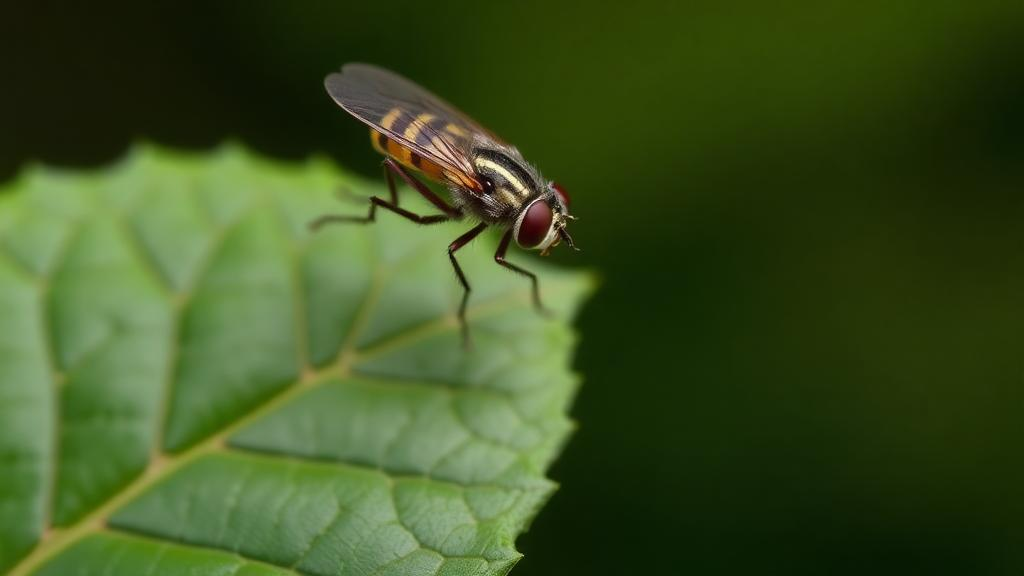
Rising temperatures are quietly reshaping the battle between plants and the viruses that attack them. One of the clearest examples is tomato yellow leaf curl virus, or TYLCV, a single-stranded DNA virus that devastates tomato crops across tropical and subtropical regions and is transmitted exclusively by the whitefly Bemisia tabaci. Farmers and researchers have long observed that TYLCV outbreaks tend to be more severe in hot climates, and laboratory work has shown that heat treatment can boost transmission. What has been missing is a molecular explanation: how exactly does a warmer environment make an insect a more competent virus vector? A new study published in Crop Health by Yu-Meng Wang, Ting Xie, Ya-Zhou He, Wilmer J. Cuellar and Xiao-Wei Wang provides a compelling answer, tracing the effect to a single, well-known stress regulator: heat shock factor.
The research team, based at Zhejiang University, Nanjing Agricultural University and the International Center for Tropical Agriculture in Colombia, worked with the Middle East Asia Minor 1 (MEAM1) cryptic species of Bemisia tabaci, the highly efficient invasive vector of TYLCV. In their experimental setup, newly emerged whiteflies were first given a six-hour acquisition access period on TYLCV-infected tomato plants and then exposed to a range of temperatures for just one hour. Quantitative PCR measurements of viral DNA revealed a striking pattern: the amount of TYLCV in the insects climbed steadily as temperatures rose, peaking at 38 degrees Celsius. At 40 and 42 degrees, viral loads remained above the 27-degree control level but fell significantly below the 38-degree peak, suggesting that moderate heat stress is most favorable for virus accumulation while extreme heat may trigger additional countermeasures in the insect.
To understand what was happening inside the whiteflies during that critical one-hour window, the researchers turned to transcriptome sequencing. Whiteflies held at 38 degrees for one hour were compared with controls kept at the normal rearing temperature of 27 degrees. The analysis identified 62 upregulated and 25 downregulated genes, and the enriched pathways pointed squarely at the cellular stress machinery: protein processing in the endoplasmic reticulum, the longevity regulating pathway, the spliceosome and endocytosis. The differentially expressed genes in these pathways were dominated by heat shock proteins, the molecular chaperones that protect cells from thermal damage, along with lethal (2) essential for life-like proteins. The team also flagged several transcription-related genes whose altered expression could plausibly influence viral gene transcription and protein synthesis within the vector.
That last observation proved to be the key to the whole study. Heat shock protein transcription is controlled by heat shock factor, or HSF, a transcription factor that becomes activated under elevated temperatures, trimerizes and binds conserved heat shock elements in the promoters of its target genes. In the whitefly genome, the researchers identified the full-length open reading frame of BtHSF, a 2,283-base-pair gene encoding a 760-amino-acid protein of roughly 84.1 kilodaltons with a conserved HSF DNA-binding domain at residues 14 to 144. Importantly, BtHSF is expressed in the midgut and primary salivary glands, the two tissues that form the critical barriers TYLCV must cross for plant-to-plant transmission, and in which the virus has previously been shown to replicate.
The pivotal discovery came when the team used the TYLCV intergenic region as bait to screen a whitefly cDNA library in a yeast one-hybrid system. Among the proteins that bound this viral DNA sequence was HSF itself. Yeast carrying the HSF prey plasmid grew on selective medium, while control transformants did not, confirming a specific protein-DNA interaction. The researchers then scanned the viral intergenic region using the JASPAR database and identified a putative HSF binding motif, TTTTTGAA, located in the complementary sense of the region. When they mutated this motif to GCAATTGC, the activating effect of BtHSF on the viral sequence was abolished, demonstrating that the interaction depends on this specific heat shock element embedded in the viral genome.
Dual-luciferase reporter assays in Drosophila S2 cells quantified just how powerful this effect is. When BtHSF was overexpressed alongside a reporter construct driven by the wild-type TYLCV intergenic region, luciferase activity rose more than eightfold compared with the empty-vector control. The mutated intergenic region lost this responsiveness entirely. In other words, the whitefly stress-response transcription factor does not merely bind the viral genome as a passive passenger; it actively drives transcription of the viral genes downstream of the intergenic region, which encodes the instructions for replication-associated proteins and the coat protein that defines the virion.
The causal chain from temperature to viral load was then tested directly. First, the team confirmed that BtHSF controls heat shock protein expression in whiteflies: silencing BtHSF with orally delivered double-stranded RNA significantly reduced transcript levels of BtHSF itself and of most heat shock proteins tested, including several HSP70 and HSP19 family members. Conversely, heat stress above 34 degrees caused at least a 47-fold increase in heat shock protein expression, with levels rising progressively as treatment temperature increased, mirroring the pattern of virus accumulation. The researchers also found that TYLCV infection itself upregulates BtHSF expression, hinting that the virus may exploit the stress response even under normal conditions.
The decisive experiment came from knocking down BtHSF in viruliferous whiteflies. After a 48-hour feeding on dsRNA, BtHSF expression dropped by 36 percent, and the consequences for the virus were dramatic. Quantitative PCR showed significantly reduced TYLCV DNA abundance, western blotting revealed a marked decrease in viral coat protein, and immunofluorescence staining of dissected tissues showed that the proportion of virus-positive midguts fell from 75 percent to 52 percent, while virus-positive primary salivary glands dropped from 66 percent to 46 percent. Because the salivary glands are the final gateway through which the virus exits the insect and enters a new plant, this reduction in tissue-level infection directly implicates HSF in the transmission cycle, not merely in viral persistence within the vector.
What makes this mechanism especially noteworthy is its apparent conservation across biological systems. The authors point out that heat shock factor 1 has been implicated in the replication of several animal viruses: it supports dengue virus and vaccinia virus replication in their hosts, binds the long terminal repeat promoter of HIV-1, and activates the BamHI-Q promoter of Epstein-Barr virus to promote viral transcription. The finding that a plant DNA virus co-opts the same stress-activated transcription factor in its insect vector suggests that HSF-mediated promotion of viral replication may be a general feature of virus-host and virus-vector interactions, spanning organisms as distant as whiteflies and humans. The team also notes that other heat-responsive transcription factors identified in their RNA-seq data, such as ATF3, ZBED1 and DRGX, may modulate virus accumulation indirectly, though their roles remain to be tested.
The study also leaves open questions that will shape future work. Viral loads declined above 38 degrees, which the authors attribute to possible strengthening of vector immunity or the physiological costs of massive heat shock protein production at extreme temperatures. And while the MEAM1 whitefly was the focus here, the MED species, which has an even broader distribution in China, carries an HSF with an identical DNA-binding domain, making it likely, though unproven, that the same mechanism operates there. For agriculture, the implications are sobering: as heat waves intensify and expand, the molecular switch identified in this study could help explain why vector-borne plant viruses surge in warm seasons and warm regions. Understanding that HSF sits at the junction of insect stress physiology and viral propagation offers a potential target for interventions aimed at breaking the temperature-virus-vector link, whether through breeding, vector control or antiviral strategies that disrupt the transcription factor’s grip on the viral genome.
Subject of Research: How heat stress activates heat shock factor to promote tomato yellow leaf curl virus accumulation in its whitefly vector
Article Title: Heat stress promotes the accumulation of tomato yellow leaf curl virus in its insect vector by activating heat shock factor
Article References: Wang, Y.-M., Xie, T., He, Y.-Z., Cuellar, W. J., & Wang, X.-W. (2024). Heat stress promotes the accumulation of tomato yellow leaf curl virus in its insect vector by activating heat shock factor. Crop Health, 2(1), Article 19. https://doi.org/10.1007/s44297-024-00039-8
Image Credits: AI Generated
DOI: 10.1007/s44297-024-00039-8
Keywords: tomato yellow leaf curl virus, TYLCV, Bemisia tabaci, whitefly, heat stress, heat shock factor, heat shock proteins, vector competence, plant virus, begomovirus, transcription factor, climate change
Cite Scienmag News
Kristina Jarvis. (October 3, 2026). Heat Waves Turn Whiteflies Into Better Virus Vessels via a Single Stress Switch. Scienmag. https://scienmag.com/heat-waves-turn-whiteflies-into-better-virus-vessels-via-a-single-stress-switch/
Kristina Jarvis. "Heat Waves Turn Whiteflies Into Better Virus Vessels via a Single Stress Switch." Scienmag, 3 October 2026, https://scienmag.com/heat-waves-turn-whiteflies-into-better-virus-vessels-via-a-single-stress-switch/. Accessed 18 October 2026.
Kristina Jarvis. "Heat Waves Turn Whiteflies Into Better Virus Vessels via a Single Stress Switch." Scienmag. October 3, 2026. https://scienmag.com/heat-waves-turn-whiteflies-into-better-virus-vessels-via-a-single-stress-switch/


