


A fatty acid already prized in nutrition circles may have found its most compelling role yet: shielding the mammary gland from the inflammatory damage that plagues dairy cows worldwide. In a new study published in Food Science & Nutrition, researchers report that supplementing the diets of mice with conjugated linoleic acid, or CLA, significantly blunted inflammation in mammary tissue—but only at a specific dose. The finding, which reveals a striking non-linear dose–response relationship, could offer dairy farmers a dietary tool to combat mastitis, a disease responsible for enormous economic losses and a major driver of antibiotic use in livestock.
CLA is not a single molecule but a family of isomers of linoleic acid, distinguished by conjugated double bonds in their structure. It occurs naturally in meat fats and dairy products, with the cis-9, trans-11 isomer accounting for 80 to 90 percent of the CLA in milk. Over the past two decades, CLA has attracted attention for a remarkable range of physiological effects, including anti-cancer, anti-inflammatory, and anti-tumor activity, as well as the ability to reduce body fat and blood sugar. Previous work has shown that dietary CLA can raise levels of anti-inflammatory cytokines such as interleukin-10 in models of neuroinflammation, and that rumen-protected CLA alleviates mild systemic inflammation and oxidative stress in postpartum cows. Yet the literature also contains contradictions: some studies report enhanced antioxidant enzyme activity after CLA supplementation, while others find no significant antioxidant effect at all.
The research team, building on earlier cell-culture experiments with bovine mammary epithelial cells, set out to answer a deceptively simple question: what dose of dietary CLA best protects living animals from mammary inflammation? They turned to a mouse model in which pregnant females were fed diets containing 0.5 percent, 1 percent, or 2 percent CLA for seven weeks. The CLA preparation contained 80.4 percent CLA, split almost evenly between the cis-9, trans-11 and trans-10, cis-12 isomers, with small amounts of oleic, stearic, palmitic, and linoleic acids making up the remainder. Feed intake was statistically identical across all groups, ensuring that any differences in outcome could be attributed to the fatty acid itself rather than to changes in appetite or nutrition.
To provoke inflammation, the researchers injected lipopolysaccharide, or LPS, a component of bacterial cell walls, directly into the fourth mammary pair of each anesthetized mouse. LPS is a standard tool for triggering a controlled inflammatory response, and in the control animals it produced the expected damage: swollen mammary tissue, heavy infiltration of inflammatory cells, and elevated levels of the pro-inflammatory cytokines tumor necrosis factor alpha (TNF-α), interleukin-1 beta (IL-1β), and interleukin-6 (IL-6). These cytokines are the molecular messengers of inflammation, and their overproduction is a hallmark of mastitis in dairy cattle as well as of many inflammatory diseases in humans.
The results from blood and mammary tissue told a consistent story. In serum, all three CLA doses reduced malondialdehyde, or MDA, a key biomarker of lipid peroxidation and oxidative damage, while boosting superoxide dismutase (SOD) activity and total antioxidant capacity (T-AOC), two measures of the body’s antioxidant defenses. But the magnitude of change was not proportional to dose. The 1 percent CLA group achieved the lowest levels of MDA and the highest SOD activity and T-AOC in mammary tissue, with SOD and T-AOC increasing by roughly 5.71 percent and 6.29 percent respectively compared with controls. In serum, the same group showed the strongest antioxidant profile, with SOD and T-AOC elevated by 7.38 percent and 7.13 percent.
The anti-inflammatory effects were even more dramatic. In the serum of mice fed 1 percent CLA, IL-1β fell by 56.28 percent, TNF-α by 69.68 percent, and IL-6 by 40.93 percent relative to controls—by far the largest reductions among the three doses. In mammary tissue, the 1 percent group again led, with decreases of approximately 16 percent, 34 percent, and 13 percent for IL-1β, TNF-α, and IL-6. Gene expression analysis reinforced the pattern: the 1 percent group showed the greatest downregulation of TNF-α and IL-8 messenger RNA, while PPARγ, a nuclear receptor involved in metabolic and inflammatory regulation, was significantly increased only in the 2 percent group. Intriguingly, the highest PPARγ expression did not translate into the strongest anti-inflammatory outcome, hinting at possible saturation or negative feedback within the signaling pathway.
Histopathology provided the visual confirmation. Under the microscope, mammary acini in the control group were swollen and crowded with inflammatory cells, the classic signature of LPS-induced mastitis. Mice fed 0.5 percent CLA showed only modest improvement, and the 2 percent group, though better than control, still displayed noticeable infiltration in most glandular tissue. Only the 1 percent group preserved intact acinar architecture with minimal inflammatory infiltration—most glands appeared essentially normal. The authors suggest that at 0.5 percent, PPARγ activation was insufficient to block the nuclear translocation of NF-κB, the master switch of the inflammatory cascade, whereas 1 percent achieved moderate PPARγ activation that maximally suppressed downstream cytokine release without triggering feedback inhibition.
The mechanism most likely centers on the interplay between PPARγ and NF-κB. PPARγ is known to interact with NF-κB and prevent its entry into the nucleus, thereby suppressing transcription of TNF-α, IL-1, and IL-6. Prior studies have shown that CLA downregulates inflammatory cytokine mRNA in macrophages via the PPARγ pathway, and that PPARγ activation is the core mechanism by which CLA alleviates colitis. The researchers are careful to note, however, that their study measured only PPARγ mRNA and did not verify protein activation or the physical interaction between PPARγ and NF-κB, so the proposed mechanism remains a plausible hypothesis rather than a confirmed causal chain. The unexpected finding that GPx activity decreased in the CLA groups is also interpreted with nuance: rather than indicating impaired antioxidant capacity, the authors argue it may simply reflect a reduced oxidative burden, since less oxidative stress means less need for the enzyme.
Translating the mouse data to the dairy barn requires caution. Using the Meeh-Rubner formula for body surface area, the researchers estimated that the daily CLA intake of a mouse on the 1 percent diet falls within a range broadly similar to the 20 to 100 grams per day of rumen-protected CLA typically used in cattle trials. But the two species differ fundamentally in how they handle unsaturated fatty acids. As a monogastric animal, the mouse absorbs CLA directly in the small intestine. In ruminants, rumen microbes biohydrogenate most unprotected unsaturated fatty acids into stearic acid, rendering plain CLA nearly useless. Any practical application in dairy cows would therefore require rumen-protected formulations, and doses cannot simply be scaled by body weight.
Even with those caveats, the study delivers a clear and actionable message: more is not always better. The 1 percent dietary inclusion of CLA outperformed both lower and higher doses across every measure of antioxidant capacity, cytokine suppression, gene expression, and tissue integrity. For a dairy industry under pressure to reduce antibiotic use while maintaining milk quality and yield, a precisely dosed fatty acid supplement that protects the mammary gland from within could be a genuinely valuable addition to the herd’s diet. The next step—validating the optimal dose in actual lactating cows with rumen-protected CLA—will determine whether this mouse study becomes the foundation of a new era in mastitis prevention.
Subject of Research: Dose-dependent effects of dietary conjugated linoleic acid on antioxidant and anti-inflammatory function of the mammary gland in mice
Article Title: Effects of Supplementing the Diets of Mice With Different Concentrations of Conjugated Linoleic Acid on the Anti‐Inflammatory Function of the Mammary Gland
Article References: Ren, Z., Liang, W., Zhang, H., Liu, M., & Wang, Y. (2026). Effects of Supplementing the Diets of Mice With Different Concentrations of Conjugated Linoleic Acid on the Anti‐Inflammatory Function of the Mammary Gland. Food Science & Nutrition, 14(10), Article e72367. https://doi.org/10.1002/fsn3.72367
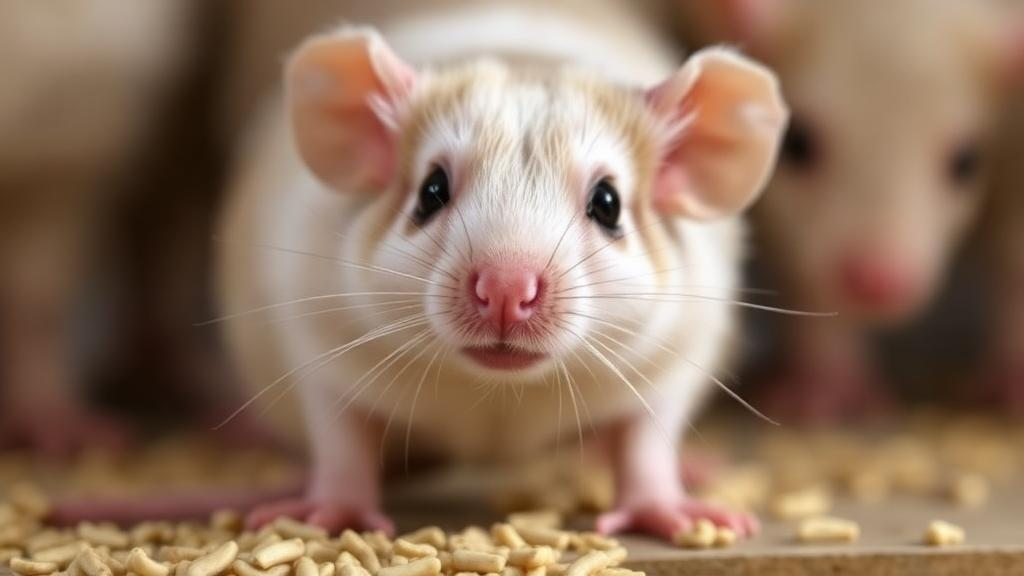
Image Credits: AI Generated
DOI: 10.1002/fsn3.72367
Keywords: conjugated linoleic acid, mastitis, mammary gland, oxidative stress, inflammation, dairy cows, PPARγ, NF-κB, cytokines, antioxidant enzymes, lipopolysaccharide, dose-response
Cite Scienmag News
Daisy Hatcher. (October 3, 2026). Fatty Acid in Dairy Feed Shows Sweet Spot for Fighting Mastitis in Mouse Study. Scienmag. https://scienmag.com/fatty-acid-in-dairy-feed-shows-sweet-spot-for-fighting-mastitis-in-mouse-study/
Daisy Hatcher. "Fatty Acid in Dairy Feed Shows Sweet Spot for Fighting Mastitis in Mouse Study." Scienmag, 3 October 2026, https://scienmag.com/fatty-acid-in-dairy-feed-shows-sweet-spot-for-fighting-mastitis-in-mouse-study/. Accessed 5 October 2026.
Daisy Hatcher. "Fatty Acid in Dairy Feed Shows Sweet Spot for Fighting Mastitis in Mouse Study." Scienmag. October 3, 2026. https://scienmag.com/fatty-acid-in-dairy-feed-shows-sweet-spot-for-fighting-mastitis-in-mouse-study/


