Wednesday, October 28, 2026
Science
No Result
View All Result
  • Login
  • HOME
  • SCIENCE NEWS
  • CONTACT US
  • HOME
  • SCIENCE NEWS
  • CONTACT US
No Result
View All Result
Scienmag
No Result
View All Result
Home Science News Biotechnology

Heat-Killed E. coli Can Support Scaled-Up Production of Predatory Bacteria

October 28, 2026
in Biology, Biotechnology
Gregory Coleman
By Gregory Coleman Scienmag Editorial Profile - Synthetic Biology
Reading Time: 3 mins read
0
Heat-Killed E. coli Can Support Scaled-Up Production of Predatory Bacteria

Heat-Killed E. coli Can Support Scaled-Up Production of Predatory Bacteria

65
SHARES
587
VIEWS
Share on FacebookShare on Twitter
ADVERTISEMENT

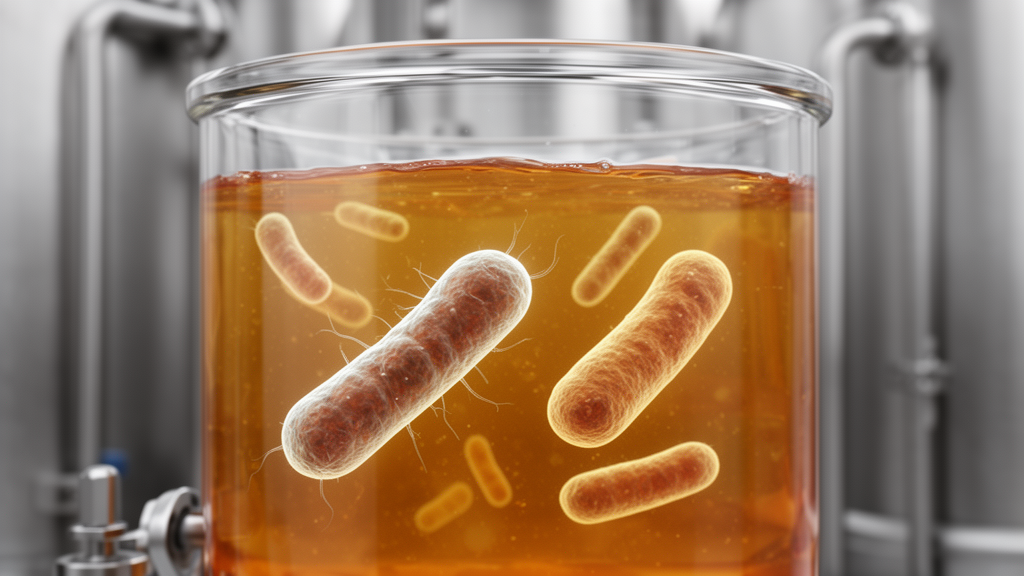
Researchers have shown that the predatory bacterium Bdellovibrio bacteriovorus can be produced at litre scale using heat-killed prey cells, an approach that could allow laboratories without bioreactor infrastructure to generate predatory stock lysates. The study, published in AMB Express, tested whether metabolically active and heat-inactivated Escherichia coli could both support the upscaled, culture-based production of a wastewater-isolated strain, B. bacteriovorus PF13.

Relative fluorescence units dropped in all heat-treated E. coli ATCC 417373 samples compared with untreated controls, and the 65 °C treatment produced the lowest fluorescence, indicating the most complete loss of metabolic activity among the conditions tested.

With heat treatment validated, the researchers upscaled co-cultures of B. bacteriovorus PF13 with either metabolically active or heat-inactivated (65 °C) E. coli prey in a stepwise progression from 100 mL to 1 L and finally to 2.5 L. This volume ladder allowed them to track how predatory production performed as the culture size increased.

In co-cultures with metabolically active prey, the predatory yield grew consistently across all volumes. For the 100 mL, 1 L and 2.5 L cultures, respectively, the plaque-forming units per millilitre of B. bacteriovorus PF13 increased by 2.84, 1.40 and 2.37 logs, while cell counts per millilitre rose by 1.12, 0.86 and 0.80 logs.

Heat-inactivated prey also supported predatory growth, though the pattern differed. In the 100 mL, 1 L and 2.5 L co-cultures using heat-killed E. coli, the cell density of B. bacteriovorus PF13 increased by 1.27, 1.23 and 0.29 logs, respectively. The abstract reports these cell-count increases for the heat-inactivated condition; the corresponding plaque-forming unit figures for that condition are not provided in the available abstract text.

The declining cell-count gain at 2.5 L with heat-inactivated prey, from 1.23 logs at 1 L to 0.29 logs at 2.5 L, suggests that scaling this particular approach further may require adjustments. The authors note that further optimisation is needed to produce predatory lysates in shorter incubation periods, indicating that the current protocol is a proof of feasibility rather than a finished production method.

The strain used in this study, PF13, was isolated from wastewater, and the prey organism was the reference strain E. coli ATCC 417373. The study was conducted as a culture-based laboratory investigation, and its findings concern production methodology rather than clinical efficacy.

The significance of the result lies in the production logistics. The authors suggest that using heat-inactivated prey with simple culture-based methods may potentially circumvent the need for such infrastructure, which they describe as particularly crucial for laboratories in resource-limited countries.

Because the article is being shared early as a peer-reviewed accepted manuscript, the reported figures are subject to the final version of record. Within those limits, the study demonstrates that heat-treated prey cells can support the production of predatory stock lysates at volumes up to 2.5 L, with the 65 °C treatment emerging as the most effective inactivation condition tested, and it establishes a baseline for the further optimisation the authors identify as the next step.

Subject of Research: Upscaled culture-based production of Bdellovibrio bacteriovorus using metabolically active and heat-inactivated E. coli prey

Article Title: Upscaling the production of Bdellovibrio bacteriovorus using metabolically active and heat-inactivated Escherichia coli

Article References: Kennedy, A.-L., Morris, T. C., Waso-Reyneke, M., Botha, A., Khan, S., & Khan, W. (2026). Upscaling the production of Bdellovibrio bacteriovorus using metabolically active and heat-inactivated Escherichia coli. AMB Express. https://doi.org/10.1186/s13568-026-02124-3

Image Credits: AI Generated

DOI: 10.1186/s13568-026-02124-3

Keywords: Bdellovibrio bacteriovorus, predatory bacteria, Escherichia coli, heat-inactivated prey, bioproduction upscaling, resazurin assay, PFU, stock lysates, antibiotic alternatives, wastewater isolate, resource-limited laboratories, AMB Express

Cite Scienmag News

Gregory Coleman. (October 28, 2026). Heat-Killed E. coli Can Support Scaled-Up Production of Predatory Bacteria. Scienmag. https://scienmag.com/heat-killed-e-coli-can-support-scaled-up-production-of-predatory-bacteria/

Gregory Coleman. "Heat-Killed E. coli Can Support Scaled-Up Production of Predatory Bacteria." Scienmag, 28 October 2026, https://scienmag.com/heat-killed-e-coli-can-support-scaled-up-production-of-predatory-bacteria/. Accessed 28 October 2026.

Gregory Coleman. "Heat-Killed E. coli Can Support Scaled-Up Production of Predatory Bacteria." Scienmag. October 28, 2026. https://scienmag.com/heat-killed-e-coli-can-support-scaled-up-production-of-predatory-bacteria/

Tags: AMB Expressantibiotic alternativesBdellovibrio bacteriovorusBdellovibrio bacteriovorus growthbioproduction upscalingbioreactor alternative methodsEscherichia coliheat inactivation of bacteriaheat-inactivated preyheat-killed E. coli as preylaboratory methods for predatory bacterialarge-scale microbial culturemetabolically inactive bacteria usePFUpredatory bacteriapredatory bacteria in biotechnologypredatory bacteria productionresazurin assayresource-limited laboratoriesscalable bacterial cultivationstock lysatesupscaled bacterial culture techniqueswastewater bacteria isolationwastewater isolate
Share26Tweet16
Previous Post

AI chatbots show promise and peril in epilepsy care, major review finds

Next Post

Chiral amino acid scaffolds yield new antifungal leads against Aspergillus

Related Posts

Fruit-derived nutraceutical tablet shows early anti-inflammatory signals in rheumatoid arthritis models
Biology

Fruit-derived nutraceutical tablet shows early anti-inflammatory signals in rheumatoid arthritis models

October 28, 2026
Nano-enabled biostimulants could rewire root exudates and soil microbes
Biotechnology

Nano-enabled biostimulants could rewire root exudates and soil microbes

October 28, 2026
Gαi2 couples neurofilaments to microtubules to stabilise nascent axons in chick spinal cord
Biology

Gαi2 couples neurofilaments to microtubules to stabilise nascent axons in chick spinal cord

October 28, 2026
Walking a little faster changes many muscles at once, but not the forces beneath your feet
Biotechnology

Walking a little faster changes many muscles at once, but not the forces beneath your feet

October 28, 2026
New mouse tool targets microvascular endothelial cells in muscle and fat
Biotechnology

New mouse tool targets microvascular endothelial cells in muscle and fat

October 28, 2026
Flavonoids that bind DNA block a mutagen’s chemical fingerprints in lab tests
Biology

Flavonoids that bind DNA block a mutagen’s chemical fingerprints in lab tests

October 28, 2026
Next Post
Chiral amino acid scaffolds yield new antifungal leads against Aspergillus

Chiral amino acid scaffolds yield new antifungal leads against Aspergillus

  • Mothers who receive childcare support from maternal grandparents show more optimized

    Mothers who receive childcare support from maternal grandparents show more parental warmth, finds NTU Singapore study

    27656 shares
    Share 11059 Tweet 6912
  • University of Seville Breaks 120-Year-Old Mystery, Revises a Key Einstein Concept

    1061 shares
    Share 424 Tweet 265
  • Bee body mass, pathogens and local climate influence heat tolerance

    682 shares
    Share 273 Tweet 171
  • Researchers record first-ever images and data of a shark experiencing a boat strike

    546 shares
    Share 218 Tweet 137
  • Groundbreaking Clinical Trial Reveals Lubiprostone Enhances Kidney Function

    531 shares
    Share 212 Tweet 133
Science

Embark on a thrilling journey of discovery with Scienmag.com—your ultimate source for cutting-edge breakthroughs. Immerse yourself in a world where curiosity knows no limits and tomorrow’s possibilities become today’s reality!

RECENT NEWS

  • Arabian Sea moisture and a stacked cyclone drove Telangana’s record 2023 deluge
  • Scientists Trace How Acupuncture’s Mechanical Force Becomes Pain Relief
  • Roadmap charts first experiments for world’s first plasma-driven x-ray laser
  • HOTAIR Gene Variant Linked to Higher Cholangiocarcinoma Risk in Egyptian Patients

Categories

  • Agriculture
  • Anthropology
  • Archaeology
  • Athmospheric
  • Biology
  • Biotechnology
  • Blog
  • Bussines
  • Cancer
  • Chemistry
  • Climate
  • Earth Science
  • Editorial Policy
  • Marine
  • Mathematics
  • Medicine
  • Pediatry
  • Policy
  • Psychology & Psychiatry
  • Science Education
  • Science News
  • Social Science
  • Space
  • Technology and Engineering

Subscribe to Blog via Email

Enter your email address to subscribe to this blog and receive notifications of new posts by email.

Join 5,151 other subscribers

© 2025 Scienmag - Science Magazine

Welcome Back!

Login to your account below

Forgotten Password?

Retrieve your password

Please enter your username or email address to reset your password.

Log In
No Result
View All Result
  • HOME
  • SCIENCE NEWS
  • CONTACT US

© 2025 Scienmag - Science Magazine

Discover more from Science

Subscribe now to keep reading and get access to the full archive.

Continue reading