


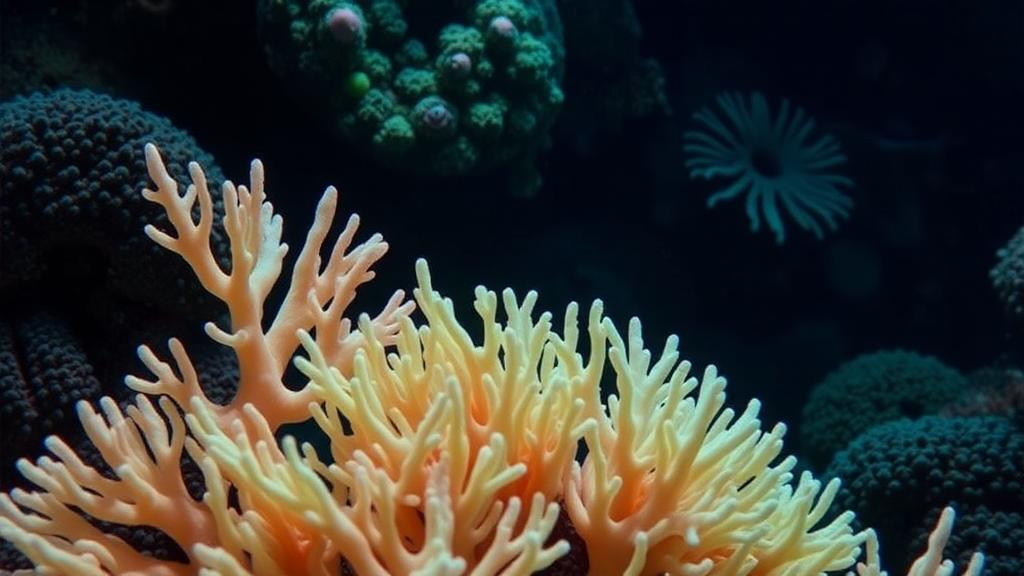
In a set of tightly controlled laboratory experiments, researchers have mapped exactly where stress strikes first inside one of the Caribbean’s most important reef-building corals. The study, led by Keisha D. Bahr and colleagues at the Harte Research Institute of Texas A&M University-Corpus Christi and published in Environmental Monitoring and Assessment, exposed fragments of the mountainous star coral Orbicella faveolata to suspended sediment, elevated temperature, and both stressors combined over 72-hour trials. The central finding is striking in its clarity: the coral’s photosynthetic machinery registers trouble long before its tissues, its symbiont populations, or its skeleton show any measurable change. This hierarchy of sensitivity, the authors argue, could transform how coastal managers detect coral stress during dredging projects, coastal construction, and marine heatwaves.
Orbicella faveolata is not an arbitrary choice of study organism. Species in the Orbicella complex were once among the dominant framework builders of Caribbean reefs, contributing enormously to reef accretion and the three-dimensional structure that shelters fisheries and buffers shorelines. Decades of disease outbreaks, mass bleaching, and poor recruitment have dramatically reduced their populations, and O. faveolata is now a primary target of restoration efforts along the Florida Reef Tract. Understanding precisely how it responds to the stressors it encounters most often, warming water and turbid, sediment-laden conditions, is therefore directly relevant to the people managing and rebuilding these ecosystems.
The experimental design was deliberately rigorous. Eighty coral fragments representing eight distinct genotypes were obtained from offshore nurseries operated by Reef Renewal USA in the Florida Keys and acclimated for five weeks under identical laboratory conditions. The study then unfolded in two phases. The first exposed fragments to a turbidity gradient of zero, 15, 29, and 50 NTU, with the 29 NTU level chosen because it matches the benchmark historically embedded in Florida’s narrative turbidity criterion for dredging compliance monitoring. The second phase used a fully factorial design crossing suspended sediment at 29 NTU with temperatures of 27 and 30 degrees Celsius. Crucially, each coral fragment lived in its own independent 500-milliliter chamber connected to its own 20-liter sump, so no experimental unit ever shared treatment water, eliminating a common source of statistical contamination in aquarium studies.
The measurement toolkit was equally comprehensive. Pulse-amplitude-modulated fluorometry, a rapid and non-destructive optical technique, tracked the photosynthetic performance of the coral’s algal symbionts, yielding parameters such as maximum quantum yield of photosystem II (Fv/Fm), maximum electron transport rate, and regulated non-photochemical energy dissipation (YNPQ). Metabolic oxygen flux was quantified with intermittent-flow respirometry, in which chambers are periodically flushed with fresh seawater while oxygen concentrations are logged continuously, allowing hourly estimates of photosynthesis and respiration. Net calcification was calculated from changes in total alkalinity using the alkalinity anomaly technique, and destructive endpoint analyses measured symbiont density, chlorophyll concentrations, host protein content, skeletal density, and skeletal surface area.
The results revealed an unmistakable pattern. Elevated temperature produced the most consistent and broadest physiological responses. Maximum photochemical efficiency declined significantly at 30 degrees Celsius, while regulated non-photochemical energy dissipation increased, indicating that the symbionts were actively shunting excess excitation energy away from damaged photosystems. Respiration also fell under warming, suggesting altered whole-colony metabolism. Suspended sediment, by contrast, elicited comparatively limited responses, affecting primarily photophysiological metrics such as reductions in Fv/Fm and electron transport at higher turbidity levels, with only modest effects on respiration in the 50 NTU treatment. Notably, no suspended sediment by temperature interaction was detected, meaning the sediment treatment neither buffered nor amplified the thermal stress response under the conditions tested.
Perhaps the most consequential result is what did not change. Net calcification, symbiont density, chlorophyll concentration, and host protein content remained largely stable across all treatments throughout the 72-hour exposures. In other words, the corals were physiologically stressed, as their photosynthetic parameters clearly showed, yet every conventional indicator of coral health that monitoring programs typically rely upon, from tissue condition to growth, remained silent. This dissociation between early photophysiological disruption and later structural damage is precisely why the authors advocate integrating fluorometric measurements into environmental monitoring. A program that waits for visible bleaching or tissue loss may be detecting stress only after days or weeks of sublethal impairment have already accumulated.
There is encouraging news on the recovery front as well. Four weeks after the stressors were removed, maximum photochemical efficiency had returned to pre-exposure levels across all treatments, although variability among genotypes persisted. The authors caution, however, that recovery of Fv/Fm should not be equated with complete holobiont recovery. Recent work on other coral species has shown that symbiont physiology, host gene expression, and microbial communities can follow asynchronous recovery trajectories, with some components continuing to decline even as others rebound. The return of one photosynthetic parameter to baseline tells only part of the story.
Genotype emerged as a recurring theme throughout the study. Even after accounting for treatment effects, significant genotype effects were detected for photophysiological metrics, respiration, calcification, and most biological endpoints, revealing substantial baseline variation among colonies of the same species. This intraspecific variability has major implications for both science and management. Experiments relying on a handful of colonies risk overestimating or underestimating stress effects depending on which genotypes happen to be sampled, and restoration programs that maintain genetic diversity may be preserving the raw material for future adaptation to sedimentation and marine heatwaves. The finding reinforces a growing consensus that coral resilience cannot be understood at the level of species alone.
The study also carries important caveats that the authors are careful to state. The 72-hour exposure captured acute responses and may have been too brief to reveal longer-term consequences such as bleaching, energy reserve depletion, or calcification decline. The sediment used was cryomilled, homogenized inorganic material from Port Everglades, chosen to standardize particle characteristics, but other research has shown that sediment origin, associated microbial communities, and chemical constituents can dramatically modify coral responses. Florida’s regulatory criterion is expressed as 29 NTU above natural background, whereas the experiment targeted an absolute turbidity of 29 NTU, so the findings provide mechanistic context for interpreting turbidity observations rather than a validation or refutation of any specific regulatory benchmark.
Taken together, the study delivers a mechanistic framework with immediate practical value. Photophysiological measurements sit at the top of the sensitivity hierarchy, metabolic responses occupy an intermediate tier, and biomass-related and skeletal endpoints form the least responsive tier over short exposures. Because PAM fluorometry is rapid, non-destructive, and field-deployable, pairing it with routine water-quality monitoring during dredging and coastal construction could flag physiological stress in reef-building corals before any visible damage appears, enabling earlier adaptive-management decisions. As ocean warming intensifies and coastal development continues to cloud tropical waters, knowing which biological alarm rings first may prove to be one of the most valuable tools reef managers have.
Subject of Research: Short-term physiological responses of the coral Orbicella faveolata to suspended sediment and elevated temperature
Article Title: Hierarchical physiological sensitivity of the coral, Orbicella faveolata, to suspended sediment and elevated temperature
Article References: Bahr, K. D., Bretzing-Tungate, R. J., Matthews, B. M., TenBrink, E. G., Gallagher, C. L., & Cannon, A. L. (2026). Hierarchical physiological sensitivity of the coral, Orbicella faveolata, to suspended sediment and elevated temperature. Environmental Monitoring and Assessment, 198(11), Article 1185. https://doi.org/10.1007/s10661-026-15969-9
Image Credits: AI Generated
DOI: 10.1007/s10661-026-15969-9
Keywords: coral reefs, Orbicella faveolata, thermal stress, suspended sediment, turbidity, photophysiology, PAM fluorometry, respirometry, calcification, coral bleaching, genotype variation, reef monitoring
Cite Scienmag News
Violet Maxwell. (October 13, 2026). Heat Hits First: Coral Photosynthesis Reveals Stress Before Bleaching Begins. Scienmag. https://scienmag.com/heat-hits-first-coral-photosynthesis-reveals-stress-before-bleaching-begins/
Violet Maxwell. "Heat Hits First: Coral Photosynthesis Reveals Stress Before Bleaching Begins." Scienmag, 13 October 2026, https://scienmag.com/heat-hits-first-coral-photosynthesis-reveals-stress-before-bleaching-begins/. Accessed 13 October 2026.
Violet Maxwell. "Heat Hits First: Coral Photosynthesis Reveals Stress Before Bleaching Begins." Scienmag. October 13, 2026. https://scienmag.com/heat-hits-first-coral-photosynthesis-reveals-stress-before-bleaching-begins/


