


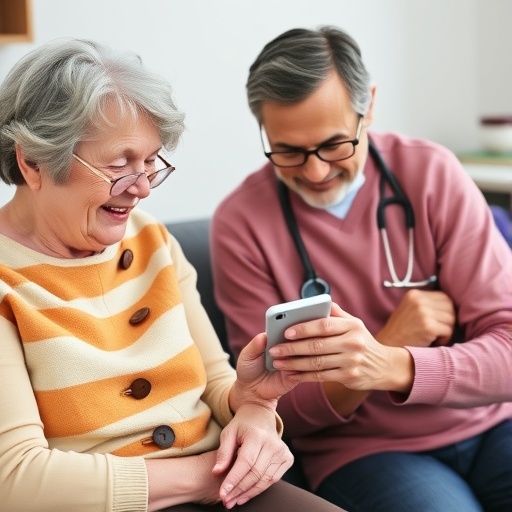
Heart failure care may be on the verge of a major shift from hospital-centered treatment to a more mobile, home-based model, according to a new qualitative study led by researchers at Columbia University School of Nursing. Interviews conducted as part of the Mighty Heart program found that patients, caregivers, clinicians, and health-system leaders generally viewed visits from specially trained paramedics—supported by telehealth connections to medical specialists—as a promising way to manage the vulnerable period after hospital discharge. The findings suggest that mobile integrated health, or MIH, can extend the reach of clinical teams into patients’ homes while offering a form of monitoring that is more immediate and personal than conventional follow-up appointments. At the same time, the research warns that reimbursement rules, staffing demands, and regulatory restrictions could determine whether the model becomes a durable part of mainstream heart failure care or remains limited to pilot programs.
The study, published August 21, 2026, in JAMA Network Open, examines how the Mighty Heart intervention was experienced and how it might be adopted across different health systems. The program was designed for people recently discharged after hospitalization for heart failure, a population at high risk of complications, emergency department visits, and readmission. During home-based encounters, paramedics could assess symptoms, review medications, collect vital signs, identify changes in a patient’s condition, and communicate with clinicians through telehealth-enabled consultations. This approach is technically different from simply sending emergency medical personnel to provide urgent treatment: it uses the paramedic’s presence in the home as a platform for longitudinal assessment, care coordination, and early intervention.
Heart failure is a chronic condition in which the heart cannot pump enough blood to meet the body’s needs or can do so only under abnormally high pressures. After discharge, small changes in weight, breathing, blood pressure, kidney function, medication use, or dietary intake can signal worsening congestion before severe symptoms develop. In traditional care pathways, those changes may go unnoticed until a patient becomes sufficiently ill to seek emergency treatment. MIH programs aim to narrow that gap by placing clinicians or paramedics in the home, where they can observe not only physiological measurements but also practical factors such as medication access, mobility, food availability, caregiver support, and the patient’s ability to follow a treatment plan.
The Mighty Heart interviews indicated that adoption was more likely when patients wanted closer monitoring and felt comfortable receiving care at home. This preference may be especially important for people who face transportation barriers, limited mobility, or difficulty arranging repeated clinic visits. Providers also described greater enthusiasm when they believed the model could improve remote care and create a more responsive connection with patients after discharge. The investigators found that early pilot efforts benefited from committed institutional partners, including emergency medicine teams, subspecialty clinicians, nursing leaders, administrators, and operational staff. These relationships helped translate a novel service into a functioning clinical workflow rather than treating it as an isolated technology project.
The COVID-19 pandemic also changed the perceived boundaries of where and how medical care could be delivered. As health systems rapidly expanded telemedicine and remote monitoring, patients and clinicians became more familiar with video consultations, digital communication, and care delivered outside traditional facilities. That flexibility supported the Mighty Heart model, in which paramedics could provide in-person evaluation while specialists joined remotely when needed. The combination has an important technical advantage: the paramedic can perform a physical assessment and obtain measurements in the patient’s real environment, while a physician or advanced practice clinician can contribute diagnostic reasoning without traveling to the home. In theory, this hybrid structure could enable faster escalation for some patients and prevent unnecessary emergency department transport for others.
Interviewees also emphasized that MIH appeared capable of reaching diverse populations and addressing needs that are often invisible in hospital records. A home visit can reveal whether a patient understands discharge instructions, can obtain prescribed medicines, has safe housing, or is able to monitor weight and symptoms. It can also expose communication, cultural, financial, or family-related challenges that influence health outcomes. By bringing care to the patient rather than requiring the patient to navigate a complex medical system, MIH may reduce some access barriers. The researchers describe this reach as one of the intervention’s central strengths, although they also stress that equitable access cannot be assumed: programs must deliberately account for language, digital connectivity, disability, geography, and the availability of caregivers.
The study found that the operational demands of MIH were substantial. Coordinating paramedics’ schedules, assigning personnel to geographically dispersed visits, maintaining communication with hospital-based clinicians, and ensuring timely documentation all require infrastructure and sustained leadership. Scope-of-practice rules may further limit what paramedics can assess, prescribe, or change independently. Effective programs therefore depend on carefully defined escalation protocols, secure data exchange, clear accountability, and continuous communication between emergency medical services and specialty care teams. The researchers specifically identify proactive interdisciplinary relationships as a driver of success, noting that emergency medicine and subspecialty clinicians must agree in advance on how decisions will be made when a home assessment detects clinical deterioration.
Financial sustainability emerged as the most fundamental barrier. Many MIH programs can reduce emergency department transports, but the prevailing Medicare reimbursement structure for emergency medical services is largely tied to transportation rather than evaluation and treatment delivered on site. That arrangement can create a paradox: the more successfully a program manages patients at home and avoids transport, the less directly it may be reimbursed for the work performed. Limited reimbursement can restrict staffing, reduce the clinical services a program can offer, and make it difficult for hospitals to justify long-term investment. The Columbia-led researchers argue that explicit payment mechanisms for mobile integrated health will be necessary if health systems are expected to expand services beyond demonstration projects.
The findings build on the main results of the Mighty Heart randomized clinical trial, previously reported in JAMA Internal Medicine, which compared mobile integrated health with a transitions-of-care coordinator for patients discharged after heart failure hospitalization. The new analysis does not simply ask whether the intervention works under trial conditions; it explores why organizations and patients might embrace it, and what could prevent implementation in routine care. The investigators conclude that future programs should select outcomes that align with institutional priorities, secure operational and financial support before launch, anticipate regulatory and scope-of-practice constraints, and establish cross-disciplinary partnerships early. If those conditions are met, home-based paramedic care linked to telehealth could become a practical extension of the hospital team—bringing sophisticated monitoring to patients at the moment when the risk of relapse is often greatest.
News Publication Date: August 21, 2026.
Web References: https://jamanetwork.com/journals/jamanetworkopen/fullarticle/10.1001/jamanetworkopen.2026.30229; https://www.nursing.columbia.edu/
References: JAMA Network Open, DOI: 10.1001/jamanetworkopen.2026.30229. Prior study: “Mobile Integrated Health vs a Transitions of Care Coordinator for Patients Discharged After Heart Failure: The Mighty-Heart Randomized Clinical Trial,” JAMA Internal Medicine.
Cite Scienmag News
Ophelia Keating. (August 21, 2026). Heart failure patients, caregivers, and clinicians embrace mobile health despite adoption barriers. Scienmag. https://scienmag.com/heart-failure-patients-caregivers-and-clinicians-embrace-mobile-health-despite-adoption-barriers/
Ophelia Keating. "Heart failure patients, caregivers, and clinicians embrace mobile health despite adoption barriers." Scienmag, 21 August 2026, https://scienmag.com/heart-failure-patients-caregivers-and-clinicians-embrace-mobile-health-despite-adoption-barriers/. Accessed 4 September 2026.
Ophelia Keating. "Heart failure patients, caregivers, and clinicians embrace mobile health despite adoption barriers." Scienmag. August 21, 2026. https://scienmag.com/heart-failure-patients-caregivers-and-clinicians-embrace-mobile-health-despite-adoption-barriers/


