

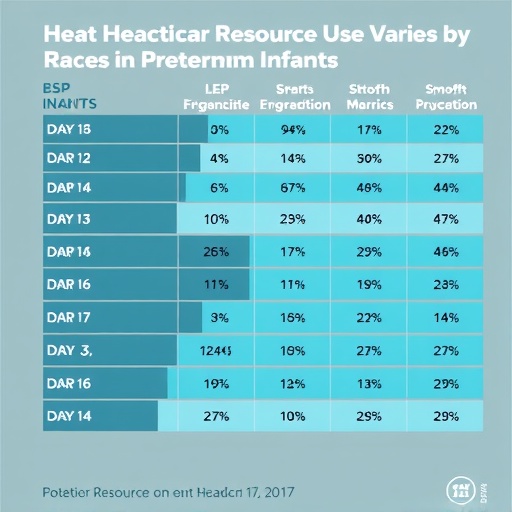
In a compelling new study published in the Journal of Perinatology, researchers have uncovered significant disparities in healthcare resource utilization among moderate to late preterm infants diagnosed with respiratory distress syndrome (RDS) across different racial and ethnic groups in Northern California. This investigation lays bare the complex interplay between race, healthcare access, and clinical outcomes in one of the most vulnerable patient populations. As preterm birth remains a persistent challenge worldwide, understanding how socioeconomic and racial factors influence resource distribution and care delivery is essential for crafting targeted interventions to improve neonatal outcomes.
Respiratory distress syndrome is a common and critical pulmonary condition affecting preterm infants due to immature lung development and insufficient surfactant production. The respiratory immaturity leads to compromised gas exchange and often necessitates intensive respiratory support, including mechanical ventilation and prolonged hospital stays. Despite advances in neonatal care, RDS continues to contribute substantially to morbidity and healthcare costs. Analyzing how healthcare resources are allocated based on race and ethnicity offers invaluable insights into potential disparities in intervention intensity, clinical management strategies, and ultimately infant survival and quality of life.
The study leveraged a comprehensive dataset drawn from Northern California, a demographically diverse region that offers a microcosm of the varied U.S. population. Through a rigorous retrospective cohort design, the research team identified moderate to late preterm infants—those born between 32 and 36 weeks gestational age—who were diagnosed with RDS within a defined period. By stratifying the subjects according to self-reported race and ethnicity, the investigators were able to analyze patterns of healthcare resource utilization, including ventilator use, length of hospital stay, prescription of surfactant therapy, and readmission rates.
One of the most striking findings of the analysis was that resource utilization differed markedly among racial groups. Infants identified as non-Hispanic White demonstrated a tendency toward receiving more aggressive respiratory interventions and longer hospitalizations compared to their minority counterparts, including Hispanic and Black infants. This observation provokes critical questions about the underlying causes—whether they are rooted in systemic biases, differences in clinical presentation, socioeconomic factors, or healthcare access discrepancies.
Further dissecting the data, the authors noted that Black and Hispanic infants with RDS were less likely to receive certain advanced respiratory therapies, such as continuous positive airway pressure (CPAP) or high-frequency ventilation, despite similar clinical indications. This discrepancy may signal implicit biases within clinical decision-making or reflect structural barriers limiting access to specialized care. Alternatively, cultural differences or varying levels of healthcare advocacy from families might influence provider behavior, underscoring the need for multifaceted approaches in addressing healthcare inequities.
The duration of hospitalization also emerged as an element influenced by racial and ethnic identity. Non-Hispanic White infants showed statistically significant longer stays in neonatal intensive care units (NICUs) relative to minority groups. Prolonged hospitalizations can reflect more comprehensive monitoring, but they also impose increased financial strain on families and healthcare systems. Conversely, shorter stays among minority infants could indicate premature discharges or less intensive surveillance, potentially affecting long-term outcomes.
Notably, the research team explored confounding factors to ensure that observed differences were not simply due to variations in gestational age or birth weight. Adjusting for these critical neonatal parameters reaffirmed that racial disparities persisted independently, bolstering the argument that systemic and structural forces are at play. This realization shifts the focus toward health policy reform and culturally tailored healthcare delivery to bridge the gap in neonatal care equity.
Beyond clinical interventions, the study also examined follow-up care through readmission rates for respiratory complications within the first six months. Here, minority infants exhibited higher readmission frequencies, which might suggest that initial resource allocation inadequacies predisposed these infants to unstable outpatient courses. These findings highlight the importance of continuity of care and social determinants of health, suggesting that post-discharge support systems are crucial components for optimizing long-term outcomes in preterm infants.
The authors emphasized that the regional healthcare infrastructure in Northern California, characterized by its multi-payer systems and a patchwork of public and private hospitals, may contribute to observed disparities. For instance, differences in insurance coverage, hospital resources, and proximity to tertiary care centers can all influence the quality and intensity of neonatal care. These structural variations underscore that equitable care is not solely a matter of clinical practice but deeply entwined with healthcare policy and socioeconomic context.
From a technical perspective, the study utilized advanced statistical modeling and propensity score matching to minimize bias and control for covariates, enabling a robust assessment of the independent effect of race and ethnicity on healthcare resource utilization. Such methodological rigor enhances the credibility of the findings and provides a template for future investigations aiming to dissect disparities in neonatal and pediatric care.
The implications of this research extend beyond academic discourse, calling for immediate action to address racial inequities in neonatal healthcare. Strategies might include implicit bias training for healthcare providers, standardization of treatment protocols irrespective of race or ethnicity, and targeted interventions to improve access for underserved communities. Moreover, policy initiatives must prioritize resource allocation to disadvantaged populations to ensure that all preterm infants, regardless of background, receive comprehensive and timely care.
In light of these insights, it becomes evident that respiratory distress syndrome management in moderate to late preterm infants cannot be effectively optimized without confronting the embedded racial and ethnic disparities in healthcare resource utilization. The convergence of neonatal medicine, social justice, and health equity emerges as a critical frontier for research and intervention—one where groundbreaking advancements can translate into measurable improvements in survival and neurodevelopmental outcomes.
The study’s comprehensive approach underscores that healthcare disparities are multifactorial and deeply rooted within the broader social determinants of health. Addressing them requires collaborative efforts spanning clinical practice, healthcare administration, and public policy. The findings also advocate for enhanced data collection mechanisms that include detailed racial and ethnic variables to better monitor and tackle inequities in neonatal care dynamically.
This pivotal investigation by Sun and colleagues represents an essential step forward in illuminating how racial and ethnic identity intersects with clinical management of preterm infants. Their work not only quantifies disparities but also challenges the medical community to implement tangible solutions ensuring equitable healthcare delivery. As neonatal morbidity and mortality remain pressing challenges globally, achieving equity in care is paramount to improving outcomes for all infants.
Ultimately, advancing neonatal care for moderate to late preterm infants with respiratory distress syndrome mandates a paradigm shift—one that embraces precision medicine while simultaneously dismantling systemic barriers related to race and ethnicity. Future research should build upon these findings, incorporating qualitative analyses to capture lived patient experiences and experimental designs to test targeted interventions.
The Northern California cohort studied offers a valuable lens through which to understand these complexities, yet the issues identified likely resonate across diverse populations and geographic settings. Therefore, this study signals a call to action for stakeholders at every level—from bedside clinicians to policymakers—to champion equitable resource utilization and to pursue a healthcare system where quality and access are not determined by race or ethnicity, but by the universal imperative of providing the best care to every vulnerable newborn.
Subject of Research: Healthcare resource utilization disparities by race and ethnicity among moderate to late preterm infants with respiratory distress syndrome.
Article Title: Differences in healthcare resource utilization by race/ethnicity among moderate to late preterm infants with respiratory distress Syndrome, Northern California.
Article References:
Sun, X., Mowla, S., Simpson, A.N. et al. Differences in healthcare resource utilization by race/ethnicity among moderate to late preterm infants with respiratory distress Syndrome, Northern California. J Perinatol (2026). https://doi.org/10.1038/s41372-026-02591-3
Image Credits: AI Generated
DOI: 24 February 2026


