


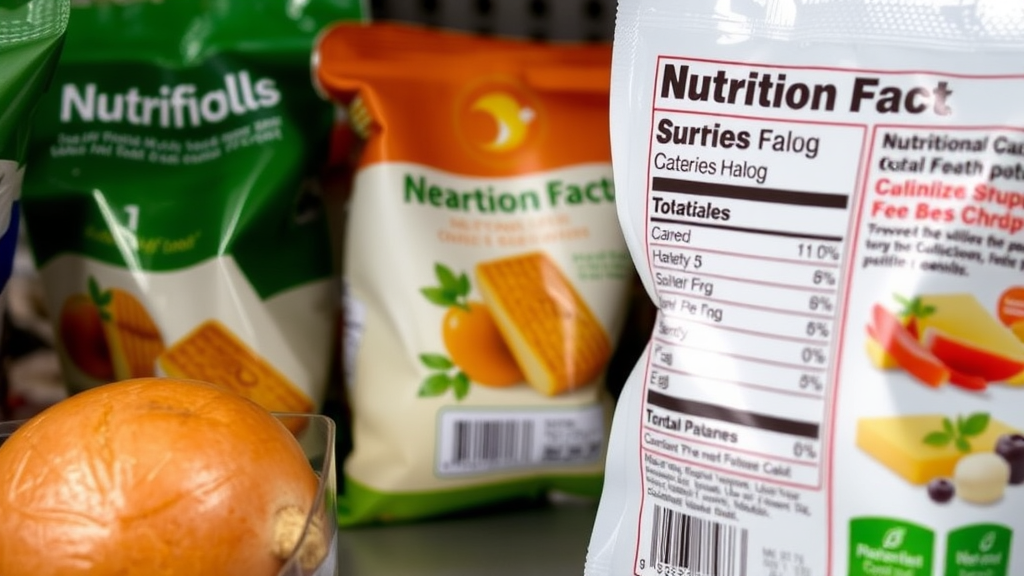
Walk down any supermarket aisle and the packages seem to be shouting about wellness. More than half of new food products launched in the United States now carry some kind of health-related claim on the front of the pack, yet only about a third of those products would actually qualify as nutritious by objective measures. That striking mismatch is the focus of a new commentary published in Nature Food, which argues that health claims on packaging should not be treated as marketing decoration but as statements that must be scientifically earned before they reach consumers.
The commentary, written by researcher Belen Beltramo, draws on a recent analysis by Zhou, Zheng, Kaiser and Gómez that examined the flood of new products entering the US market. The numbers reveal a structural imbalance in how the food industry communicates. Claims such as low sugar, high protein, natural, or heart-healthy appear on packages at rates far exceeding the underlying nutritional quality of the products themselves. For shoppers, who typically spend only seconds deciding whether an item goes into the cart, the front of the pack becomes the primary source of information, and if that information systematically overstates healthfulness, the entire decision environment is skewed.
Psychologists have long documented why these claims work so well. A phenomenon known as the health halo effect means that a single positive claim can cause consumers to rate a product as healthier overall, lower in calories, and even more appropriate for frequent consumption, regardless of the full nutrition label on the back. Experimental work by Schuldt and colleagues showed that labels such as organic can inflate perceived healthiness and taste judgments. The halo effect operates automatically and largely outside conscious awareness, which is precisely why it is so effective as a marketing tool and so problematic from a public health perspective.
The regulatory landscape in the United States has attempted to keep pace. In late 2024, the US Food and Drug Administration finalized an updated definition of the term healthy for use on food labels, tightening the criteria so that products bearing the claim must contain meaningful amounts of recommended food groups while staying within limits on added sugars, sodium and saturated fat. The update was widely welcomed, but it covers only one claim among the dozens that populate modern packaging. Terms such as natural remain largely undefined, and nutrient content claims can be technically accurate while still conveying a misleadingly wholesome overall impression.
This is where the question of what it means for a claim to be earned becomes central. The commentary argues that the bar for making health-related statements should be tied to objective nutritional profiling rather than to isolated attributes. Nutrient profiling systems, first developed systematically by researchers such as Rayner and colleagues at the UK Food Standards Agency, score foods across multiple dimensions, rewarding beneficial components like fiber, protein and fruit content while penalizing excess sugar, salt and fat. Applying such profile-based thresholds to claim eligibility would mean that a product could only advertise healthfulness if its complete nutritional picture supported it.
International experience offers instructive contrasts. Several Latin American countries, including Chile and Mexico, have moved in the opposite regulatory direction, requiring prominent warning labels on products high in sugar, sodium or saturated fat, and restricting the use of child-directed marketing on packaged foods that carry those warnings. Evidence reviewed by Crosbie and colleagues suggests these warning-label systems change both industry formulation practices and consumer purchases. The contrast with the US approach, where positive claims dominate and negative warnings are rare, highlights a fundamental policy fork: governments can either let manufacturers frame products favorably or require that the less flattering nutritional truths be disclosed just as prominently.
Recent market research adds an economic dimension to the debate. A study by Hristakeva, Liaukonytė and Feler published in the Journal of Marketing Research found that health-related claims measurably boost sales, meaning companies have a clear commercial incentive to add them even when nutritional quality does not warrant the framing. This incentive structure explains the proliferation of claims documented in the new product data. Without regulatory guardrails, the market alone will keep rewarding claim-heavy packaging, because the claims work on shoppers and shoppers drive revenue. The commentary suggests that this is exactly why voluntary industry restraint is unlikely to solve the problem on its own.
Consumer vulnerability is not evenly distributed, which raises equity concerns. Research on labeling and health policy by Lee, Cullerton and Herron has emphasized that misleading packaging disproportionately affects populations with lower health literacy, who rely more heavily on front-of-pack cues and have less time or resources to decode nutrition panels. Meanwhile, work by Eichin and colleagues on how consumers process health information suggests that even motivated shoppers struggle to integrate multiple numeric values into a coherent judgment, making simplified front-of-pack claims, whether positive or negative, disproportionately influential compared with the fine print.
The stakes extend beyond individual purchasing decisions. Diet-related disease remains a leading driver of preventable illness in the United States and many other countries, and the food environment shapes consumption patterns at population scale. If half of new products signal healthfulness while only a third deliver it, the cumulative effect is an environment in which choosing well requires actively distrusting the most visible information on every package. Public health researchers argue that this erodes trust across the board, penalizing genuinely nutritious products whose honest claims get lost in a sea of inflated ones.
The path forward outlined in the commentary is straightforward in principle: make health claims contingent on verified overall nutritional quality, using established nutrient profiling as the gatekeeping mechanism. Products would earn the right to advertise healthfulness, rather than borrowing it from a single attribute. Combined with clearer definitions of vague terms and continued refinement of tools such as the updated FDA healthy standard, such a system would realign marketing incentives with nutritional reality. As the evidence accumulates, the message to both regulators and industry is becoming difficult to ignore: in food packaging, healthfulness is not a slogan to be claimed but a standard to be met.
Subject of Research: Mismatch between health claims on food packaging and actual nutritional quality of new US food products
Article Title: Food packaging claims need to be earned
Article References: Beltramo, B. (2026). Food packaging claims need to be earned. Nature Food. https://doi.org/10.1038/s43016-026-01442-w
Image Credits: AI Generated
DOI: 10.1038/s43016-026-01442-w
Keywords: food labeling, health claims, nutrition, front-of-pack labeling, FDA, health halo effect, nutrient profiling, food policy, consumer behavior, public health, food marketing, regulation
Cite Scienmag News
Daisy Hatcher. (September 24, 2026). Health Claims on Food Packaging Often Outrun the Nutrition Inside. Scienmag. https://scienmag.com/health-claims-on-food-packaging-often-outrun-the-nutrition-inside/
Daisy Hatcher. "Health Claims on Food Packaging Often Outrun the Nutrition Inside." Scienmag, 24 September 2026, https://scienmag.com/health-claims-on-food-packaging-often-outrun-the-nutrition-inside/. Accessed 4 October 2026.
Daisy Hatcher. "Health Claims on Food Packaging Often Outrun the Nutrition Inside." Scienmag. September 24, 2026. https://scienmag.com/health-claims-on-food-packaging-often-outrun-the-nutrition-inside/


