


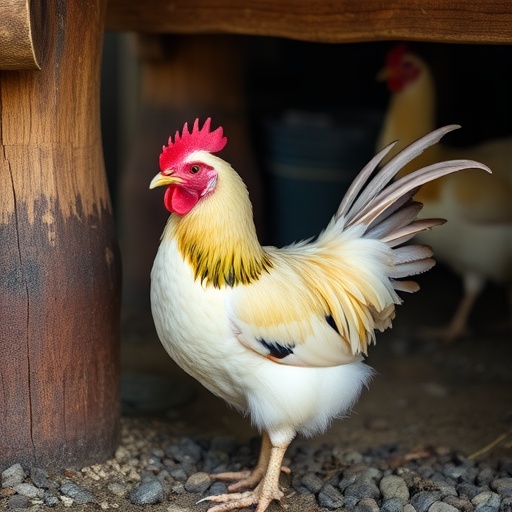
In a groundbreaking study published recently in the Journal of Archaeological Science: Reports, researchers have unveiled the first biomolecular evidence of ancient chickens on the Korean Peninsula. This research represents a seismic shift in understanding the domestication and management of chickens in East Asia, challenging long-held assumptions about their origins and dispersal patterns. By applying cutting-edge techniques in biomolecular archaeology, the team led by Professor Kyungcheol Choy of Hanyang University ERICA has traced the presence and human management of chickens during the Proto-Three Kingdoms period, approximately two millennia ago.
Traditionally, the narrative surrounding chicken domestication and distribution in Northeast Asia has posited that chickens spread from China to Japan, passing through Korea as a mere conduit. However, until now, the role of Korea in this process has been poorly understood, primarily due to the challenges associated with identifying fragmented avian bones in archaeological contexts. Professor Choy’s research addresses this knowledge gap using an innovative methodological approach known as Zooarchaeology by Mass Spectrometry, or ZooMS, which allows for precise species identification from minuscule bone fragments.
ZooMS is a proteomic technique that analyzes collagen peptides extracted from bone samples to generate species-specific molecular fingerprints. This method is particularly valuable in archaeological studies where bone preservation is poor and morphological differentiation between species, such as domestic chickens and wild pheasants, is problematic. By analyzing only about 2 milligrams of bone collagen, ZooMS enables researchers to circumvent the limitations of traditional osteological identification, offering unparalleled resolution in species confirmation.
In conjunction with ZooMS, the research team utilized radiocarbon dating and stable isotope analysis on bone collagen to glean insights into the life histories of these ancient birds. Stable isotope analysis, particularly nitrogen isotopes, revealed elevated values suggestive of anthropogenic feeding practices. This biochemical signature is a strong indicator that the chickens were not merely wild animals but were actively managed and provisioned by humans, implying an established form of poultry husbandry during this early historic period in Korea.
The confirmation of chicken management 2,000 years ago is significant because it situates the Korean Peninsula as more than a passive wildlife corridor. Instead, Korea emerges as an active participant in the domestication and dispersal of chickens, contributing to the complex cultural and biological exchanges in East Asia. These findings invite a reevaluation of the region’s agricultural history, illuminating how early Korean societies integrated domesticated animals into their subsistence systems and cultural practices.
Beyond its immediate archaeological implications, this study showcases the power of combining molecular techniques with traditional archaeological methods to answer longstanding questions in human-animal relationships. The multi-proxy approach employed integrates proteomics, radiocarbon chronology, and isotopic ecology, setting a new standard for investigating domestication processes and animal management strategies in deep time.
The pioneering application of ZooMS to bird remains in the Korean archaeological record opens exciting avenues for future research. By extending these methods to other species such as pigs, cattle, dogs, and horses, researchers can chart the development of animal husbandry practices across the peninsula and their broader connections to neighboring regions. This could lead to transformative insights into the origins of livestock diversity and the management of indigenous breeds over millennia.
Moreover, the implications of this research extend beyond archaeology and anthropology into modern fields like food security and biodiversity conservation. Understanding the genetic and ecological histories of domesticated animals can inform strategies to preserve resilient indigenous breeds and sustainable agricultural practices in the face of global change. The study’s authors emphasize that reconstructing the past can yield practical knowledge for addressing contemporary challenges in animal husbandry and ecosystem management.
Professor Choy highlights that their study provides a methodological foundation for rewriting the history of human-animal interactions in East Asia. As similar analyses are applied to a wider array of archaeological contexts across Korea in the next decade, a nuanced picture of the timing and routes of chicken domestication and dispersal will emerge. This work challenges simplistic models of cultural diffusion and offers a more dynamic view of ancient biocultural exchanges.
In addition to its scholarly contributions, this research is poised to impact public understanding through museum exhibitions and educational programs. By presenting science-based narratives about the history of chickens and their management in Korea, institutions can foster appreciation for the deep historical roots of everyday foods and encourage reflection on the intertwined histories of humans and animals.
Ultimately, the present study signals the advent of biomolecular archaeology within Korean zooarchaeology. This integrative paradigm leverages molecular, chemical, and chronological data to unlock new dimensions of the human past. What began with the analysis of a handful of chicken bones from a single site now holds the potential to revolutionize research on ancient diets, migrations, diseases, and environmental changes throughout East Asia.
The remarkable convergence of archaeological science and molecular biology in this study exemplifies how interdisciplinary approaches can illuminate hidden aspects of prehistory. By peering into ancient proteins preserved in bone, researchers are rewriting narratives about one of the world’s most ubiquitous domesticated animals, enriching our understanding of human history and cultural evolution on the Korean Peninsula and beyond.
Cite Scienmag News
Courtney Benton. (April 22, 2026). Hanyang University ERICA Researchers Uncover the History of Chicken Domestication on the Korean Peninsula. Scienmag. https://scienmag.com/hanyang-university-erica-researchers-uncover-the-history-of-chicken-domestication-on-the-korean-peninsula/
Courtney Benton. "Hanyang University ERICA Researchers Uncover the History of Chicken Domestication on the Korean Peninsula." Scienmag, 22 April 2026, https://scienmag.com/hanyang-university-erica-researchers-uncover-the-history-of-chicken-domestication-on-the-korean-peninsula/. Accessed 4 September 2026.
Courtney Benton. "Hanyang University ERICA Researchers Uncover the History of Chicken Domestication on the Korean Peninsula." Scienmag. April 22, 2026. https://scienmag.com/hanyang-university-erica-researchers-uncover-the-history-of-chicken-domestication-on-the-korean-peninsula/


