

Friday, September 4, 2026
Science
No Result
View All Result
  • Login
  • HOME
  • SCIENCE NEWS
  • CONTACT US
  • HOME
  • SCIENCE NEWS
  • CONTACT US
No Result
View All Result
Scienmag
No Result
View All Result
Home Science News Medicine

Gαq Activates Free Fatty Acid Receptor 4 to Suppress Metabolic Dysfunction

July 15, 2026
in Medicine
Drew Townsend
By Drew Townsend Scienmag Editorial Profile - Cell Biology
Reading Time: 2 mins read
0
Gαq Activates Free Fatty Acid Receptor 4 to Suppress Metabolic Dysfunction

Gαq Activates Free Fatty Acid Receptor 4 to Suppress Metabolic Dysfunction

65
SHARES
587
VIEWS
Share on FacebookShare on Twitter
ADVERTISEMENT

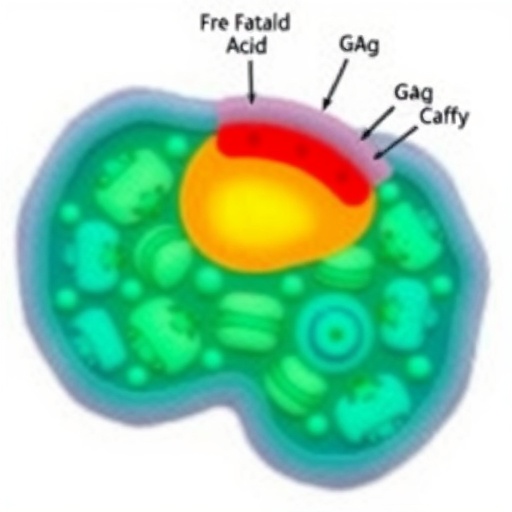
In a study poised to reshape how scientists think about diet-linked metabolic disease, researchers report that activating free fatty acid receptor 4 (FFAR4) can meaningfully reduce metabolic dysfunction. The work, published in Nature Communications (2026), pinpoints a signaling route involving Gαq and the Nr1h3–PPARγ regulatory axis.

FFAR4 is a membrane receptor that senses long-chain fatty acids, classically implicated in metabolic control. Here, the team shows that when FFAR4 signals through Gαq, downstream pathways change gene-expression programs tied to lipid handling and insulin sensitivity. Instead of merely adjusting energy balance, the mechanism interrupts a transcriptional network that normally supports metabolic imbalance.

A central finding is that FFAR4–Gαq activation perturbs Nr1h3 (also known as LXRα) signaling, thereby disturbing the downstream communication to PPARγ. PPARγ is a master regulator of adipocyte differentiation and lipid uptake, and it is frequently discussed in the context of insulin resistance and metabolic syndrome. By disrupting this axis, FFAR4 activation shifts metabolic behavior toward a more protected state.

Mechanistically, the authors connect receptor-level signaling to nuclear transcriptional outcomes. The study suggests that changes in Nr1h3 activity alter PPARγ-driven transcription, reducing the expression of gene programs that contribute to dysfunctional metabolic phenotypes. This provides a coherent pathway linking extracellular fatty acid detection to intracellular, genome-scale metabolic control.

The researchers also emphasize functional outcomes in metabolic systems, reporting improvements consistent with suppressed disease-associated dysfunction. While the specific experimental models span multiple layers of validation, the theme is consistent: FFAR4 engagement through Gαq produces protective metabolic effects.

Importantly for translational interest, the findings highlight a direction for therapeutic strategy: rather than broadly modulating fatty acid receptors, selectively steering FFAR4 signaling toward Gαq could achieve more targeted rewiring of transcriptional control.

Overall, the study presents FFAR4–Gαq as a lever that can disrupt the Nr1h3–PPARγ axis, offering a viral-sounding new angle on metabolic disease intervention. By connecting membrane sensing to nuclear metabolic regulation, it expands the repertoire of actionable nodes within the fatty acid signaling network.

Subject of Research: Metabolic dysfunction; fatty acid receptor signaling; transcriptional regulation (Nr1h3–PPARγ axis).

Article Title: Gαq activation of free fatty acid receptor 4 suppresses metabolic dysfunction by disrupting Nr1h3-PPARγ axis.

Article References: Kong, Y., Wang, J., Wang, Z., Yang, S., Ye, X., Wang, W., Wang, H., Deng, W., Liu, Y., Xu, F., Hou, T., Zhao, Y., Zhang, B., Yu, X., Chen, Y., Liang, X., & Zhu, S. (2026). Gαq activation of free fatty acid receptor 4 suppresses metabolic dysfunction by disrupting Nr1h3-PPARγ axis. Nature Communications, 17(1), Article 8664. https://doi.org/10.1038/s41467-026-75589-2

Image Credits: AI Generated

DOI: 10.1038/s41467-026-75589-2

Keywords: diet-linked metabolic disease, fatty acid sensing receptor, FFAR4 activation, Gαq signaling pathway, insulin sensitivity improvement, lipid metabolism regulation, metabolic dysfunction suppression, Nr1h3 (LXRα) signaling disruption, nuclear receptor-mediated metabolic regulation, PPARγ regulation in adipocytes, signaling pathways in obesity, transcriptional control of metabolic genes

Cite Scienmag News

Drew Townsend. (July 15, 2026). Gαq Activates Free Fatty Acid Receptor 4 to Suppress Metabolic Dysfunction. Scienmag. https://scienmag.com/g%ce%b1q-activates-free-fatty-acid-receptor-4-to-suppress-metabolic-dysfunction/


Drew Townsend. "Gαq Activates Free Fatty Acid Receptor 4 to Suppress Metabolic Dysfunction." Scienmag, 15 July 2026, https://scienmag.com/g%ce%b1q-activates-free-fatty-acid-receptor-4-to-suppress-metabolic-dysfunction/. Accessed 4 September 2026.

Drew Townsend. "Gαq Activates Free Fatty Acid Receptor 4 to Suppress Metabolic Dysfunction." Scienmag. July 15, 2026. https://scienmag.com/g%ce%b1q-activates-free-fatty-acid-receptor-4-to-suppress-metabolic-dysfunction/

Tags: diet-linked metabolic diseasefatty acid sensing receptorFFAR4 activationGαq signaling pathwayinsulin sensitivity improvementlipid metabolism regulationmetabolic dysfunction suppressionNr1h3 (LXRα) signaling disruptionnuclear receptor-mediated metabolic regulationPPARγ regulation in adipocytessignaling pathways in obesitytranscriptional control of metabolic genes
Share26Tweet16
Previous Post

Iran experts build framework to assess older adults’ primary healthcare access

Next Post

Randomized trial finds digital training improves depression care for frontline workers

Related Posts

Variational autoencoders detect coronary artery disease in SPECT images
Medicine

Variational autoencoders detect coronary artery disease in SPECT images

September 4, 2026
VESALIUS-REAL study reveals lipid treatment gaps in high-risk patients lacking prior cardiovascular events
Medicine

VESALIUS-REAL study reveals lipid treatment gaps in high-risk patients lacking prior cardiovascular events

September 4, 2026
GFRAL mediates metabolic responses to mitochondrial stress in brown fat
Medicine

GFRAL mediates metabolic responses to mitochondrial stress in brown fat

September 4, 2026
Vasospasm and Delayed Ischemia After Aneurysmal Rupture With Hemorrhage
Medicine

Vasospasm and Delayed Ischemia After Aneurysmal Rupture With Hemorrhage

September 3, 2026
Graph-Based White Matter Tractometry: Methods, Applications, and Validation Paths
Medicine

Graph-Based White Matter Tractometry: Methods, Applications, and Validation Paths

September 3, 2026
Managing Everyday Life in Double Exposure: Frail Older People’s Experiences During a Pandemic
Medicine

Managing Everyday Life in Double Exposure: Frail Older People’s Experiences During a Pandemic

September 3, 2026
Next Post
Randomized trial finds digital training improves depression care for frontline workers

Randomized trial finds digital training improves depression care for frontline workers

  • Mothers who receive childcare support from maternal grandparents show more optimized

    Mothers who receive childcare support from maternal grandparents show more parental warmth, finds NTU Singapore study

    27656 shares
    Share 11059 Tweet 6912
  • University of Seville Breaks 120-Year-Old Mystery, Revises a Key Einstein Concept

    1061 shares
    Share 424 Tweet 265
  • Bee body mass, pathogens and local climate influence heat tolerance

    682 shares
    Share 273 Tweet 171
  • Researchers record first-ever images and data of a shark experiencing a boat strike

    546 shares
    Share 218 Tweet 137
  • Groundbreaking Clinical Trial Reveals Lubiprostone Enhances Kidney Function

    531 shares
    Share 212 Tweet 133
Science

Embark on a thrilling journey of discovery with Scienmag.com—your ultimate source for cutting-edge breakthroughs. Immerse yourself in a world where curiosity knows no limits and tomorrow’s possibilities become today’s reality!

RECENT NEWS

  • What drives meeting length in breast cancer multidisciplinary team discussions
  • MECR-driven metabolic reprogramming fuels prostate cancer growth and immune remodeling
  • Dual-mode charge storage achieved in laser-induced graphene supercapacitors
  • Graphene microcavity sensor tracks blood pressure in single vessels

Categories

  • Agriculture
  • Anthropology
  • Archaeology
  • Athmospheric
  • Biology
  • Biotechnology
  • Blog
  • Bussines
  • Cancer
  • Chemistry
  • Climate
  • Earth Science
  • Editorial Policy
  • Marine
  • Mathematics
  • Medicine
  • Pediatry
  • Policy
  • Psychology & Psychiatry
  • Science Education
  • Social Science
  • Space
  • Technology and Engineering

Subscribe to Blog via Email

Enter your email address to subscribe to this blog and receive notifications of new posts by email.

Join 5,151 other subscribers

© 2025 Scienmag - Science Magazine

Welcome Back!

Login to your account below

Forgotten Password?

Retrieve your password

Please enter your username or email address to reset your password.

Log In
No Result
View All Result
  • HOME
  • SCIENCE NEWS
  • CONTACT US

© 2025 Scienmag - Science Magazine

Discover more from Science

Subscribe now to keep reading and get access to the full archive.

Continue reading