

Monday, July 27, 2026
Science
No Result
View All Result
  • Login
  • HOME
  • SCIENCE NEWS
  • CONTACT US
  • HOME
  • SCIENCE NEWS
  • CONTACT US
No Result
View All Result
Scienmag
No Result
View All Result
Home Science News Psychology & Psychiatry

Gut microbiome shift links anhedonia and sensation-seeking in prodromal Parkinson’s mice

July 27, 2026
in Psychology & Psychiatry
Reading Time: 2 mins read
0
Gut microbiome shift links anhedonia and sensation-seeking in prodromal Parkinson’s mice

Gut microbiome shift links anhedonia and sensation-seeking in prodromal Parkinson’s mice

65
SHARES
587
VIEWS
Share on FacebookShare on Twitter
ADVERTISEMENT

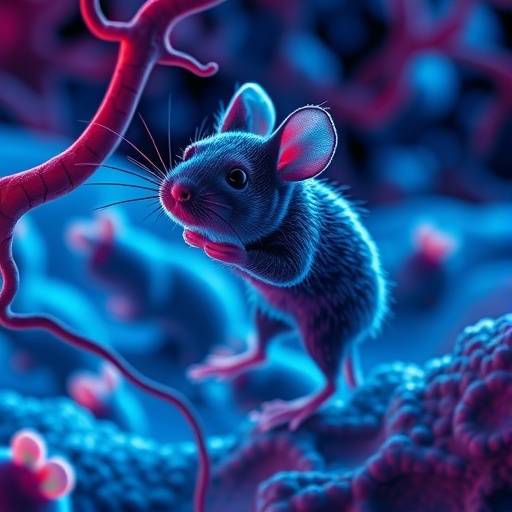
A new study reported in Translational Psychiatry links mood-related behavior to the microbiome in a mouse model designed to mimic early, prodromal Parkinson’s disease. The work combines behavioral phenotyping with microbiome profiling to test whether gut communities shift in tandem with changes in reward processing and motivation, two domains increasingly implicated in prodromal stages of neurodegeneration.

Researchers used a transgenic mouse model alongside behavioral assays that distinguish anhedonia-like behavior from sensation-seeking tendencies. Rather than treating these traits as mutually exclusive, the team found that both could coexist within the same disease-relevant setting, suggesting that prodromal Parkinson’s biology may not follow a single emotional trajectory.

The microbiome component of the study focused on context-dependent dysbiosis—changes in gut microbial composition that vary with experimental conditions rather than remaining fixed. High-throughput sequencing and downstream ecological analyses revealed that gut communities reorganized differently across behavioral phenotypes, pointing to a bidirectional relationship between gut ecology and brain-relevant behavior.

Technically, the analysis leveraged microbial community structure metrics and pattern-based comparisons to identify taxa associated with altered behavioral profiles. The authors report that dysbiosis was not uniform across animals, but instead aligned with which behavioral state the mice expressed, consistent with a “trait-by-context” framework.

A key implication is that anhedonia and sensation-seeking may reflect overlapping yet separable mechanisms that interact with gut-derived signals, including microbial metabolites and immune-modulating pathways. By situating these signals inside a prodromal window, the findings strengthen the argument that gut-targeted interventions could be most impactful before overt motor symptoms appear.

The study also emphasizes biological heterogeneity, showing that even within the same genetic Parkinson’s model, neurobehavioral outcomes and microbiome changes do not occur identically. This heterogeneity may explain why clinical gut-microbiome studies in Parkinson’s patients sometimes yield mixed results.

Overall, the results support a viral new narrative: prodromal Parkinson’s disease may involve parallel behavioral shifts and gut ecosystem remodeling, with emotional phenotypes acting as a lens through which dysbiosis becomes visible. If translatable to humans, microbiome signatures could help stratify risk and guide early, personalized prevention strategies.

The research, DOI-linked to the Translational Psychiatry article “Coexistence of anhedonia and sensation-seeking with context-dependent gut dysbiosis in a prodromal transgenic mouse model of Parkinson’s disease,” sets the stage for experiments that test whether modifying gut communities can causally reshape reward-related behaviors.

Subject of Research: Parkinson’s disease—prodromal stage; gut microbiome; anhedonia; sensation-seeking.

Article Title: Coexistence of anhedonia and sensation-seeking with context-dependent gut dysbiosis in a prodromal transgenic mouse model of Parkinson’s disease.

Article References: Dubljević, O., Popović, D., Potrebić Stefanović, M. et al. Translational Psychiatry (2026). https://doi.org/10.1038/s41398-026-04306-w

Image Credits: AI Generated

DOI: https://doi.org/10.1038/s41398-026-04306-w

Tags: behavioral phenotyping in Parkinson’s researchbidirectional gut-brain interactionscontext-dependent gut dysbiosisearly biomarkers of Parkinson’s diseasegut microbial community dynamicsGut microbiomegut-brain axis in neurodegenerationmicrobial taxa associated with mood and behaviormicrobiome profiling in mouse modelsmicrobiome-behavior connectionprodromal Parkinson’s diseasereward processing and motivation in Parkinson’s
Share26Tweet16
Previous Post

Renewables Ease Energy, Water, and Ecological Strains in Yellow River Basin

Next Post

Nonclassical biosynthetic pathway allows bacteria to synthesize tocopherol

Related Posts

Autism and social anxiety linked to submissive behavior and larger amygdala
Psychology & Psychiatry

Autism and social anxiety linked to submissive behavior and larger amygdala

July 27, 2026
Lifestyle Factors and BrainAGE Linked to Depression in Adults
Psychology & Psychiatry

Lifestyle Factors and BrainAGE Linked to Depression in Adults

July 27, 2026
Gene expression signatures forecast psychotherapy response in posttraumatic stress disorder
Psychology & Psychiatry

Gene expression signatures forecast psychotherapy response in posttraumatic stress disorder

July 27, 2026
Whole-Exome Sequencing and Structural Brain Imaging Reveal Bipolar Disorder Markers
Psychology & Psychiatry

Whole-Exome Sequencing and Structural Brain Imaging Reveal Bipolar Disorder Markers

July 27, 2026
Esketamine Opioid-Free Anesthesia Improves Bariatric Surgery Pain and Mental Health
Psychology & Psychiatry

Esketamine Opioid-Free Anesthesia Improves Bariatric Surgery Pain and Mental Health

July 27, 2026
Early Parenting Shapes Neural Reward Responses From Childhood to Adolescence
Psychology & Psychiatry

Early Parenting Shapes Neural Reward Responses From Childhood to Adolescence

July 26, 2026
Next Post
Nonclassical biosynthetic pathway allows bacteria to synthesize tocopherol

Nonclassical biosynthetic pathway allows bacteria to synthesize tocopherol

  • Mothers who receive childcare support from maternal grandparents show more

    Mothers who receive childcare support from maternal grandparents show more parental warmth, finds NTU Singapore study

    27656 shares
    Share 11059 Tweet 6912
  • University of Seville Breaks 120-Year-Old Mystery, Revises a Key Einstein Concept

    1061 shares
    Share 424 Tweet 265
  • Bee body mass, pathogens and local climate influence heat tolerance

    682 shares
    Share 273 Tweet 171
  • Researchers record first-ever images and data of a shark experiencing a boat strike

    546 shares
    Share 218 Tweet 137
  • Groundbreaking Clinical Trial Reveals Lubiprostone Enhances Kidney Function

    531 shares
    Share 212 Tweet 133
Science

Embark on a thrilling journey of discovery with Scienmag.com—your ultimate source for cutting-edge breakthroughs. Immerse yourself in a world where curiosity knows no limits and tomorrow’s possibilities become today’s reality!

RECENT NEWS

  • Hidden Design Behind Sharks, Spines, and Diverse Swimming Styles
  • Flaring Soil and Peat Emissions Dominated Canada’s Record 2023 Wildfire Season
  • Non-Gaussian Fluctuations in Order Parameter Across a Phase Transition
  • Opto-thermo-osmotic technique enables programmable rotation of single cells around any axis

Categories

  • Agriculture
  • Anthropology
  • Archaeology
  • Athmospheric
  • Biology
  • Biotechnology
  • Blog
  • Bussines
  • Cancer
  • Chemistry
  • Climate
  • Earth Science
  • Editorial Policy
  • Marine
  • Mathematics
  • Medicine
  • Pediatry
  • Policy
  • Psychology & Psychiatry
  • Science Education
  • Social Science
  • Space
  • Technology and Engineering

Subscribe to Blog via Email

Enter your email address to subscribe to this blog and receive notifications of new posts by email.

Join 5,146 other subscribers

© 2025 Scienmag - Science Magazine

Welcome Back!

Login to your account below

Forgotten Password?

Retrieve your password

Please enter your username or email address to reset your password.

Log In
No Result
View All Result
  • HOME
  • SCIENCE NEWS
  • CONTACT US

© 2025 Scienmag - Science Magazine

Discover more from Science

Subscribe now to keep reading and get access to the full archive.

Continue reading
