


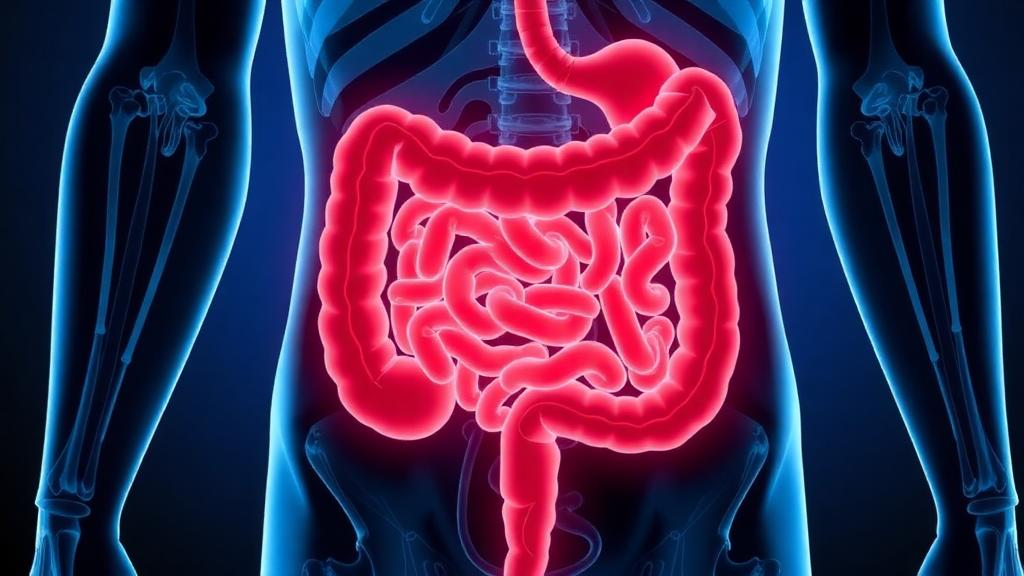
Ulcerative colitis has long been described as a disease of an unbalanced gut microbiome, but a new study argues that the real story lies not in which microbes are present, but in how they talk to one another. Publishing in Advanced Science, a research team led by scientists including mathematician Shing-Tung Yau and systems biologist Rongling Wu reports that the chronic inflammatory bowel condition fundamentally rewires the interaction architecture of the gut ecosystem, shifting power from protective, beneficial bacteria to opportunistic pathogens. The work, which combines an elegant spousal cohort design with a novel network-modeling framework and even topological mathematics, suggests that disease is less a change in the microbial cast than a change in the play itself.
The team’s starting point was a concept borrowed from evolutionary biology: phenotypic plasticity, the capacity of an organism to change its traits in response to its environment. While plasticity has been studied extensively in plants and animals, no one had systematically linked microbial plasticity to a shift in human health status. To do so, the researchers recruited twelve patients with ulcerative colitis along with their healthy spouses, all sharing the same household environment. Because diet, lifestyle, and living conditions are held broadly constant within each couple, differences in microbial abundance between spouses could be attributed to the disease itself rather than to environmental confounders. A second matched cohort of twelve fully healthy couples served as a control, allowing the team to separate disease-driven plasticity from ordinary day-to-day fluctuation.
Shotgun metagenomic sequencing of fecal samples identified 5,048 bacterial species across the participants. The researchers first computed a habitat index for each individual, the summed abundance of all gut microbes, as a measure of the ecosystem’s overall productivity. Comparing the two cohorts, they found that disease-induced plasticity was both significantly greater and far more variable between couples than fluctuation-induced plasticity, indicating that the gut microbiota as a whole is acutely sensitive to ulcerative colitis, with the degree of sensitivity shaped by each family’s unique environment. Opportunistic pathogens generally showed heightened plasticity in response to the disease, while commensal organisms such as Eubacterium species displayed the opposite pattern, remaining comparatively stable.
By fitting power-law curves describing how each species’ abundance scales with the habitat index, the team uncovered four distinct plasticity strategies. Enterobacter hormaechei subsp. oharae, a known pathobiont, followed a disease-driven trajectory unique to ulcerative colitis patients. Vibrio owensii responded to both disease and household environment, Enterococcus gallinarum responded mainly to random fluctuation, and Butyricimonas virosa showed a combined disease-plus-fluctuation signature. These patterns set the stage for the study’s central question: which other microbes are responsible for driving each species’ plastic response?
Answering that question required a fundamentally new modeling tool. Correlation-based networks can capture interaction strength, and Bayesian networks can capture direction, but neither does both at once. The researchers therefore built on their generalized statistical mechanics framework, which integrates evolutionary game theory, predator-prey dynamics, and graph theory into a system of quasi-dynamic mixed ordinary differential equations. By incorporating an allometric scaling law, the model converts static abundance measurements into quasi-dynamic trajectories indexed by the habitat index, allowing informative, dynamic, omnidirectional, and personalized networks, dubbed idopNetworks, to be reconstructed without longitudinal sampling. Crucially, the equations decompose each microbe’s observed abundance into an independent component reflecting its intrinsic capacity and a dependent component reflecting regulation by its coexisting species.
Because a fully connected network among 5,048 species is both computationally intractable and biologically implausible, the team first applied Wu’s functional clustering, a Gaussian-mixture-based method, to sort all species into eight modules according to the similarity of their plasticity profiles. The modules mapped cleanly onto known ecology: one dominated by Streptococcus, another by Bacteroides, two by Prevotella, and several by clostridial groups including Roseburia, Ruminococcus, and Lachnospiraceae associated with short-chain fatty acid production. One module, M1, stood out. In healthy spouses its plasticity remained small and stable, but in ulcerative colitis patients its response curve steepened dramatically, marking it as the community most responsive to the inflammatory environment.
Layering coarse-grained module-to-module networks with fine-grained species-level networks produced what the authors call 4MidopNetworks: multilayer, multiplex, multiscale maps of who promotes or inhibits whom. The comparison between health and disease was striking. In healthy subjects, the network’s hub module was M6, a cluster containing beneficial organisms whose hub species, such as Lachnospiraceae bacterium 3_1_57FAA_CT1, promoted probiotics like Lactobacillus backii while suppressing harmful sulfur-reducing bacteria. In ulcerative colitis patients, the hub shifted to M1 and M8, where hub species such as Neisseria elongata subsp. glycolytica actively promoted opportunistic pathogens including Klebsiella aerogenes and Listeria monocytogenes. Directional interactions also flipped: a module that facilitated Bacteroides in healthy guts became inhibitory in diseased guts, evidence that the community’s operating rules, not just its membership, are reconfigured by inflammation.
The decomposition analysis proved especially revealing. Module M1’s observed abundance in patients understated its true potential, because it was held in check by inhibitory pressure from module M5 despite its heightened intrinsic capacity in the diseased gut. Conversely, M6, the healthy hub, was suppressed in patients by strong negative regulation from module M7. At the species level, the plasticity of Enterobacter hormaechei subsp. oharae emerged from a complex tug-of-war: positive regulation by Psychrobacillus and Leuconostoc strains, offset by inhibition from Bacillus cereus, a species with a documented dual role in causing gastroenteritis yet also easing inflammatory bowel disease by repairing the gut barrier. Such decompositions, the authors argue, could guide rational ecological interventions that tip the balance back toward health.
To probe the deeper structure of these networks, the team deployed GLMY homology theory, a branch of topological mathematics developed by Yau and collaborators that extends classical homology to directed graphs. The analysis detected ulcerative colitis-specific two-dimensional topological features, essentially high-order cooperative cavities, within the M1 module’s positive-interaction network that were entirely absent in healthy individuals. Four of five such features shared a circular connectivity pattern linking Pectobacterium carotovorum, Pseudomonas aeruginosa, and Listeria monocytogenes, suggesting that conditional pathogens form tightly knit mutual-promotion alliances under disease conditions rather than acting independently. Meanwhile, healthy negative-interaction networks showed greater topological complexity than diseased ones, painting a picture of disease as a simplification of inhibitory control combined with elaboration of cooperative pathogenic circuits.
The findings carried translational weight as well. A machine-learning classifier built on module M1’s plasticity signature distinguished ulcerative colitis patients from healthy controls with an area under the curve of 0.82, and six individual species within the module each exceeded 0.9, qualifying as potent single-species biomarkers. The authors caution that the cohort was small, though they note simulation studies indicating their parameter-light model retains robust statistical power at such scales. They also stress that validation in larger, independent populations is essential before plasticity-based diagnostics reach the clinic. Still, the study marks a conceptual shift: from cataloging which microbes differ in disease to deciphering the dynamic ecological rules that govern them. If pathobiont-centered plasticity enhancement proves to be a general driver of dysbiosis, future therapies may aim not simply to reseed the gut with beneficial bacteria, but to dismantle the pathogenic alliances that inflammation builds, restoring the interaction network itself to a healthy architecture.
Subject of Research: Microbial interaction networks and phenotypic plasticity in the gut microbiota of ulcerative colitis patients
Article Title: Omnidirectional Interaction Networks Modulating Phenotypic Plasticity in the Gut Microbiota Towards Ulcerative Colitis
Article References: Li, H., Li, J., Dong, A., Guo, X., Tu, Q., Feng, Z., Lin, H., Zhang, Y., Hao, Y., Gong, H., Meng, Y., Wang, Y., Yau, S.-T., Cao, X., Wu, R., & Liu, X. (2026). Omnidirectional Interaction Networks Modulating Phenotypic Plasticity in the Gut Microbiota Towards Ulcerative Colitis. Advanced Science, Article e78043. https://doi.org/10.1002/advs.78043
Image Credits: AI Generated
DOI: 10.1002/advs.78043
Keywords: gut microbiota, ulcerative colitis, phenotypic plasticity, microbial interaction networks, dysbiosis, metagenomics, idopNetworks, pathobionts, GLMY homology, machine learning biomarkers, evolutionary game theory, inflammatory bowel disease
Cite Scienmag News
Morgan Morrow. (October 8, 2026). Gut Microbe Networks Rewire Themselves in Ulcerative Colitis, Study Finds. Scienmag. https://scienmag.com/gut-microbe-networks-rewire-themselves-in-ulcerative-colitis-study-finds/
Morgan Morrow. "Gut Microbe Networks Rewire Themselves in Ulcerative Colitis, Study Finds." Scienmag, 8 October 2026, https://scienmag.com/gut-microbe-networks-rewire-themselves-in-ulcerative-colitis-study-finds/. Accessed 8 October 2026.
Morgan Morrow. "Gut Microbe Networks Rewire Themselves in Ulcerative Colitis, Study Finds." Scienmag. October 8, 2026. https://scienmag.com/gut-microbe-networks-rewire-themselves-in-ulcerative-colitis-study-finds/


