


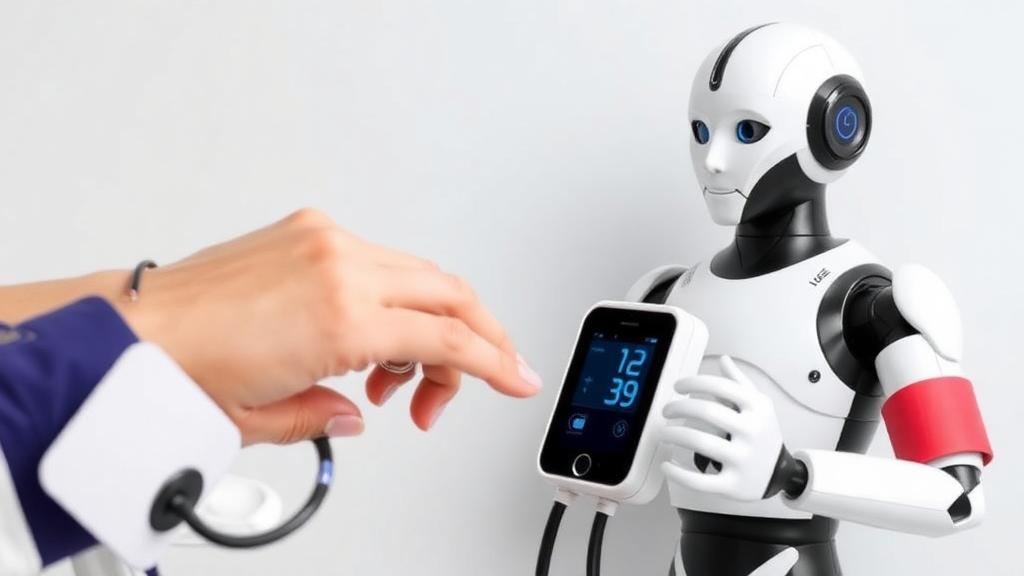
When people want a quick answer about their health, many now turn to artificial intelligence. Ask a chatbot whether a home blood pressure monitor has passed clinical validation testing, and it will usually respond with confidence. According to preliminary research presented at the American Heart Association’s Hypertension Scientific Sessions 2026 in Arlington, Virginia, that confidence is frequently misplaced. Three of the four most popular AI-powered search tools, OpenAI’s ChatGPT, Microsoft’s Copilot and Perplexity AI, correctly identified whether a home blood pressure monitor met validated clinical standards only 63 to 83 percent of the time. Google Gemini performed best, yet it still delivered incorrect responses roughly 10 to 15 percent of the time. For a question that determines whether a device can be trusted to measure blood pressure accurately, those error rates carry real clinical consequences.
The stakes are far from trivial. High blood pressure is the leading risk factor for cardiovascular disease, affecting more than 125 million adults in the United States, roughly 47 percent of the adult population, according to the American Heart Association’s 2026 Heart Disease and Stroke Statistics Update. Only about one in four of those adults keeps their blood pressure within the target range of less than 120 mm Hg systolic and 80 mm Hg diastolic. Home monitoring is a cornerstone of modern hypertension management, allowing clinicians to track treatment response and patients to participate actively in their own care. But the entire enterprise depends on the device itself being accurate, which is why validation matters so much.
A home blood pressure monitor is considered validated when independent, third-party testing has demonstrated that it produces consistently accurate readings. Three primary registries catalog these devices: StrideBP, ValidateBP and Hypertension Canada. The 2025 American Heart Association Guideline for the Prevention, Detection, Evaluation, and Management of High Blood Pressure in Adults explicitly recommends that people use a home monitoring device that has been validated for accuracy, and directs patients to consult their clinician and visit validatebp.org for guidance. Because these registries are free, public and independently maintained, the information AI tools would need to answer correctly is, in principle, easily accessible.
That accessibility is what makes the new findings so puzzling. Researchers tested 324 home blood pressure monitors in Canada during April and May 2026, including 145 validated devices and 179 devices that were not validated. The device list was drawn from the three validation registries, a list of known non-validated devices, and the top-selling blood pressure cuff monitors sold through Amazon in Canada, Australia and the United States. Each device was queried against four AI search tools: Google Gemini, Microsoft Copilot, ChatGPT and Perplexity. The design deliberately included lesser-known monitors as well as popular ones, though the researchers noted that even obscure devices appear on the same official registries as their better-known counterparts.
The questioning protocol was equally systematic. For each of the 324 devices, researchers asked each AI tool three types of questions: a general, public-style question about the device’s validation status; a more specific question directing the tool to check a named validation registry; and the same question posed with additional detail and requiring a one-word answer. This layered approach was intended to reveal whether phrasing, specificity or explicit pointers to authoritative sources changed the quality of the responses. To assess consistency, the team retested 20 percent of the devices that had produced mixed results, using three different examiners on different computers and on different days, primarily in May 2026.
The results revealed both troubling inaccuracy and troubling inconsistency. Accuracy varied significantly depending on which tool was used. Google Gemini scored highest, answering correctly 86 to 91 percent of the time depending on how questions were phrased, while correct responses from ChatGPT, Copilot and Perplexity ranged from only about 63 to 83 percent. Notably, all four tools were less accurate at identifying validated monitors than unvalidated ones, and all four misidentified various devices as failing to meet clinical standards even while verifying against the very registries that list only validated monitors. When researchers retested devices with mixed results, asking the same tool the same questions on a different day or from a different computer, the tools often produced a different answer, undermining any assumption that a single query yields a dependable verdict.
Anna Soriano, M.D., a third-year internal medicine resident at the University of Montreal and the study’s presenting author, emphasized how close the weaker tools came to chance performance. We found that most AI tools performed only slightly better than if you had flipped a coin for each question, she said. Even Google Gemini, which performed best, was often wrong and couldn’t find information that is easily located. Soriano added that people may unknowingly believe a device is validated based on an AI tool’s inaccurate response, and that using such a device may produce inaccurate blood pressure readings, which could lead to an inappropriate diagnosis or treatment decisions. The authors could not determine exactly why the AI tools struggled with devices that had already passed validation testing.
One detail Soriano described as almost counterintuitive stands out: in many cases, the AI tools actually located the monitor’s listing on an official registry website but failed to interpret that listing as proof of validation. It is surprising that AI tools had so much difficulty specifically identifying validated devices, since those are the ones with clear listings on official registries, she said. This suggests the problem lies not in retrieval but in reasoning, the step where a language model must connect a factual observation to the correct conclusion. It is a distinction with broad implications, because much of the promise of AI in health care depends on exactly that kind of inference, whether the task involves cardiac imaging, electrocardiography or mobile monitoring devices.
Keith C. Ferdinand, M.D., FAHA, an American Heart Association volunteer expert and vice chair of the Association’s 2025 High Blood Pressure Guideline, who was not involved in the study, placed the findings in a wider clinical context. Artificial intelligence holds great promise to help support clinicians in areas such as cardiac imaging, electrocardiography, mobile devices and other tools, he said, but the potential shortcomings demonstrated by this study should remind clinicians and the public that using AI for clinical decision-making requires caution. Ferdinand, the Gerald S. Berenson Endowed Chair in Preventative Cardiology and professor of medicine at Tulane University School of Medicine in New Orleans, stressed that home blood pressure devices need to be both validated and accurate, and that with proper technique and regular monitoring, readings from home devices remain a valuable component of integrated, individualized treatment plans that can improve patient care and outcomes.
The researchers acknowledge important limitations. The results are likely to change as AI technology continues to improve, and because the tools were tested over a finite window, the findings represent a snapshot of rapidly evolving systems. To limit each tool’s ability to learn from previous test searches, the scientists used private internet browsing sessions, though this technique could not fully prevent language model training on the queries. The study is also a research abstract, presented at the Hypertension Scientific Sessions and scheduled for publication in the Hypertension Scientific Sessions 2026 Supplement in November 2026; abstracts are not peer-reviewed and the findings are considered preliminary until published as a full manuscript. Even so, the practical advice from the authors is unambiguous: rather than trusting a chatbot’s answer, healthcare professionals and the public should confirm a monitor’s validation status directly through the recognized independent, free and publicly available registries, starting with validatebp.org.
Subject of Research: Accuracy of AI chatbots in identifying clinically validated home blood pressure monitors
Article Title: Top AI tools accurately identified validated home BP monitors only about 2/3 of the time
Article References: Top AI tools accurately identified validated home BP monitors only about 2/3 of the time. (n.d.). Original publication
Image Credits: AI Generated
DOI: Not provided
Keywords: artificial intelligence, ChatGPT, Google Gemini, Microsoft Copilot, Perplexity AI, blood pressure monitors, hypertension, clinical validation, home monitoring, American Heart Association, health misinformation, validatebp.org
Cite Scienmag News
Denise Maddox. (October 8, 2026). AI Chatbots Struggle to Spot Validated Home Blood Pressure Monitors, Study Finds. Scienmag. https://scienmag.com/ai-chatbots-struggle-to-spot-validated-home-blood-pressure-monitors-study-finds/
Denise Maddox. "AI Chatbots Struggle to Spot Validated Home Blood Pressure Monitors, Study Finds." Scienmag, 8 October 2026, https://scienmag.com/ai-chatbots-struggle-to-spot-validated-home-blood-pressure-monitors-study-finds/. Accessed 8 October 2026.
Denise Maddox. "AI Chatbots Struggle to Spot Validated Home Blood Pressure Monitors, Study Finds." Scienmag. October 8, 2026. https://scienmag.com/ai-chatbots-struggle-to-spot-validated-home-blood-pressure-monitors-study-finds/


