

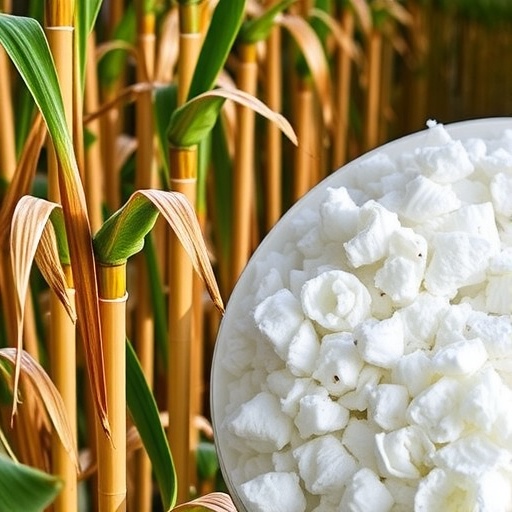
The global push for sustainable materials has scientists reimagining waste not as a disposal problem but as a reservoir of untapped value. In a striking advance, researchers have turned sugarcane bagasse—the fibrous residue left after juice extraction—into a high-purity cellulose pulp suitable for everything from textiles to biodegradable films, using a process that ditches harsh chemicals for a cleaner, smarter chemistry. The work, accepted in the Journal of Bioresources and Bioproducts, demonstrates how a combination of carbonate-based oxygen-alkali cooking and enzyme-driven bleaching can preserve cellulose integrity while eliminating the need for sulfur or chlorine compounds, a feat that could reshape how the pulp and paper industry approaches agricultural residues.
Conventional pulping of non-wood biomass often relies on kraft or soda processes that employ sodium hydroxide and sodium sulfide at high temperatures, followed by chlorine dioxide or elemental chlorine bleaching. These methods degrade cellulose chains, reducing the polymer’s molecular weight and viscosity, while generating toxic byproducts such as adsorbable organic halides and malodorous sulfur gases. Sugarcane bagasse, abundant in tropical regions, poses an additional challenge: its high hemicellulose and lignin content demands aggressive chemical conditions that often sacrifice yield and quality. The new route circumvents these pitfalls by rethinking both delignification and brightening from a molecular perspective.
The process begins with a hydrothermal pretreatment step that selectively strips away hemicellulose. By treating the bagasse with hot water under controlled pressure, the team removed 83.7% of hemicellulose while retaining nearly 90% of the cellulose. This simple pretreatment is critical because hemicellulose acts as a physical barrier and a chemical shield that protects lignin during subsequent cooking. Removing it early opens the cell wall matrix, exposing lignin to reactive oxygen species in a more targeted manner. Moreover, the dissolved hemicellulose stream can be separately valorized into biofuels or platform chemicals, adding economic and sustainability credits to the overall biorefinery concept.
The core innovation lies in the pulping stage, where sodium hydroxide is partially replaced by sodium carbonate. In a typical oxygen-alkali cook, the hydroxyl radical and superoxide anion generated are highly reactive but indiscriminate, attacking both lignin and cellulose. The researchers discovered that at a 50% sodium carbonate substitution ratio, the carbonate ions buffer the alkalinity and modulate the generation of reactive oxygen species, promoting selective oxidation of lignin’s aromatic rings while sparing the cellulose backbone. Response surface optimization pinpointed 105.8 °C and three hours as the sweet spot, yielding a pulp with 36.5% yield, 47.6% ISO brightness, and 89.1% α-cellulose content—numbers that rival or exceed those of traditional sulfur-based pulps but at a significantly lower cooking temperature and without any sulfur odor.
Yet the pulp’s true transformation occurs during bleaching. Instead of chlorine-containing compounds, the team deployed an enzymatic cascade: xylanase first nips residual hemicellulose tethers, laccase then oxidizes lignin fragments into quinone structures, and finally a modest dose of hydrogen peroxide decolorizes the chromophores. This enzymatic totally chlorine-free (TCF) sequence works symbiotically. Xylanase improves the accessibility of laccase to lignin-carbohydrate complexes, while laccase-generated oxidized intermediates sensitize lignin toward peroxide oxidation, allowing a drastic reduction in peroxide consumption. The final dissolving pulp boasts 81.2% ISO brightness, 91.02% α-cellulose, a viscosity of 248 mL/g indicating preserved chain length, and an overall yield of 30.8% starting from raw bagasse. These specifications comfortably meet industrial requirements for dissolving pulp, the premium feedstock used to spin rayon, lyocell, and specialty cellulose ethers.
Behind the numbers is a mechanistic elegance. The carbonate ion, through equilibrium with bicarbonate and hydroxide, finely tunes the solution’s redox potential, encouraging the formation of stable perhydroxyl anions rather than fleeting hydroxyl radicals. This shift favors electrophilic attack on lignin’s electron-rich phenolic units over random chain scission of cellulose. Concurrently, the laccase mediator system shuttles electrons from lignin substructures to molecular oxygen, generating hydrogen peroxide in situ and creating a closed-loop oxidative cycle. This understanding allowed the team to drastically reduce the external peroxide load, avoiding common pitfalls of TCF bleaching such as brightness ceiling and cellulose yellowing from over-oxidation.
Environmental benefits extend beyond chemical substitution. The lower cooking temperature saves energy, the absence of sulfur eliminates the need for recovery boilers and causticizing loops, and the enzyme step operates at mild pH and temperature. Furthermore, the process effluent, free of chloride and sulfide ions, is more amenable to anaerobic treatment and nutrient recovery. For sugarcane mills already generating bagasse on site, integrating such a pulping unit could convert a disposal cost into a high-margin product stream, aligning with circular bioeconomy goals.
The study arrives at a moment when global dissolving pulp demand is surging, driven by the appetite for bio-based textiles as alternatives to petroleum-derived polyester. Wood remains the dominant raw material, but land competition, deforestation concerns, and supply chain vulnerabilities are pushing industry toward underutilized agricultural residues. By proving that bagasse can be upgraded without compromising quality or the environment, this research provides a tangible blueprint. The team’s next steps include scaling the integrated process to pilot plant operations and assessing techno-economic viability, but the fundamental chemistry is already clear: a greener pulping route is not only possible but competitive.
Subject of Research: Green production of dissolving pulp from sugarcane bagasse via carbonate-based oxygen-alkali pulping and enzymatic totally chlorine-free bleaching
Article Title: Green Production of Dissolving Pulp from Sugarcane Bagasse via Carbonate-Based Oxygen-Alkali Pulping and Enzymatic Totally Chlorine-Free Bleaching
News Publication Date: 30-Jun-2026
Web References: http://dx.doi.org/10.1016/j.jobab.2026.100281
References: Journal of Bioresources and Bioproducts, 2026; DOI: 10.1016/j.jobab.2026.100281
Image Credits: State Key Laboratory of Green Papermaking and Resource Recycling, Key Laboratory of Pulp & Paper Science and Technology of Education Ministry, Qilu University of Technology, Jinan 250353, China
Keywords: sugarcane bagasse, dissolving pulp, oxygen-alkali pulping, sodium carbonate, enzymatic bleaching, chlorine-free, lignin oxidation, cellulose preservation, biorefinery, agricultural residue valorization, lyocell feedstock, green chemistry


