


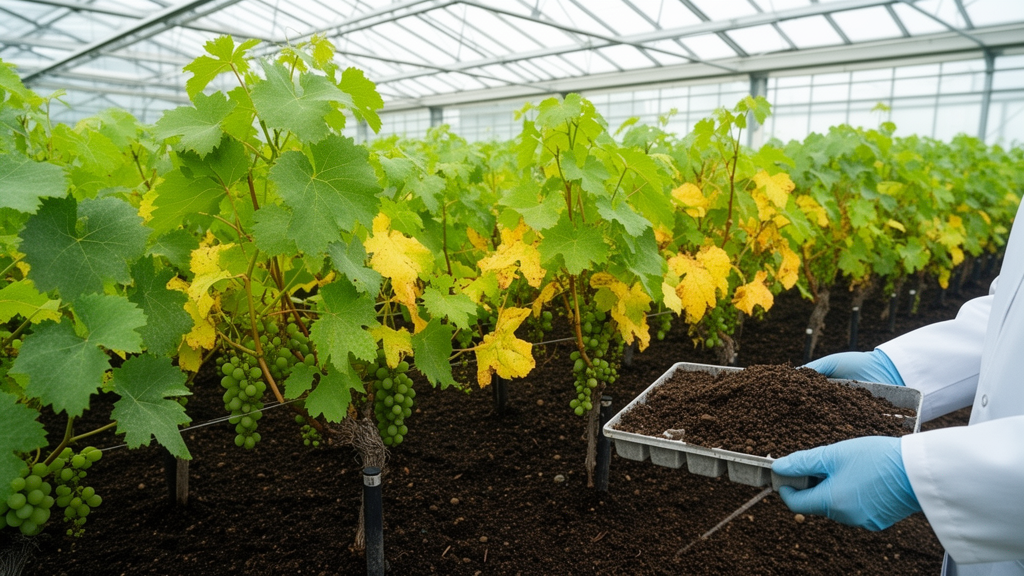
Phosphorus is a vital macronutrient for grapevine, but the mechanisms that allow cultivars to cope with both too little and too much of it have remained poorly defined. Seedlings were grown under 0 mM phosphorus (deficiency), 2.5 mM (sufficiency) and 5 mM (excess or toxicity). Vegetative performance peaked at the intermediate level.
Stem length, stem diameter, lateral shoot number and shoot dry weight all reached their highest values under 2.5 mM phosphorus, while both severe deficiency and excess significantly impaired shoot development, indicating that the physiological optimum for grapevine vegetative growth sits at the moderate supply rather than at the high end. Root behavior told a different story. Root dry weight remained comparable between the 2.5 mM and 5 mM treatments, so plants receiving excess phosphorus showed a higher root-to-shoot ratio.
This shift suggests that when shoots are suppressed by phosphorus toxicity, the root system retains relatively more of the plant's biomass, a pattern consistent with stress-driven allocation changes rather than stimulated root growth. Nutrient profiling revealed pronounced tissue-specific partitioning. Increasing phosphorus supply promoted accumulation of phosphorus and nitrogen in leaves while altering the root macronutrient status of nitrogen, phosphorus, potassium, calcium and magnesium.
In roots, elevated phosphorus suppressed the accumulation of iron, manganese and copper while enhancing zinc uptake. The divergent behavior of zinc, which increased in roots but decreased in leaves, highlights how phosphorus levels can reshape micronutrient distribution between organs rather than simply limiting overall uptake. Both extremes of supply triggered oxidative stress.
Activities of the antioxidant enzymes catalase, guaiacol peroxidase and ascorbate peroxidase were up-regulated in leaves and roots under deficiency and excess alike, showing that phosphorus imbalance imposes oxidative pressure that the plants counter with heightened enzymatic defense. Cultivar-specific responses were prominent. Under deficiency, 'Khalili' accumulated substantial anthocyanins and showed higher leaf starch content, suggesting a distinctive metabolic strategy for coping with phosphorus starvation. 'Perlette', by contrast, maintained more stable ionic homeostasis under excess phosphorus, indicating greater tolerance of toxicity at the mineral balance level.
The authors conclude that 2.5 mM phosphorus represents the physiological optimum for grapevine vegetative development, while both extreme deficiency and excess impair growth through distinct mineral imbalances and oxidative stress cascades.
Subject of Research: Morphophysiological and biochemical responses of two grape cultivars to varying phosphorus supply levels
Article Title: Morphophysiological and biochemical responses of two grape cultivars to phosphorus deficiency and toxicity
Article References: Behrooz, M. Z., Karimi, R., Khadivi, A., Tunç, Y., & Yadav, L. P. (2026). Morphophysiological and biochemical responses of two grape cultivars to phosphorus deficiency and toxicity. PLOS One, 21(10), e0361111. https://doi.org/10.1371/journal.pone.0361111
Image Credits: AI Generated
DOI: 10.1371/journal.pone.0361111
Keywords: grapevine, phosphorus deficiency, phosphorus toxicity, antioxidant enzymes, nutrient partitioning, oxidative stress, anthocyanins, root-to-shoot ratio, Vitis vinifera, plant nutrition, micronutrients, cultivar comparison
Cite Scienmag News
Gavin Prescott. (October 27, 2026). Grape Cultivars Reveal Distinct Responses to Phosphorus Deficiency and Excess. Scienmag. https://scienmag.com/grape-cultivars-reveal-distinct-responses-to-phosphorus-deficiency-and-excess/
Gavin Prescott. "Grape Cultivars Reveal Distinct Responses to Phosphorus Deficiency and Excess." Scienmag, 27 October 2026, https://scienmag.com/grape-cultivars-reveal-distinct-responses-to-phosphorus-deficiency-and-excess/. Accessed 27 October 2026.
Gavin Prescott. "Grape Cultivars Reveal Distinct Responses to Phosphorus Deficiency and Excess." Scienmag. October 27, 2026. https://scienmag.com/grape-cultivars-reveal-distinct-responses-to-phosphorus-deficiency-and-excess/


