


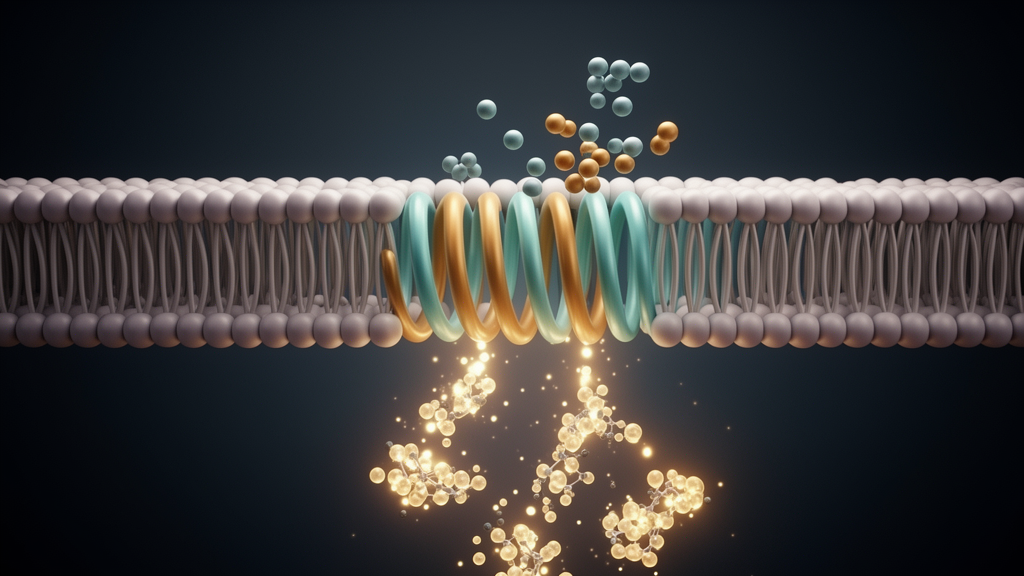
The next revolution in cancer medicine may not come from a new drug molecule but from a family of proteins that scientists have quietly overlooked for decades. G protein-coupled receptors, or GPCRs, are the largest receptor superfamily in the human body, comprising roughly 800 distinct receptors that sit embedded in the membranes of virtually every cell. A new review published in Frontiers in Systems Biology by researchers at the H. Lee Moffitt Cancer Center and Research Institute argues that these receptors constitute a vastly underexploited axis of oncogenic signaling, tumor microenvironment modulation, and non-genetic adaptive resistance. The team, led by Stuart Maudsley of Moffitt’s Receptor Biology Lab, proposes that GPCR-focused precision oncology, powered by multi-omics profiling, expression-based liquid biopsies, and artificial intelligence-driven network modeling, could fundamentally transform how clinicians monitor and treat heterogeneous solid tumors.
Precision oncology as it exists today was built on the foundation of next-generation sequencing and companion liquid biopsy diagnostics. Landmark platforms such as Guardant360 and FoundationOne Liquid CDx can profile more than 300 cancer-associated genes alongside features like microsatellite instability and tumor mutational burden, enabling clinicians to match targeted therapies to actionable driver mutations. Celebrated successes include EGFR-directed tyrosine kinase inhibitors in non-small cell lung cancer, BRAF and MEK inhibitors in melanoma, and PARP inhibitors in BRCA-mutant ovarian cancer. Yet the review’s authors contend that these early iterations were fundamentally constrained by their reliance on static genomic snapshots. Mutation-based profiling can identify initial therapeutic vulnerabilities, but it captures poorly the dynamic biological processes, including epigenetic reprogramming, transcriptional plasticity, and microenvironmental adaptation, that drive acquired resistance and tumor evolution under treatment pressure.
The core technical problem is intratumoral heterogeneity. Tumors are not monolithic molecular entities but dynamic ecosystems composed of genetically and epigenetically distinct subclones that evolve under selective therapeutic pressures. Traditional sequencing panels capture a single temporospatial biopsy, thereby missing the subclonal architecture, spatial transcriptomic variability, and real-time adaptive reprogramming that collectively orchestrate resistance. In practical terms, this manifests as initial treatment responses followed by relapse driven by pre-existing or acquired resistant clones. Compounding this limitation is the systematic underrepresentation of GPCRs in standard oncology panels, despite mounting evidence for their overexpression, mutation, and functional dysregulation across cancers. The chemokine receptor CXCR4, for example, is overexpressed in more than 23 different human cancers and plays a pivotal role in metastatic dissemination and immune evasion. GPRC5A drives metastatic colonization in lung and esophageal cancers, while proton-sensing GPCRs like GPR65 facilitate metabolic adaptation to the acidic tumor microenvironment. These receptors operate largely through non-mutational mechanisms, such as ligand gradient alterations, transcriptional upregulation, and epigenetic reactivation, which escape detection by DNA-centric panels.
A systematic pan-cancer analysis of TCGA data across 20 solid tumor categories and 45 histological subtypes found that most tumor types differentially express more than 50 GPCRs relative to normal tissue, with differential expression showing greater prognostic relevance for survival than either mutation or copy-number variation. In pancreatic adenocarcinoma specifically, GPRC5A was the most highly expressed GPCR, showing a 50-fold increase over normal pancreas, with 95 percent of tumor samples exhibiting at least an 8-fold increase in median expression. Proteogenomic analyses have further revealed that GPCR mutations do not reliably predict expression dysregulation, with a substantial proportion of GPCR upregulation in cancer occurring through non-mutational mechanisms such as promoter demethylation, enhancer rewiring, and post-transcriptional regulation. This decoupling of genomics from proteomics underscores the necessity of multi-modal profiling to fully capture the pathological nuances of oncogenic GPCR activation.
Single-cell multi-omics technologies have added a crucial layer of spatial and cellular resolution to GPCR biology. By enabling simultaneous profiling of transcriptomes, chromatin accessibility, and surface proteomes at single-cell resolution, these platforms reveal heterogeneous GPCR expression landscapes within tumors, identifying rare subpopulations with distinct signaling states that may harbor pre-existing resistance or stem-like properties. In glioblastoma, single-cell analyses elucidated the role of the adhesion GPCR GPR56 in mediating mesenchymal transition, a key resistance mechanism, demonstrating subpopulation-specific GPCR signaling that bulk profiling would have obscured. Spatial transcriptomics technologies such as 10x Visium and MERFISH complement these analyses by preserving tissue architecture, enabling the mapping of GPCR signaling gradients relative to the tumor microenvironment, vasculature, and immune infiltrate. Spatial proteomic platforms, including imaging mass cytometry and multiplexed immunofluorescence panels, extend this resolution to the protein level, enabling direct visualization of GPCR surface expression and its co-localization with immune and stromal populations within intact tissue.
The complexity of GPCR signaling networks, characterized by receptor promiscuity, signaling bias, context-dependent activation, and extensive crosstalk with other oncogenic pathways, renders them particularly amenable to artificial intelligence-driven analytical frameworks. Multi-omics network integration models such as TMO-Net leverage graph neural networks to predict GPCR synthetic lethalities, identify resistance nodes, and prioritize combination therapy strategies from high-dimensional data. A recent comprehensive mapping of the human chemokine-GPCR interactome using deep mutational scanning and structural modeling revealed the molecular determinants of selectivity and promiscuity in chemokine receptor activation, identifying previously unappreciated receptor-ligand pairs with functional relevance to cancer immunology. Beyond network modeling, AI approaches are accelerating GPCR-targeted antibody development for CAR-T cell immunotherapy, identifying surface-expressed GPCRs as novel CAR-T targets, and optimizing antibody specificity against conformationally diverse receptor states. AI-driven structure-based drug design, powered by cryo-electron microscopy structural data and AlphaFold-derived models, is similarly transforming the identification of allosteric binding sites and biased agonist scaffolds for previously undruggable GPCRs.
Expression-based liquid biopsy represents the monitoring backbone of the proposed framework. While circulating tumor DNA established the foundation of liquid biopsy-guided oncology, its inherent limitation to genetic-level information leaves functional signaling landscapes, including GPCR expression dynamics, relatively inaccessible. The next generation of liquid biopsy platforms integrates multiple analyte classes, including circulating tumor RNA, exosomal microRNA, long non-coding RNAs, and extracellular vesicle-associated proteins, to capture a holistic view of tumor biology in real time. Circulating tumor RNA profiling is particularly productive for monitoring GPCR expression changes that are invisible to DNA-based approaches, such as therapy-induced transcriptional upregulation of chemokine receptors, epigenetic reactivation of silenced GPCRs, and ligand-dependent receptor recycling. GPCR genes including PTGDR1, PTGDR2, and PTGIR have been identified as epigenetically regulated biomarkers detectable in liquid biopsies of HPV-associated oropharyngeal cancer, illustrating the potential of methylation-based GPCR biomarker panels complementing expression-level analysis. Tumor-derived exosomes carry receptor proteins, signaling lipids, and non-coding RNAs that reflect the signaling state of their cells of origin, and serial profiling of exosomal GPCR content therefore offers a non-invasive window into the real-time rewiring of tumor signaling networks.
On the therapeutic side, the review catalogues a diverse arsenal of GPCR-directed modalities. Proteolysis-targeting chimeras, or PROTACs, recruit E3 ubiquitin ligases to induce targeted proteasomal degradation of overexpressed receptors rather than merely blocking signaling, an approach particularly relevant for GPCRs whose oncogenic functions involve scaffolding or protein-protein interaction roles not addressable by conventional orthosteric or allosteric ligands. High-throughput CRISPR-based platforms such as DCyFIR enable multiplexed GPCR profiling by simultaneously measuring receptor activation across multiple signaling readouts in a single assay, dramatically accelerating the identification of biased ligands with selective pathway engagement profiles. RNA therapeutics, including antisense oligonucleotides, siRNA, mRNA, and CRISPR-based transcriptional modulators, offer sequence-specific strategies for modulating GPCR expression regardless of protein structural tractability, reaching the substantial proportion of oncologically relevant GPCRs that lack suitable binding pockets for small molecule intervention. Digital twin technology, in which computational models integrating multi-omics patient data simulate receptor network behavior, enables patient-specific prediction of drug responses, resistance trajectories, and optimal combination strategies, with models continuously updated by longitudinal liquid biopsy data.
The authors are careful to acknowledge substantial unresolved tensions in the field. Despite the roughly 800-member size of the GPCR superfamily and its status as the most heavily drugged gene family in other therapeutic areas, oncology-specific GPCR-targeted approvals remain few. Receptor promiscuity and pathway redundancy, exemplified by the extensive cross-reactivity mapped across the human chemokine-GPCR interactome, can blunt the efficacy of single-receptor blockade. Chronic engagement of individual GPCR targets carries on-target toxicity risk: the anti-Frizzled antibody vantictumab, despite an encouraging 31.3 percent objective response rate in combination with paclitaxel in HER2-negative breast cancer, saw its clinical development curtailed after six of 48 patients developed bone fractures attributable to on-target inhibition of Wnt signaling in bone. The COMBAT trial combining the CXCR4 antagonist motixafortide with pembrolizumab and chemotherapy in metastatic pancreatic cancer reported a disease control rate of 34.5 percent in a chemotherapy-resistant cohort, with a median overall survival of only 3.3 months in the intention-to-treat population, improving to 7.5 months in the second-line setting. More broadly, no prospective clinical trial has yet demonstrated that a liquid-biopsy-detected change in GPCR expression, used explicitly to trigger a treatment switch, improves patient outcomes, meaning the central premise of the adaptive framework remains a hypothesis rather than an established practice.
Looking forward, the Moffitt team envisions an AI-integrated clinical platform that continuously synthesizes multi-analyte liquid biopsy data with digital twin models of patient-specific GPCR signaling networks to generate real-time adaptive therapy recommendations. Such a platform would leverage predictive algorithms trained on large, annotated patient cohorts to anticipate resistance trajectories before they manifest as clinical progression, enabling preemptive therapeutic recalibration rather than reactive second-line switching. Integration with precision imaging modalities, including CXCR4-targeted PET tracers that enable whole-body mapping of receptor expression, and with electronic health record data would further enrich the contextual information available to these systems. Federated learning approaches, which enable model training across distributed clinical datasets without sharing individual patient data, offer a privacy-preserving route to assembling the large, diverse training cohorts required for robust, generalizable GPCR predictive models. The authors also stress that significant technical challenges remain, including variable liquid biopsy sensitivity for GPCR RNA signals, the comparatively low abundance of circulating tumor RNA relative to circulating tumor DNA, and non-standardized exosome isolation methodologies that can materially affect recovered GPCR-associated cargo. Access disparities compound these gaps, as illustrated by the experience of precision oncology within Brazil’s public healthcare system, where many patients cannot access even first-generation genomic diagnostics. Until analytical standardization, prospective validation, and equitable deployment are achieved, the researchers advocate cautious optimism: GPCR-centric precision oncology represents a biologically well-motivated and partially clinically validated direction whose adoption should proceed alongside, rather than in place of, rigorous prospective testing.
Subject of Research: GPCR signaling systems facilitate precision interventions for multi-oncology therapy
Article Title: GPCR signaling systems facilitate precision interventions for multi-oncology therapy
Article References: Del Pozo, A., Pardo, M., Boeringer, T., Craig, C. J., Sorathia, R., Millican, M., & Maudsley, S. (2026). GPCR signaling systems facilitate precision interventions for multi-oncology therapy. Frontiers in Systems Biology, 6, Article 1940022. https://doi.org/10.3389/fsysb.2026.1940022
Image Credits: AI Generated
DOI: 10.3389/fsysb.2026.1940022
Keywords: GPCR, signaling, systems, facilitate, precision, interventions, multi-oncology, therapy, scientific research
Cite Scienmag News
Nathaniel Bowman. (October 17, 2026). GPCR signaling systems facilitate precision interventions for multi-oncology therapy. Scienmag. https://scienmag.com/gpcr-signaling-systems-facilitate-precision-interventions-for-multi-oncology-therapy/
Nathaniel Bowman. "GPCR signaling systems facilitate precision interventions for multi-oncology therapy." Scienmag, 17 October 2026, https://scienmag.com/gpcr-signaling-systems-facilitate-precision-interventions-for-multi-oncology-therapy/. Accessed 17 October 2026.
Nathaniel Bowman. "GPCR signaling systems facilitate precision interventions for multi-oncology therapy." Scienmag. October 17, 2026. https://scienmag.com/gpcr-signaling-systems-facilitate-precision-interventions-for-multi-oncology-therapy/


