Wednesday, November 4, 2026
Science
No Result
View All Result
  • Login
  • HOME
  • SCIENCE NEWS
  • CONTACT US
  • HOME
  • SCIENCE NEWS
  • CONTACT US
No Result
View All Result
Scienmag
No Result
View All Result
Home Science News Medicine

Glycolysis Metabolites Linked to Short-Term Mortality After Heart Attack

October 29, 2026
in Medicine
Ophelia Keating
By Ophelia Keating Scienmag Editorial Profile - Health Services Research
Reading Time: 2 mins read
0
Glycolysis Metabolites Linked to Short-Term Mortality After Heart Attack

Glycolysis Metabolites Linked to Short-Term Mortality After Heart Attack

65
SHARES
587
VIEWS
Share on FacebookShare on Twitter
ADVERTISEMENT

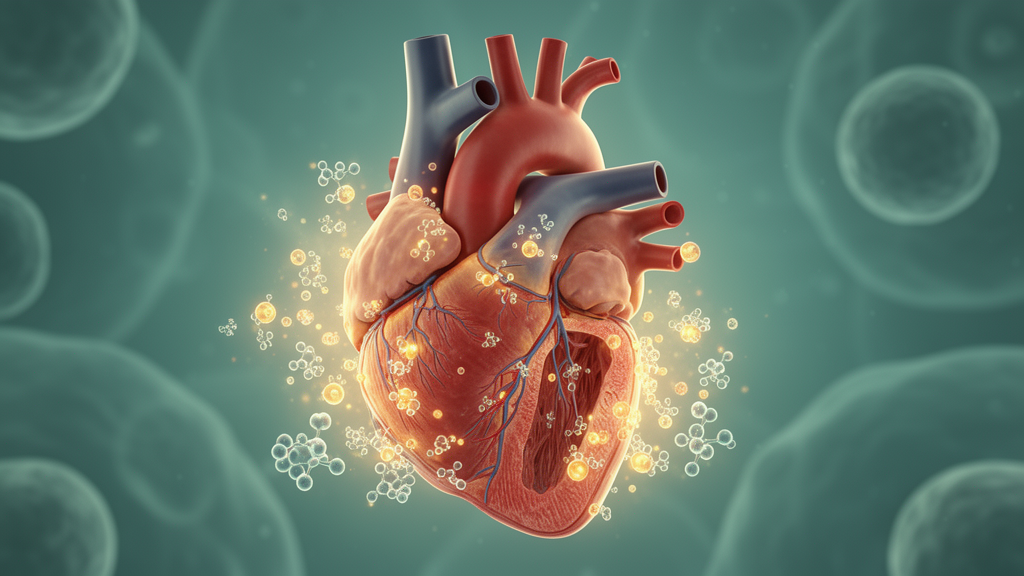
Patients who suffer the most serious type of heart attack face sharply different short-term risks depending on the levels of four sugar-breakdown metabolites in their blood, according to a new study published in Diabetology & Metabolic Syndrome. Elevated plasma concentrations of glucose, lactate, pyruvate and citrate were each significantly associated with an increased risk of death within 28 days after a ST-elevation myocardial infarction, or STEMI.

The research drew on data from 724 STEMI patients enrolled in the population-based Augsburg Myocardial Infarction Registry. Arterial blood samples were collected in EDTA tubes at the start of the catheterization procedure, and plasma metabolite concentrations were quantified with a high-throughput nuclear magnetic resonance spectroscopy platform developed by Nightingale Health in Finland.

During the 28-day follow-up window, 677 of the patients survived while 47 died. The researchers used multivariable logistic regression models to assess the associations between the glycolysis-related metabolites and short-term mortality, adjusting their P values for multiple testing with the false discovery rate method.

Glucose showed the strongest association with 28-day mortality, with an odds ratio of 2.10 (95% confidence interval 1.53 to 2.88, adjusted P ≤ 0.001). Pyruvate showed the weakest of the four significant associations, with an odds ratio of 1.60 (95% confidence interval 1.22 to 2.10, adjusted P = 0.001). Lactate and citrate also reached statistical significance, falling between these two extremes.

The findings address a gap highlighted by the authors: prior studies had already linked lactate and glucose to short-term mortality after myocardial infarction, but information on glycolysis-wide metabolite alterations remained insufficient. By measuring pyruvate and citrate alongside the better-known markers, the study offers a broader picture of how disturbances in the glycolysis pathway relate to early post-infarction death.

The study’s results indicate that metabolic disturbances, reflected by these glycolysis-related metabolites, are associated with short-term mortality in STEMI patients, suggesting their potential prognostic value.

The authors also note that blood was drawn at a single time point, at the start of catheterization, so the measurements capture metabolite levels at one moment early in hospital care.

Even with those limitations, the consistency of the associations across all four metabolites, and their survival after adjustment for multiple testing, marks glycolysis-related metabolites as candidate prognostic markers worth further investigation in the critical first four weeks after a STEMI.

Subject of Research: Associations between glycolysis-related metabolites and 28-day mortality after ST-elevation myocardial infarction

Article Title: Associations between glycolysis related metabolites and short-term mortality after ST-elevation myocardial infarction

Article References: Meisinger, C., Freuer, D., Raake, P., Linseisen, J., & Schmitz, T. (2026). Associations between glycolysis related metabolites and short-term mortality after ST-elevation myocardial infarction. Diabetology & Metabolic Syndrome. https://doi.org/10.1186/s13098-026-02335-5

Image Credits: AI Generated

DOI: 10.1186/s13098-026-02335-5

Keywords: STEMI, myocardial infarction, glycolysis, glucose, lactate, pyruvate, citrate, mortality, NMR spectroscopy, biomarkers, Augsburg Myocardial Infarction Registry, prognosis

Cite Scienmag News

Ophelia Keating. (October 29, 2026). Glycolysis Metabolites Linked to Short-Term Mortality After Heart Attack. Scienmag. https://scienmag.com/glycolysis-metabolites-linked-to-short-term-mortality-after-heart-attack/

Ophelia Keating. "Glycolysis Metabolites Linked to Short-Term Mortality After Heart Attack." Scienmag, 29 October 2026, https://scienmag.com/glycolysis-metabolites-linked-to-short-term-mortality-after-heart-attack/. Accessed 4 November 2026.

Ophelia Keating. "Glycolysis Metabolites Linked to Short-Term Mortality After Heart Attack." Scienmag. October 29, 2026. https://scienmag.com/glycolysis-metabolites-linked-to-short-term-mortality-after-heart-attack/

Tags: Augsburg Myocardial Infarction RegistryBiomarkersbiomarkers for heart attack prognosisblood metabolite analysis in acute cardiac eventscitratecitrate levels in cardiac eventsdiabetes-related metabolites and heart attack survivalglucoseglycolysisglycolysis metabolites and heart attacklactatelactate levels and heart attack outcomesmetabolic profiling in myocardial infarctionmortalitymyocardial infarctionNMR spectroscopynuclear magnetic resonance spectroscopy in cardiologyplasma glucose and heart attack riskprognosispyruvatepyruvate as a prognostic markerrisk factors for 28-day post-heart attack deathshort-term mortality after STEMISTEMI
Share26Tweet16
Previous Post

Cysteine Cathepsins Mapped Across Breast Tumors Reveal States That May Shape Antibody-Drug Conjugate Use

Next Post

Iron-Boosted Carbon–Silver Iodide Photocatalyst Degrades Tetracycline Under Visible Light

Related Posts

Scientists define herd health management in new framework for farm veterinarians
Biology

Scientists define herd health management in new framework for farm veterinarians

November 4, 2026
Blood enzyme marker shows promise for lung cancer risk assessment in pooled analysis
Cancer

Blood enzyme marker shows promise for lung cancer risk assessment in pooled analysis

November 4, 2026
TERRA R-loops turn chromosome ends into cancer’s weak spot
Medicine

TERRA R-loops turn chromosome ends into cancer’s weak spot

November 4, 2026
Yi Zhi Ren Fruit Shows Neuroprotective and Metabolic Effects in Preclinical Studies, But Human Evidence Remains Scarce
Agriculture

Yi Zhi Ren Fruit Shows Neuroprotective and Metabolic Effects in Preclinical Studies, But Human Evidence Remains Scarce

November 4, 2026
A Simple ECG Reading May Hint at a Hidden Heart Tumor, Study Finds
Medicine

A Simple ECG Reading May Hint at a Hidden Heart Tumor, Study Finds

November 4, 2026
MRI Tract Patterns Sort ALS Patients into Three Subtypes Linked to Disease Severity
Medicine

MRI Tract Patterns Sort ALS Patients into Three Subtypes Linked to Disease Severity

November 4, 2026
Next Post
Iron-Boosted Carbon–Silver Iodide Photocatalyst Degrades Tetracycline Under Visible Light

Iron-Boosted Carbon–Silver Iodide Photocatalyst Degrades Tetracycline Under Visible Light

  • Mothers who receive childcare support from maternal grandparents show more optimized

    Mothers who receive childcare support from maternal grandparents show more parental warmth, finds NTU Singapore study

    27656 shares
    Share 11059 Tweet 6912
  • University of Seville Breaks 120-Year-Old Mystery, Revises a Key Einstein Concept

    1061 shares
    Share 424 Tweet 265
  • Bee body mass, pathogens and local climate influence heat tolerance

    682 shares
    Share 273 Tweet 171
  • Researchers record first-ever images and data of a shark experiencing a boat strike

    546 shares
    Share 218 Tweet 137
  • Groundbreaking Clinical Trial Reveals Lubiprostone Enhances Kidney Function

    531 shares
    Share 212 Tweet 133
Science

Embark on a thrilling journey of discovery with Scienmag.com—your ultimate source for cutting-edge breakthroughs. Immerse yourself in a world where curiosity knows no limits and tomorrow’s possibilities become today’s reality!

RECENT NEWS

  • Endophytic Fungus Boosts Cold Tolerance in Basil by Activating Cold-Response Genes
  • Scientists define herd health management in new framework for farm veterinarians
  • Carbon dots shift colors under UV light for encryption and sensing
  • Space weather may strip atmospheres from young exoplanets

Categories

  • Agriculture
  • Anthropology
  • Archaeology
  • Athmospheric
  • Biology
  • Biotechnology
  • Blog
  • Bussines
  • Cancer
  • Chemistry
  • Climate
  • Earth Science
  • Editorial Policy
  • Marine
  • Mathematics
  • Medicine
  • Pediatry
  • Policy
  • Psychology & Psychiatry
  • Science Education
  • Science News
  • Social Science
  • Space
  • Technology and Engineering

Subscribe to Blog via Email

Enter your email address to subscribe to this blog and receive notifications of new posts by email.

Join 5,149 other subscribers

© 2025 Scienmag - Science Magazine

Welcome Back!

Login to your account below

Forgotten Password?

Retrieve your password

Please enter your username or email address to reset your password.

Log In
No Result
View All Result
  • HOME
  • SCIENCE NEWS
  • CONTACT US

© 2025 Scienmag - Science Magazine

Discover more from Science

Subscribe now to keep reading and get access to the full archive.

Continue reading