


Emerging scientific research reveals complex and regionally varied shifts in hailstorm hazards driven by global climate change, posing intricate challenges particularly for agricultural sectors. A recent comprehensive study by Raupach et al. (2026), published in Nature Climate Change, delves into the environmental drivers of hail-prone conditions worldwide, employing multiple atmospheric proxies combined with state-of-the-art climate model projections. Their findings paint a nuanced and sometimes contradictory picture of how hail frequency and intensity might evolve under warming scenarios, emphasizing both the uncertainty inherent in these projections and the profound implications for global food security.
Central to this study is the application of three distinct hail proxies — analytical tools that infer hail likelihood from large-scale atmospheric variables — across a wide ensemble of Coupled Model Intercomparison Project Phase 6 (CMIP6) climate model outputs. Each proxy incorporates different meteorological factors such as atmospheric instability, shear, melting-level height, and moisture content, leading to divergent projections especially in tropical regions. For instance, while the proxies developed by Raupach and SHIP integrate the moderating influences of low- to mid-tropospheric temperature and humidity and project decreases in hail-prone conditions in the tropics, the instability–shear proxy employed by Eccel predicts robust increases driven by heightened convective instability.
This disparity underscores a critical dynamic interaction within tropical atmospheres, where rising instability due to warming may be tempered by other thermodynamic factors such as increases in melting-level height and tropospheric moisture. The study details how the Raupach proxy, designed to factor in these complex interactions, demonstrates a muted sensitivity to instability in the tropics compared to mid-latitude environments, offering a plausible explanation for the contrasting responses. Notably, general tendencies of instability–shear proxies to overestimate tropical hail likelihood have previously motivated refinement efforts encapsulated in the Raupach model, highlighting ongoing challenges in accurately representing hail risk in diverse climatic zones.
Beyond regional discrepancies, the ensemble mean results project a broad poleward migration of hail-prone conditions as global mean temperatures increase by 2°C to 3°C. In mid-latitude regions such as the United States, Europe, and Australia, summer hail-prone day frequency is expected to decline or stabilize, counterbalanced by more subtle wintertime increases. These seasonal shifts reflect the juxtaposition of enhanced atmospheric instability promoting convective storm development against counteracting influences of elevated melting levels and moisture profiles. Crucially, this seasonal dichotomy suggests a differential impact on agronomic systems, with winter crops potentially facing augmented hail-related hazards, while summer crops could experience reduced risk exposure.
Methodologically, the integration of CMIP6 projections facilitates a comprehensive appraisal that incorporates changes in atmospheric circulation patterns alongside thermodynamic shifts—advancing beyond approaches relying solely on temperature and moisture trends. These results resonate with broader observed and projected trends, including the poleward displacement of storm tracks and the expansion of tropical latitudes. However, the study acknowledges generally low confidence in projecting dynamic aspects of severe convective storms, noting that variability in reanalysis datasets can sometimes exhibit opposite sign trends compared to model projections. This variability highlights the imperative to holistically quantify the relative roles of dynamic versus thermodynamic influences on hailstorm frequency and intensity.
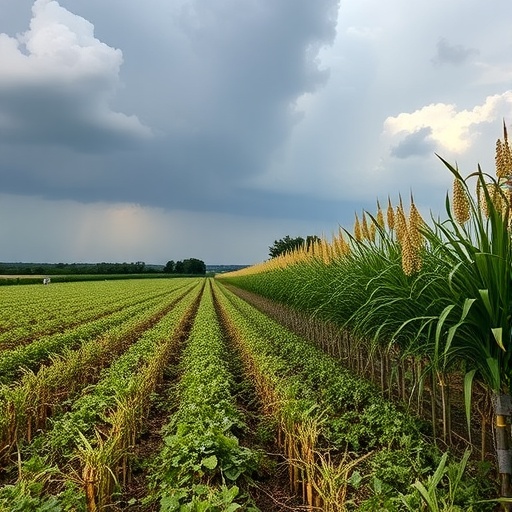
Applying these hail hazard insights to agricultural risk, the study offers a preliminary exploration of potential crop vulnerability changes. Hailstorms rank among the most destructive extreme weather phenomena for crops, yet prior climate impact assessments have predominantly focused on gradual changes in temperature, precipitation, and CO₂ concentrations, often underrepresenting the relevance of episodic severe events. Although limited by stationary crop distribution datasets and the coarse spatial resolution of climate outputs, analyses suggest that poleward shifts in hail hazard could partly negate anticipated yield gains from climatic amelioration of growing conditions. This is especially salient for staple crops like maize cultivated in tropical regions where a projected decrease in hail frequency may somewhat buffer the negative effects of rising temperatures.
Further complicating the risk landscape are the myriad factors that govern actual crop damage from hail events. These include hailstone size, impact with coincident wind strength, and the timing of hailstorms relative to crop phenology. The study emphasizes the importance of considering shifting growing seasons and developmental milestones when assessing vulnerability, as these temporal factors can dramatically influence damage outcomes. Future studies incorporating dynamic agronomic modeling and phenological data are critical to refining risk assessments and guiding adaptive agricultural practices under a changing climate.
Intriguingly, while this investigation centers on hail-prone day frequency, it acknowledges emerging evidence that the severity and hailstone size may not track simply with frequency trends. Increasing atmospheric instability and moisture availability could enable growth of larger hailstones that survive melting layers, potentially offsetting declines in hail occurrence. Studies in the United States and Australia forecast such trends, with seasonal shifts favoring larger hailstones in the colder seasons, which could have disproportionate impacts on crops during critical stages of their growth cycles. These compounded risks necessitate enhanced atmospheric monitoring and more sophisticated proxy development capable of resolving changes in hailstone size distribution and intensity.
Global variability in hailstorm properties further complicates the extrapolation of proxies developed in one geographical context to others. Raupach et al. highlight the effort to design proxies that incorporate spatial heterogeneity in storm environments, validated across diverse regions such as the Australian continent. Nonetheless, the assumption of proxy stationarity—that the relationships between atmospheric variables and hail occurrence remain constant under future climates—introduces additional uncertainty. This uncertainty is exacerbated by differential hailstorm characteristics observed between land and maritime environments, where maritime hailstorm traits remain poorly understood and are excluded from this analysis focused on terrestrial projections.
The research also aligns hail hazard evolution with broader climatic phenomena such as the expansion of the tropics and poleward shifts in atmospheric storm tracks. These large-scale circulation changes modulate the frequency and intensity of convective storms, superimposed on thermodynamic trends from a warming planet. The study highlights the need for future work that disentangles these dynamic and thermodynamic components to better grasp their individual and interactive effects on hail risk. Such insights have vital implications not only for weather prediction but also for long-term climate adaptation strategies.
In integrating climatology with agriculture, this study signals the importance of reconsidering how extreme weather risks such as hailstorms are incorporated into assessments of global food security under climate change. Current crop impact models predominantly emphasize gradual climatic shifts, often missing the punctuated but devastating influence of hail. As cropping zones potentially migrate poleward with warming, hail risk may produce an attenuating effect on productivity gains. This complex interplay between hazard evolution and crop suitability underscores the necessity for interdisciplinary research spanning atmospheric science, agronomy, and risk management to safeguard future food supplies.
Moreover, the study addresses the limitations of current proxy-based analyses, recognizing that direct modeling of hailstorm severity and hailstone size from coarse-scale climate data remains elusive. The interplay of instability, moisture, temperature profiles, and dynamic atmospheric factors yields complicated, regionally nuanced responses difficult to resolve without higher-resolution data and improved parameterizations. The possibility that reductions in total hail frequency could coincide with increases in the occurrence of large, destructive hailstones is particularly concerning for winter-season crops, which may encounter intensifying risks that have not yet been fully characterized.
Finally, the authors prompt further investigation into the spatiotemporal dynamics of hail risk in a warming world. The complexity of the interactions, the heterogeneity of environmental proxies, and the variable sensitivity of different crops and cropping calendars together demand advanced modeling frameworks. Such frameworks should incorporate evolving atmospheric dynamics, soil-plant interactions, phenological shifts, and socio-economic factors governing adaptation capacity. As global warming continues to reshape the climate system, the multifaceted challenge of hail hazard evolution emerges as both a pressing scientific frontier and a critical societal concern.
Cite Scienmag News
Sloane Callahan. (June 3, 2026). Global Warming Alters Hail Hazards, Threatens Crops. Scienmag. https://scienmag.com/global-warming-alters-hail-hazards-threatens-crops/
Sloane Callahan. "Global Warming Alters Hail Hazards, Threatens Crops." Scienmag, 3 June 2026, https://scienmag.com/global-warming-alters-hail-hazards-threatens-crops/. Accessed 3 September 2026.
Sloane Callahan. "Global Warming Alters Hail Hazards, Threatens Crops." Scienmag. June 3, 2026. https://scienmag.com/global-warming-alters-hail-hazards-threatens-crops/


