

Thursday, July 16, 2026
Science
No Result
View All Result
  • Login
  • HOME
  • SCIENCE NEWS
  • CONTACT US
  • HOME
  • SCIENCE NEWS
  • CONTACT US
No Result
View All Result
Scienmag
No Result
View All Result
Home Science News Technology and Engineering

Global analysis reveals changing early-onset inflammatory bowel disease burden worldwide

July 16, 2026
in Technology and Engineering
Reading Time: 2 mins read
0
Global analysis reveals changing early-onset inflammatory bowel disease burden worldwide

Global analysis reveals changing early-onset inflammatory bowel disease burden worldwide

65
SHARES
587
VIEWS
Share on FacebookShare on Twitter
ADVERTISEMENT

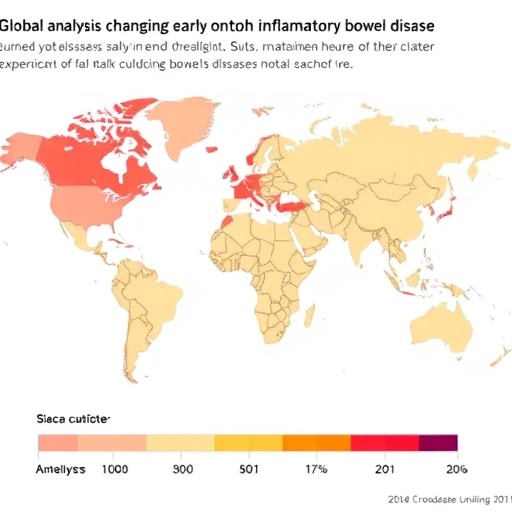
A new global analysis suggests that early-onset inflammatory bowel disease (IBD)—diagnosed in childhood—may be undergoing a geographic and demographic shift, with implications for pediatric gastroenterology worldwide. The study, reported in Pediatric Research, examines how the disease burden is changing over time across populations, highlighting that what clinicians once expected to be regionally concentrated can now appear more widespread and unevenly distributed.

Researchers focus on IBD’s early forms, which include Crohn’s disease and ulcerative colitis. These conditions often begin with chronic gastrointestinal inflammation that can affect growth, nutrition, and long-term health. Because childhood onset typically implies a longer lifetime exposure to disease activity, even modest changes in incidence or severity can translate into substantial public-health consequences.

Using a large, international data framework, the team quantified patterns in early-onset IBD across regions and examined trends that indicate a “shifting burden.” Rather than remaining fixed, the frequency and impact of early diagnoses appear to evolve as healthcare access, environmental exposures, and diagnostic practices change. In some settings, rising detection may partially reflect improved screening, while in others it may signal true increases in disease occurrence.

The analysis also underscores differences in how the burden is distributed by age at diagnosis and over time. Such heterogeneity is critical: it suggests that prevention strategies tailored to early childhood risk windows may need adjustment as patterns change. It also emphasizes that pediatric inflammatory disease is not static; it responds to social and biomedical transitions.

Beyond descriptive trends, the study’s implications extend to clinical planning. Health systems may need to anticipate demand for pediatric endoscopy, specialized nutrition support, and long-term medication monitoring, including therapies that alter immune pathways. For families, earlier recognition can improve outcomes, but it also raises the need for standardized referral pathways and consistent diagnostic criteria.

Importantly, the findings point to the possibility that environmental factors—such as diet composition, microbiome-altering exposures, sanitation, and early-life infections—could be interacting with genetic susceptibility in complex ways. While the study is primarily population-based, these biological considerations help frame why regional shifts might occur.

The authors argue that understanding where and how childhood IBD is changing can guide resource allocation and help prioritize research into modifiable risk factors. In a world where epidemiology is moving, clinicians and policymakers may need to keep revising assumptions about which regions face the greatest pediatric burden.

For pediatric patients and clinicians, the message is clear: early-onset IBD is changing on a global scale. Continued surveillance, harmonized data collection, and mechanistic studies are likely required to separate improved detection from true increases—and to identify targets for prevention and earlier intervention.

If you’d like, I can also condense this into a shorter “viral-style” news brief while keeping the same word and paragraph constraints.

Subject of Research: Early-onset inflammatory bowel disease (pediatric Crohn’s disease and ulcerative colitis) and global burden trends.

Article Title: The shifting burden of early-onset inflammatory bowel disease: a global analysis.

Article References: Yue, C., Zhou, Z., Fang, L. et al. The shifting burden of early-onset inflammatory bowel disease: a global analysis. Pediatr Res (2026). https://doi.org/10.1038/s41390-026-05226-7

Image Credits: AI Generated

DOI: 10.1038/s41390-026-05226-7

Keywords:

Tags: advances in pediatric gastroenterology diagnosticschanging epidemiology of pediatric IBDchildhood gastrointestinal inflammationearly-onset inflammatory bowel diseasegeographic distribution of IBDglobal burden of pediatric inflammatory bowel diseaseglobal trends in Crohn's disease and ulcerative colitisimpact of environmental factors on early IBDlong-term health effects of childhood IBDpediatric inflammatory bowel diseasepublic health implications of early-onset IBDregional variations in IBD diagnosis
Share26Tweet16
Previous Post

Plasma Ceramide Ratios Link Metabolic and Inflammation Markers to Parkinson’s Cognitive Decline

Next Post

Enhanced Bayesian Hybrid Inference Using Genome Sequence Data

Related Posts

Fractional High-Chern Insulator Realized in Twisted Rhombohedral Graphene
Medicine

Fractional High-Chern Insulator Realized in Twisted Rhombohedral Graphene

July 16, 2026
Stealthy Spinning Drone Blends In With Everyday Objects
Technology and Engineering

Stealthy Spinning Drone Blends In With Everyday Objects

July 16, 2026
Selectivity Achieved Despite Indiscriminate Photoreduction in New Study
Medicine

Selectivity Achieved Despite Indiscriminate Photoreduction in New Study

July 16, 2026
Experts Reach Consensus on Bedside PDA Closure for Extremely Low-Birth-Weight Infants
Technology and Engineering

Experts Reach Consensus on Bedside PDA Closure for Extremely Low-Birth-Weight Infants

July 16, 2026
Genome Editing Reinvents Perilla, Boosting Potential of Traditional Herb
Technology and Engineering

Genome Editing Reinvents Perilla, Boosting Potential of Traditional Herb

July 16, 2026
Scalable Nearly-Pure MOF Membranes Enable Energy-Efficient Gas Separations
Medicine

Scalable Nearly-Pure MOF Membranes Enable Energy-Efficient Gas Separations

July 16, 2026
Next Post
Enhanced Bayesian Hybrid Inference Using Genome Sequence Data

Enhanced Bayesian Hybrid Inference Using Genome Sequence Data

  • Mothers who receive childcare support from maternal grandparents show more

    Mothers who receive childcare support from maternal grandparents show more parental warmth, finds NTU Singapore study

    27656 shares
    Share 11059 Tweet 6912
  • University of Seville Breaks 120-Year-Old Mystery, Revises a Key Einstein Concept

    1061 shares
    Share 424 Tweet 265
  • Bee body mass, pathogens and local climate influence heat tolerance

    682 shares
    Share 273 Tweet 171
  • Researchers record first-ever images and data of a shark experiencing a boat strike

    546 shares
    Share 218 Tweet 137
  • Groundbreaking Clinical Trial Reveals Lubiprostone Enhances Kidney Function

    531 shares
    Share 212 Tweet 133
Science

Embark on a thrilling journey of discovery with Scienmag.com—your ultimate source for cutting-edge breakthroughs. Immerse yourself in a world where curiosity knows no limits and tomorrow’s possibilities become today’s reality!

RECENT NEWS

  • Bioengineered Bacterial Spores Found for Broader New Applications
  • Crown Bioscience Joins C-Path Coalition for New Approach Methodologies
  • First Atmosphere Detected on Rocky Exoplanet in Habitable Zone
  • Brexit nurse departures tied to 3,700 additional hospital deaths, researchers warn

Categories

  • Agriculture
  • Anthropology
  • Archaeology
  • Athmospheric
  • Biology
  • Biotechnology
  • Blog
  • Bussines
  • Cancer
  • Chemistry
  • Climate
  • Earth Science
  • Editorial Policy
  • Marine
  • Mathematics
  • Medicine
  • Pediatry
  • Policy
  • Psychology & Psychiatry
  • Science Education
  • Social Science
  • Space
  • Technology and Engineering

Subscribe to Blog via Email

Enter your email address to subscribe to this blog and receive notifications of new posts by email.

Join 5,146 other subscribers

© 2025 Scienmag - Science Magazine

Welcome Back!

Login to your account below

Forgotten Password?

Retrieve your password

Please enter your username or email address to reset your password.

Log In
No Result
View All Result
  • HOME
  • SCIENCE NEWS
  • CONTACT US

© 2025 Scienmag - Science Magazine

Discover more from Science

Subscribe now to keep reading and get access to the full archive.

Continue reading
