

Thursday, July 16, 2026
Science
No Result
View All Result
  • Login
  • HOME
  • SCIENCE NEWS
  • CONTACT US
  • HOME
  • SCIENCE NEWS
  • CONTACT US
No Result
View All Result
Scienmag
No Result
View All Result
Home Science News Biology

Enhanced Bayesian Hybrid Inference Using Genome Sequence Data

July 16, 2026
in Biology
Reading Time: 2 mins read
0
Enhanced Bayesian Hybrid Inference Using Genome Sequence Data

Enhanced Bayesian Hybrid Inference Using Genome Sequence Data

65
SHARES
587
VIEWS
Share on FacebookShare on Twitter
ADVERTISEMENT

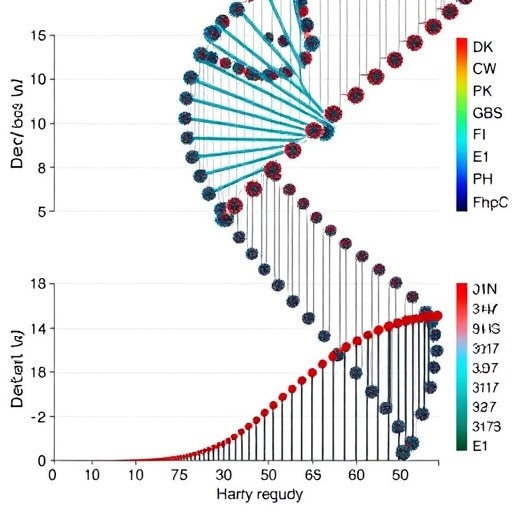
A new statistical framework promises sharper answers to a long-standing question in conservation and evolutionary genetics: who is a hybrid, and who is a backcross in the wild? In a study published this week, researchers present a Bayesian hybrid inference method that leverages sampled genomes from two populations across two generations. The goal is to assign individuals probabilistically to classes such as hybrids or backcrosses while respecting the complexities of real genomes.

The approach builds on an earlier method by Chakraborty and Rannala (2023), but it introduces a crucial upgrade: it explicitly accounts for uncertainty in population haplotype frequencies. That matters because haplotype frequencies inferred from finite samples are never known exactly. Treating them as fixed quantities can inflate confidence, especially when datasets are small—precisely the scenario faced by many non-model organisms.

Technically, the new framework improves inference by correctly marginalizing over haplotypes while still modeling genetic linkage and recombination along chromosomes. Rather than breaking the genome into independent pieces, it retains the dependence created by shared ancestry and recombination events. This allows the method to extract more informative signals than analyses that ignore linkage structure.

Simulations show that when the number of individuals sampled to estimate population haplotypes is large, posterior probabilities from the new method nearly match those produced by the earlier 2023 approach. But when sample sizes shrink, the new method’s posterior probabilities decline, reflecting a more conservative—and more realistic—handling of uncertainty.

Performance benchmarks using ROC (Receiver Operating Characteristic) curves indicate that predictive discrimination remains essentially equivalent to the earlier method. In other words, the upgrade does not appear to sacrifice the ability to separate true hybrids from non-hybrids; it mainly adjusts the degree of certainty.

To test generality beyond simulations, the team applied the method to three recently published datasets spanning three very different taxa. The results were evaluated in kiwifruit (Actinidia), the plateau fence lizard (Sceloporus tristichus), and the puma (Puma concolor), illustrating the method’s versatility.

By providing a principled way to infer hybridization and backcrossing while reflecting uncertainty in population-level genetic summaries, the framework could help researchers interpret contact zones, manage breeding plans, and untangle introgression histories with fewer overconfident conclusions.

Overall, the work signals a shift toward hybrid-detection tools that are both statistically rigorous and computationally aligned with the realities of genomic data—where the genome is linked, recombination matters, and uncertainty cannot be ignored.

Subject of Research: Hybrid and backcross inference using genome sequences across two generations

Article Title: Improved Bayesian inference of hybrids using genome sequences

Article References: Chakraborty, S., Rannala, B. Improved Bayesian inference of hybrids using genome sequences. Heredity (2026). https://doi.org/10.1038/s41437-026-00861-6

DOI: 10.1038/s41437-026-00861-6

Keywords: Bayesian inference, hybridization, backcrossing, haplotypes, linkage and recombination, ROC performance, genome sequences

Tags: Bayesian hybrid inferenceconservation geneticsevolutionary geneticsfinite sample effects on haplotype frequency estimationgenome sequence data analysisGenomic hybrid detectionimproved genetic assignment methodsincorporating linkage disequilibrium in inferencelinkage and recombination modelingpopulation haplotype frequency uncertaintyprobabilistic classification of hybrids and backcrossesstatistical framework for hybrid identification
Share26Tweet16
Previous Post

Global analysis reveals changing early-onset inflammatory bowel disease burden worldwide

Next Post

Fractional High-Chern Insulator Realized in Twisted Rhombohedral Graphene

Related Posts

UW Physician-Scientist Honored by Association for Molecular Pathology for Exceptional Service
Biology

UW Physician-Scientist Honored by Association for Molecular Pathology for Exceptional Service

July 16, 2026
TSPAN7 Builds Transmembrane Skeleton, Stabilizing Tubular Membranes via Spiral Assembly
Biology

TSPAN7 Builds Transmembrane Skeleton, Stabilizing Tubular Membranes via Spiral Assembly

July 16, 2026
What Animals Do Before Going to War
Biology

What Animals Do Before Going to War

July 16, 2026
Blood Test Detects 90% of Early-Stage Pancreatic Cancer
Biology

Blood Test Detects 90% of Early-Stage Pancreatic Cancer

July 16, 2026
New Advances in ALS and Alzheimer’s Treatments
Biology

New Advances in ALS and Alzheimer’s Treatments

July 16, 2026
Trinh and Ryu Win DOW Funding for Fungal Biotech Research
Biology

Trinh and Ryu Win DOW Funding for Fungal Biotech Research

July 16, 2026
Next Post
Fractional High-Chern Insulator Realized in Twisted Rhombohedral Graphene

Fractional High-Chern Insulator Realized in Twisted Rhombohedral Graphene

  • Mothers who receive childcare support from maternal grandparents show more

    Mothers who receive childcare support from maternal grandparents show more parental warmth, finds NTU Singapore study

    27656 shares
    Share 11059 Tweet 6912
  • University of Seville Breaks 120-Year-Old Mystery, Revises a Key Einstein Concept

    1061 shares
    Share 424 Tweet 265
  • Bee body mass, pathogens and local climate influence heat tolerance

    682 shares
    Share 273 Tweet 171
  • Researchers record first-ever images and data of a shark experiencing a boat strike

    546 shares
    Share 218 Tweet 137
  • Groundbreaking Clinical Trial Reveals Lubiprostone Enhances Kidney Function

    531 shares
    Share 212 Tweet 133
Science

Embark on a thrilling journey of discovery with Scienmag.com—your ultimate source for cutting-edge breakthroughs. Immerse yourself in a world where curiosity knows no limits and tomorrow’s possibilities become today’s reality!

RECENT NEWS

  • Bioengineered Bacterial Spores Found for Broader New Applications
  • Crown Bioscience Joins C-Path Coalition for New Approach Methodologies
  • First Atmosphere Detected on Rocky Exoplanet in Habitable Zone
  • Brexit nurse departures tied to 3,700 additional hospital deaths, researchers warn

Categories

  • Agriculture
  • Anthropology
  • Archaeology
  • Athmospheric
  • Biology
  • Biotechnology
  • Blog
  • Bussines
  • Cancer
  • Chemistry
  • Climate
  • Earth Science
  • Editorial Policy
  • Marine
  • Mathematics
  • Medicine
  • Pediatry
  • Policy
  • Psychology & Psychiatry
  • Science Education
  • Social Science
  • Space
  • Technology and Engineering

Subscribe to Blog via Email

Enter your email address to subscribe to this blog and receive notifications of new posts by email.

Join 5,146 other subscribers

© 2025 Scienmag - Science Magazine

Welcome Back!

Login to your account below

Forgotten Password?

Retrieve your password

Please enter your username or email address to reset your password.

Log In
No Result
View All Result
  • HOME
  • SCIENCE NEWS
  • CONTACT US

© 2025 Scienmag - Science Magazine

Discover more from Science

Subscribe now to keep reading and get access to the full archive.

Continue reading
