


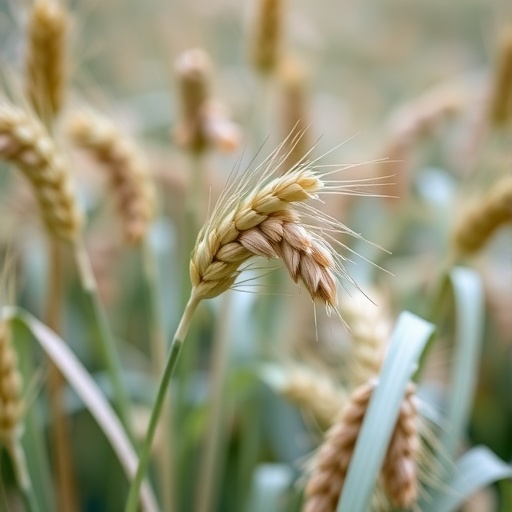
A three-generation field experiment has found that barley exposed to cold stress in its ancestry can produce descendants that germinate more reliably, survive at higher rates and deliver larger yields when temperatures fall again. The study, published in Molecular Genetics and Genomics, describes what researchers call inherited cold-memory-associated resilience: a measurable improvement in performance after earlier generations encountered cold, even though the current plants were not necessarily exposed to the same stress themselves. The findings could give crop breeders a new way to develop cereals for a climate in which damaging cold snaps increasingly collide with unpredictable planting seasons. The effect was not a vague sign of plant hardiness. In barley lineages repeatedly conditioned by cold, grain yield per plant rose from 4.27 grams in a cold-stressed lineage with no ancestral memory to as much as 5.75 grams. The researchers emphasize, however, that the results do not prove epigenetic inheritance. Instead, they reveal a strong, quantifiable pattern that now requires molecular and breeding experiments to determine precisely how it is transmitted.
Cold is particularly dangerous early in a cereal’s life. Delayed germination can leave seedlings vulnerable to disease, soil damage and competition from weeds, while freezing or near-freezing conditions can disrupt cell membranes, photosynthesis and the development of reproductive tissues. Barley, or Hordeum vulgare, is often cultivated in regions where sowing dates expose young plants to sudden cold. To recreate that agricultural challenge under field conditions, Modhi O. Alotaibi and colleagues studied 138 barley accessions—genetically diverse lines representing the species’ available variation—and followed their descendants across three generations. Cold stress was imposed through delayed sowing rather than an artificial laboratory treatment, allowing the plants to experience a complex combination of low temperature, altered soil conditions and changed seasonal timing. The design separated eight third-generation lineage-treatment combinations into classes called no-memory, transgenerational, intergenerational and repeated cold-memory. This distinction matters because a stress effect can arise through several routes: directly in the exposed plant, through its immediate offspring, or across more distant generations. By testing descendants under both control and recurrent cold conditions, the researchers could compare not only survival, but also whether ancestral exposure improved the plants’ response to a new cold episode.
The clearest advantage appeared during establishment, the precarious interval between a seed’s first metabolic activity and the formation of a functioning seedling. Under third-generation cold stress, germination in the no-memory lineage was 79.0 percent. Memory-conditioned lineages reached between 83.5 and 86.6 percent, depending on the class of ancestral exposure. Seedling survival showed a larger separation: the no-memory group reached 68.0 percent, whereas the memory-associated groups ranged from 77.7 to 85.5 percent. These percentages represent more than a modest boost in early growth. In a field, the difference between two-thirds of seedlings surviving and more than four-fifths surviving can determine whether a crop forms a dense, productive stand or requires costly reseeding. The strongest performance generally came from repeated-memory lineages, plants whose ancestry experienced recurring cold stress. That pattern is consistent with a priming response, in which an earlier challenge leaves biological systems better prepared for a later one. Yet the study did not show that the plants consciously “remember” cold. The term describes a physiological and inherited pattern: descendants respond differently because some information associated with ancestral stress has persisted through reproduction.
One of the study’s most revealing measurements was electrolyte leakage, a biochemical indicator of membrane damage. Cell membranes are built largely from lipid layers whose physical properties change as temperatures drop. Cold can make membranes less flexible and more prone to disruption, allowing ions to leak from cells into surrounding tissues. Researchers can measure this leakage by placing damaged plant material in water and assessing its electrical conductivity. Higher conductivity indicates that more electrolytes have escaped, signaling weaker membrane stability. In the cold-stressed no-memory lineage, electrolyte leakage reached 51.5 percent. In the memory-conditioned groups, it fell to 42.1, 34.3 and intermediate levels, with the repeated-memory lineage showing the strongest protection. Lower leakage suggests that these plants preserved cellular integrity more effectively during cold exposure. The analysis also linked resilience to protection against oxidative damage. Cold stress can disturb photosynthesis and respiration, causing reactive oxygen species—chemically reactive molecules capable of damaging proteins, membranes and DNA—to accumulate. Plants survive by balancing these molecules with antioxidant defenses. The barley lineages that remained healthier appeared to coordinate membrane protection, oxidative-damage control and survival as part of a connected stress-protection module.
The benefits extended beyond seedlings into reproduction and harvest. The researchers combined establishment, physiological, biochemical, growth, reproductive and yield measurements into standardized cold-memory indices. An integrated cold-resilience index increased from 38.9 in the no-memory cold-stressed lineage to 49.8 in the transgenerational class, 54.5 in the intergenerational class and 58.9 in the repeated-memory class. A separate grain-yield memory index rose by 26.3 percent, 36.7 percent and 44.0 percent across those same categories. Grain yield per plant climbed to 5.04–5.75 grams in the memory-associated groups, compared with 4.27 grams without ancestral conditioning. The researchers also identified a productivity module centered on grain-yield memory, reproductive yield and what they termed benefit–cost ratio—a measure intended to capture the payoff of resilience relative to the plant’s investment in it. This distinction is important for agriculture. A plant that survives cold but produces little grain is not necessarily a useful crop. Strong breeding candidates must maintain reproductive output while deploying protective metabolism. The results suggest that, in at least some barley backgrounds, inherited stress-associated traits can support both survival and productivity rather than forcing a simple trade-off.
To search for the genetic regions associated with these effects, the team conducted a genome-wide association study using 17,894 quality-filtered single-nucleotide polymorphisms, or SNPs. Each SNP is a position in the genome where individual barley lines may carry different DNA letters. By comparing those variants with measured memory indices, association mapping can identify genomic regions that occur more often in plants with a particular response. The analysis detected 137 significant marker–index–memory associations. Among the strongest signals was a locus on chromosome 5H associated with germination memory, with a statistical strength reported as −log10(P) of 7.58. Signals linked to benefit–cost ratio appeared on chromosomes 3H and 6H, with −log10(P) values of 7.37 and 6.89. These values indicate that the associations were unlikely to have arisen by chance under the study’s statistical model, although association is not proof that the marker itself causes the trait. A marker may sit near the functional gene, or the signal may reflect a larger inherited genomic segment. Confirming the candidates will require experiments that alter individual genes and test whether the expected cold-memory phenotype changes.
The candidate genes highlighted by the researchers point to a biological network rather than a single “cold-memory gene.” Several are involved in trehalose and sucrose metabolism, pathways that regulate soluble sugars. Sugars can serve as energy sources, osmoprotectants and stabilizers of proteins and membranes, while trehalose-related signaling can help coordinate growth with stress responses. Other candidates are associated with receptor-like kinase signaling, which allows plant cells to detect external cues and transmit information through phosphorylation cascades. ERF transcription factors may then alter the activity of suites of downstream genes, including those involved in defense and stress adaptation. Additional candidates were linked to auxin transport, lipid protection, solute transport and genome surveillance. Auxin is a central plant hormone that controls cell division, elongation and developmental patterning; changes in its distribution can influence how roots and shoots grow under stress. Solute transporters can regulate ions and compatible compounds, while genome-surveillance mechanisms help detect and respond to DNA damage. Together, these systems could explain how a plant preserves membranes, controls reactive oxygen species, adjusts growth and protects hereditary material during cold episodes.
The most provocative implication is that farmers might one day breed barley not only for direct cold tolerance, but also for the ability to retain and transmit a beneficial response to previous stress. Such a strategy could complement conventional selection, which usually evaluates how a plant performs under a particular environment and generation. Breeders could use the identified markers to enrich populations for resilience-associated genomic regions, then test whether the advantage remains across locations, years, sowing dates and genetic backgrounds. But the study’s caution is as important as its headline. The authors interpret their results as inherited phenotypes associated with cold memory, not direct evidence that cold-induced epigenetic marks passed from parent to offspring. Epigenetic inheritance can involve chemical modifications to DNA or histone proteins, changes in chromatin structure, or small RNAs that influence gene activity without altering the underlying DNA sequence. Demonstrating such a mechanism would require tracking these molecular marks through reproductive tissues and generations, then showing that experimentally changing them changes the trait. For now, the barley experiment establishes that ancestral cold exposure can be associated with stronger descendant performance in the field—and provides a map of genomic and biochemical leads for finding out why.
The findings arrive as crop production confronts a more erratic thermal environment, in which warmer average conditions do not eliminate sudden freezes and can make planting decisions more difficult. Barley’s early development and yield formation are both sensitive to timing, so a lineage that establishes rapidly and protects its reproductive potential could offer a practical buffer against seasonal shocks. The researchers’ dataset, supported by supplementary materials, supplies a foundation for validating the 137 associations and testing the prioritized genes in controlled crosses or gene-editing experiments. Future work will also need to determine whether repeated cold conditioning carries costs under warm conditions, whether the response persists after many generations without stress, and whether similar memory-associated effects occur in other cereals such as wheat, rice or rye. If those tests succeed, plant stress memory could move from an intriguing biological metaphor to a measurable breeding target. The immediate message is more restrained but still striking: barley does not possess a nervous system, yet its descendants can bear the signature of an ancestral winter in their germination, cellular stability, survival and harvest.
Cite Scienmag News
Alan Morgan. (August 28, 2026). Genetic study identifies barley hotspots for inherited cold-stress resilience. Scienmag. https://scienmag.com/genetic-study-identifies-barley-hotspots-for-inherited-cold-stress-resilience/
Alan Morgan. "Genetic study identifies barley hotspots for inherited cold-stress resilience." Scienmag, 28 August 2026, https://scienmag.com/genetic-study-identifies-barley-hotspots-for-inherited-cold-stress-resilience/. Accessed 3 September 2026.
Alan Morgan. "Genetic study identifies barley hotspots for inherited cold-stress resilience." Scienmag. August 28, 2026. https://scienmag.com/genetic-study-identifies-barley-hotspots-for-inherited-cold-stress-resilience/


