


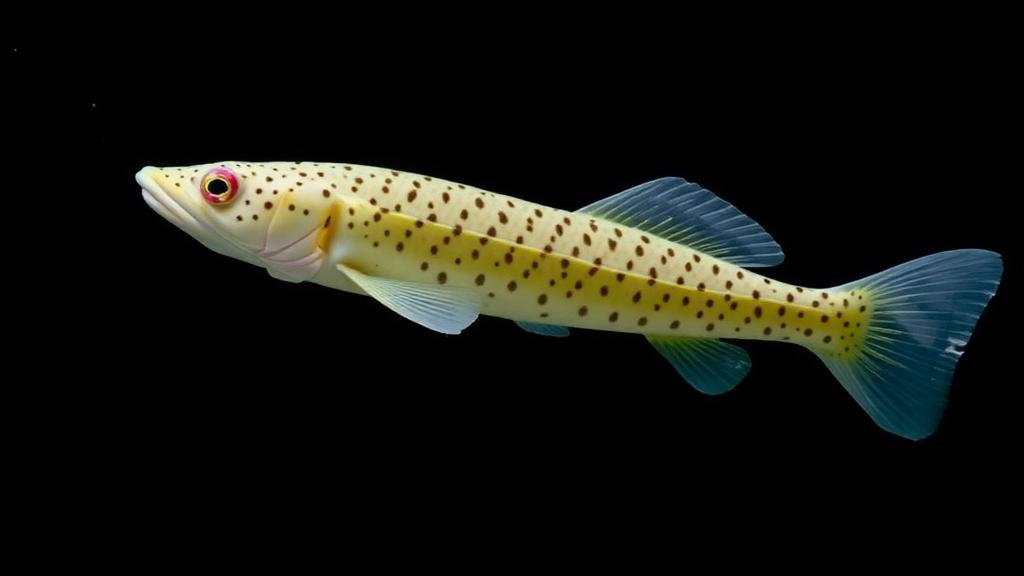
In the world of aquaculture, appearance and performance rarely travel together. A rare, pale-colored fish might be expected to be a fragile curiosity, yet the leucistic morph of the northern snakehead (Channa argus) has quietly become one of the more intriguing subjects in Chinese freshwater fish research. This unusual variant of a species better known as a hardy, aggressive predator retains the high-quality flesh and nutrient density of its normally pigmented relatives, while its striking coloration gives it a distinctive commercial appeal. What has puzzled farmers and scientists alike, however, is that some of these leucistic individuals grow dramatically faster than others raised under the same conditions.
A new study published in BMC Genomics by Wei Fan, Hongli Liu, Jian Su and colleagues, working across the Neijiang Academy of Agricultural Sciences, Sichuan Agricultural University, Neijiang Normal University and an industry partner, set out to explain that growth disparity at the molecular level. Rather than focusing on a single organ, the team took a multi-tissue approach, sequencing the transcriptomes of the brain, liver and skeletal muscle of leucistic northern snakeheads whose growth rates differed significantly. The logic behind this design is straightforward but powerful: growth is not the product of one tissue acting alone. It emerges from a conversation between the brain, which coordinates appetite and endocrine signals; the liver, which processes nutrients and secretes growth-regulating factors; and the muscle, where the actual deposition of new protein takes place.
Transcriptome sequencing, the core technology of the study, captures a snapshot of which genes are actively being transcribed into messenger RNA in each tissue at the moment of sampling. By comparing these expression profiles between fast-growing and slow-growing leucistic individuals, researchers can identify genes and signaling pathways whose activity correlates with rapid growth. High-throughput sequencing platforms now make it possible to quantify the activity of virtually every expressed gene simultaneously, and sophisticated bioinformatics pipelines then sort the resulting data, flagging genes whose expression differs significantly between groups and mapping them onto known biological pathways.
The analysis revealed a series of differential pathways closely associated with growth rate. Among the most notable was the TGF-beta signaling pathway, which the authors found to be activated in the larger, faster-growing group. This pathway family is a central regulator of tissue development across the animal kingdom, and in fish it has well-documented roles in myogenesis, the formation and maturation of muscle fibers. Members of the TGF-beta superfamily, including myostatin, act as molecular brakes on muscle growth, while other related signals promote proliferation and differentiation of muscle precursor cells. An imbalance in this finely tuned system can therefore translate directly into differences in how much muscle an animal builds from the same amount of feed.
According to the study’s functional analysis, the differential pathways identified in the fast-growing fish appear to influence key biological processes such as muscle growth and metabolism. In practical terms, this suggests that the growth advantage of certain leucistic snakeheads is not simply a matter of eating more, but of running an internally different program: one in which the signals governing muscle fiber recruitment, protein turnover and energy allocation are tuned toward more efficient somatic development. The liver’s role in this program is particularly important, because it integrates dietary nutrients, synthesizes the insulin-like growth factors that drive muscle anabolism, and manages lipid and glucose metabolism that fuels tissue construction.
The northern snakehead itself is a biologically remarkable animal, which makes these findings all the more interesting. Native to East Asian freshwater systems, Channa argus is an obligate air-breather equipped with a suprabranchial organ that allows it to survive in oxygen-poor waters and even tolerate brief periods out of water. It is famous for its hardiness, its voracious appetite and its rapid growth, traits that have made it a valuable aquaculture species in China even as its ecological vigor has raised alarm in regions where it has been introduced elsewhere. A leucistic morph of such a robust species, combining unusual appearance with the species’ inherent growth potential, represents exactly the kind of variant that fish farmers dream of, provided the genetics of its performance can be understood and managed.
Leucism itself is worth distinguishing from albinism, since the two conditions are often confused. Albino animals lack melanin entirely because of defects in melanin synthesis, and they typically have red or pink eyes. Leucistic animals, by contrast, suffer a partial loss of pigmentation across all pigment cell types, producing pale or white coloration while often leaving the eyes normally pigmented. In fish, the genetic and cellular bases of leucism are diverse, and pigmentation anomalies can sometimes be linked to broader developmental differences. Understanding whether the leucistic morph’s growth traits are independent of, or connected to, its pigmentation genetics remains an open question, but the current study’s focus on growth pathways provides a crucial piece of the puzzle.
The multi-tissue design of the research deserves particular emphasis, because single-organ studies can miss the systemic nature of growth regulation. The brain, as the command center, integrates environmental cues and hormonal feedback to modulate feeding behavior and the secretion of pituitary growth hormone. The liver responds to that growth hormone by producing insulin-like growth factors, and it also channels dietary energy toward either storage or construction of body tissue. The muscle, finally, is where those signals are executed, with satellite cells and myofibrillar protein synthesis determining how much flesh is actually added. By sampling all three tissues from the same individuals, the researchers could look for coordinated shifts in gene expression across this axis, a far more informative picture than any single tissue could provide.
The implications for molecular breeding are significant. Traditional selective breeding of farmed fish relies on visible performance traits, measuring which individuals grow fastest and breeding from them, a slow process that captures only part of the underlying genetic variation. Transcriptomic markers, by contrast, can reveal which molecular pathways distinguish high-performing animals, potentially allowing breeders to select for favorable expression profiles or underlying genetic variants at a much earlier stage. For the leucistic northern snakehead, whose market value depends on both its unusual coloration and its meat quality, being able to identify fast-growing individuals early, or to breed lines in which the growth-promoting pathways are consistently active, could substantially improve the economics of farming this niche product.
The study also contributes more broadly to aquaculture science, a field under growing pressure to produce protein efficiently as wild fisheries stagnate and demand for farmed fish rises. Growth traits are among the most economically important characteristics in virtually every farmed species, and the signaling pathways identified here, particularly TGF-beta signaling, are conserved across fish lineages. Insights gained from the snakehead may therefore inform research on other cultured species, from carp to tilapia, where manipulating the same regulatory networks could enhance growth performance. The authors note that their work lays a theoretical foundation for the molecular breeding of the leucistic northern snakehead and for the sustainable development of the aquaculture industry, framing the research not merely as a description of one unusual fish but as a step toward a more precise, biology-driven approach to fish farming.
There remain, of course, important caveats and next steps. Transcriptomics measures gene expression, not the final functional output of proteins and metabolism, and the causal role of any single pathway must be confirmed through further experiments, whether functional validation of candidate genes, proteomic follow-up or breeding trials that test whether the expression signatures predict real-world growth. The study was conducted under institutional animal care approval at Sichuan Agricultural University and reported in accordance with the ARRIVE guidelines, reflecting the growing rigor expected of animal research. Supported by Sichuan provincial science and technology programs, the work exemplifies the collaboration between academic institutions and industry that increasingly characterizes modern aquaculture genomics. For now, the pale ghost of the snakehead world has offered up its secrets a little further: beneath its unusual skin, the leucistic northern snakehead carries a molecular growth program whose dynamics researchers are only beginning to read, and whose full exploitation could reshape how this remarkable species is farmed.
Subject of Research: Molecular mechanisms underlying growth rate differences in the leucistic morph of the northern snakehead, Channa argus
Article Title: Multi-tissue transcriptomics elucidate growth disparity mechanisms in the leucistic morph of Channa argus
Article References: Fan, W., Liu, H., He, Y., Zhuo, T., Wang, J., Geng, Y., Huang, X., Chen, H., Jiao, X., Wang, Q., Yang, H., Deng, Y., & Su, J. (2026). Multi-tissue transcriptomics elucidate growth disparity mechanisms in the leucistic morph of Channa argus. BMC Genomics. https://doi.org/10.1186/s12864-026-13392-5
Image Credits: AI Generated
DOI: 10.1186/s12864-026-13392-5
Keywords: Channa argus, leucism, transcriptomics, growth rate, TGF-beta signaling, aquaculture, molecular breeding, muscle growth, gene expression, northern snakehead, BMC Genomics, fish genetics
Cite Scienmag News
Juliet Wilcox. (October 1, 2026). Ghost Fish, Fast Growth: Transcriptomes Reveal Why Leucistic Snakeheads Outgrow Their Peers. Scienmag. https://scienmag.com/ghost-fish-fast-growth-transcriptomes-reveal-why-leucistic-snakeheads-outgrow-their-peers/
Juliet Wilcox. "Ghost Fish, Fast Growth: Transcriptomes Reveal Why Leucistic Snakeheads Outgrow Their Peers." Scienmag, 1 October 2026, https://scienmag.com/ghost-fish-fast-growth-transcriptomes-reveal-why-leucistic-snakeheads-outgrow-their-peers/. Accessed 5 October 2026.
Juliet Wilcox. "Ghost Fish, Fast Growth: Transcriptomes Reveal Why Leucistic Snakeheads Outgrow Their Peers." Scienmag. October 1, 2026. https://scienmag.com/ghost-fish-fast-growth-transcriptomes-reveal-why-leucistic-snakeheads-outgrow-their-peers/


