


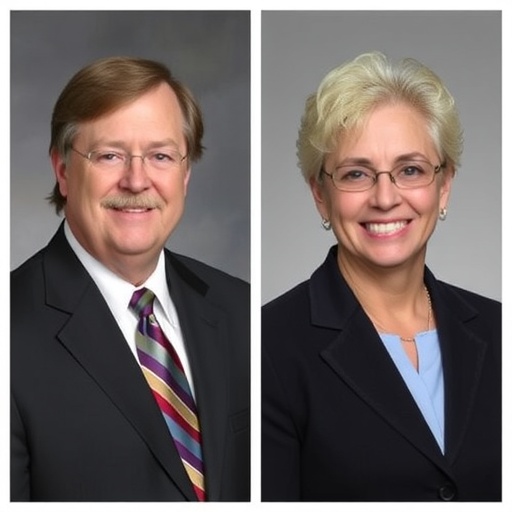
The Gerontological Society of America (GSA) has announced a new slate of elected officers who will help guide one of the world’s largest interdisciplinary organizations devoted to aging. Chosen by more than 6,000 members—including researchers, educators, clinicians, and policy professionals—the incoming leaders will begin their terms on January 1, 2027. Their appointments arrive as population aging reshapes health-care systems, social policy, scientific research, and the design of communities worldwide.
The organization’s elected officers oversee leadership responsibilities and strategic planning, helping determine how GSA responds to emerging challenges in gerontology. The field encompasses the biological mechanisms of aging, the prevention and treatment of age-related disease, psychological and social development across the life course, and policies affecting older adults. By combining these areas, gerontology seeks to explain not only how people age, but also why health, independence, and quality of life differ so dramatically among individuals.
Edward Alan Miller, PhD, MPA, FGSA, of the University of Massachusetts Boston, will become vice president of the Board of Directors. Miller’s background connects health policy, public administration, and aging research—fields that are increasingly intertwined as longer life expectancy places new demands on long-term care, insurance systems, housing, and community support. His role will include helping shape GSA’s strategic direction and supporting collaboration across the organization’s scientific and professional divisions.
Sherry A. Greenberg, PhD, RN, GNP-BC, FGSA, of Hunter-Bellevue School of Nursing, will serve as secretary. As a registered nurse and gerontological nurse practitioner, Greenberg represents the clinical expertise needed to translate aging research into day-to-day care. Geriatric nursing often requires managing multiple chronic conditions simultaneously, assessing cognitive and functional changes, coordinating medications, and supporting patients and families as health needs evolve over time.
The incoming board members are Lewis A. Lipsitz, MD, MS, FGSA, of Harvard Medical School; Dawn C. Carr, PhD, MGS, FGSA, of Florida State University; and Brian Downer, PhD, FACRM, FGSA, of the University of Texas Medical Branch. Their areas of expertise reflect the breadth of modern aging science, which ranges from complex clinical physiology to social participation, rehabilitation, disability, and population health. Together, the appointments strengthen the organization’s capacity to connect laboratory discoveries with practical interventions and public policy.
Lipsitz’s inclusion is especially relevant to research on the biological and clinical complexity of aging. Older adults frequently experience multimorbidity, frailty, impaired balance, and changes in the body’s ability to maintain stable internal conditions, a process known as physiological regulation. Carr brings expertise relevant to aging, social behavior, and population-level change, while Downer’s rehabilitation focus aligns with efforts to preserve mobility, cognitive function, and independence after illness or injury. These concerns are central to extending not only lifespan, but also healthspan—the years lived in good health.
GSA will also welcome new leaders across its specialized sections. Katarina Friberg-Felsted, PhD, MS, FGSA, FAGHE, of the University of Utah, will serve as vice chair-elect of the Academy for Gerontology in Higher Education. Monique J. Brown, PhD, MPH, FGSA, of the University of South Carolina, will take the same role in the Behavioral and Social Sciences Section. LaDora V. Thompson, PhD, PT, FAPTA, FGSA, of Boston University, will become vice chair-elect of the Biological Sciences Section.
Additional section leadership will come from Taylor Jansen, PhD, of Providence College, who will serve as vice chair-elect of the Emerging Scholar and Professional Organization; Allison Lindauer, PhD, APRN, of Oregon Health and Science University, who will lead the Health Sciences Section as vice chair-elect; and Jarmin C. Yeh, PhD, MPH, MSSW, of the University of California, San Francisco, who will serve as vice chair-elect of the Social Research, Policy and Practice Section. The range of disciplines represented by these appointments illustrates how aging research now extends from molecular biology and nursing to education, social work, public health, and policy analysis.
The scientific importance of this interdisciplinary structure is growing rapidly. Aging is not governed by a single biological pathway or social factor. Cellular senescence, inflammation, changes in immune function, muscle loss, vascular disease, cognitive decline, social isolation, income, housing, and access to care can interact in ways that amplify health risks. Research teams that bring together clinicians, biologists, behavioral scientists, economists, educators, and policy experts are better positioned to investigate these interactions and design interventions that work in real-world settings.
Founded in 1945, GSA is the oldest and largest interdisciplinary organization focused on aging and serves members in more than 50 countries. Its stated vision is “meaningful lives as we age,” supported by a mission to advance aging research, education, practice, and policy through excellence, innovation, and collaboration. The organization is also home to the National Academy on an Aging Society, a nonpartisan public policy institute, and the National Center to Reframe Aging, which works to influence how the public and institutions understand later life. The new officers will assume their positions at a moment when the science of aging is moving rapidly from specialized laboratories into mainstream discussions about medicine, technology, work, caregiving, and the future of society.
Cite Scienmag News
Beatrice Stafford. (August 6, 2026). Gerontological Society of America Announces New Officers. Scienmag. https://scienmag.com/gerontological-society-of-america-announces-new-officers/
Beatrice Stafford. "Gerontological Society of America Announces New Officers." Scienmag, 6 August 2026, https://scienmag.com/gerontological-society-of-america-announces-new-officers/. Accessed 4 September 2026.
Beatrice Stafford. "Gerontological Society of America Announces New Officers." Scienmag. August 6, 2026. https://scienmag.com/gerontological-society-of-america-announces-new-officers/


