


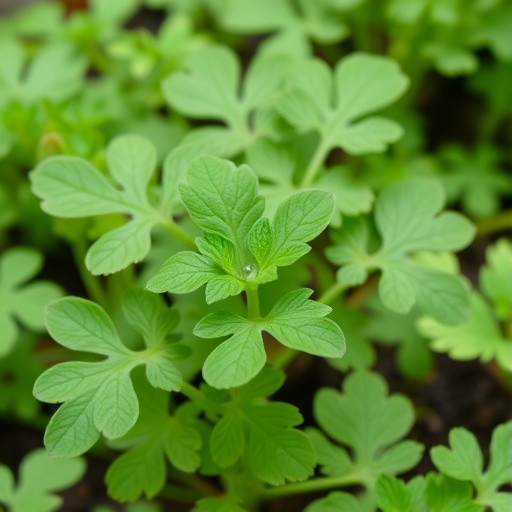
In a groundbreaking study published in the journal “Discover Plants,” researchers Zangishehei, Mortazavian, and Norouzi have explored the highly intricate relationship between polyploidy induction and genetic expression in coriander, a vital herb in culinary and medicinal domains. The authors meticulously conducted experiments using colchicine—a chemical compound known for its role in inducing polyploidy in plants. The primary objective of their research was to unravel genotype-specific responses to this treatment, a necessity for improving crop resilience and nutritional quality.
From the outset, the research underscores the importance of polyploidy, a condition wherein a plant possesses more than two complete sets of chromosomes. This phenomenon can alter the traits of a plant positively or negatively, making it a double-edged sword in agricultural practices. The research highlights how polyploidy can lead to enhanced size, vigor, and disease resistance in plants, making it a valuable tool for plant breeders. Coriander, due to its extensive culinary use globally and its rich profile of essential oils, serves as an excellent model organism for studying these genetic transformations.
The use of colchicine, while effective in inducing polyploidy, requires a nuanced approach as its application can result in a spectrum of responses from different genotypes. The researchers conducted comprehensive trials with various coriander genotypes, investigating their response to colchicine-induced polyploidy at a molecular level. Notably, their findings revealed significant variations in growth parameters and essential oil composition among the genotypes, emphasizing that not all plants react uniformly to polyploidy induction.
One of the intriguing aspects of the study was the identification of specific genetic markers linked to successful polyploidy induction. By employing advanced genetic sequencing techniques, the researchers managed to pinpoint these markers, paving the way for more targeted breeding strategies in coriander. This could revolutionize how breeders select plants for polyploidy induction, leading to more successful cultivation practices and improved yields.
Moreover, the research delves into the broader implications of polyploidy in agriculture. In an era where climate change and population growth pose dire threats to global food security, the ability to enhance crop resilience through polyploidy becomes increasingly crucial. The study presents a compelling argument for the systematic exploration of polyploidy induction across other economically significant crops, signaling a potential shift in agricultural strategies worldwide.
The results obtained from their experiments not only enrich the existing body of knowledge regarding coriander but also serve as a reference point for future research in plant genetics. The researchers hope that their findings will inspire further investigations into the role of genetic diversity in crop improvement. By understanding how various genotypes respond to traditional agricultural treatments, scientists can develop innovative approaches tailored to the unique needs of different plant species and cultivars.
Additionally, the study acknowledges potential challenges and risks associated with colchicine treatments, including cytotoxic effects that could outweigh the benefits of polyploidy in certain circumstances. Therefore, while the prospects are exciting, the authors emphasize the necessity for careful management and comprehensive understanding of each plant’s genetic makeup before applying colchicine treatments on a larger scale.
Finally, the researchers call upon the scientific community to collaborate in exploring the vast potential of polyploidy in agriculture. They advocate for interdisciplinary approaches that integrate genetics, molecular biology, and agronomy to foster innovative solutions that align with sustainable agriculture.
As the agricultural landscape continues to evolve, this research serves as a vital reminder of the importance of genetic research in enhancing crop resilience. The study not only sheds light on the specific responses of coriander to polyploidy but also opens the door for future explorations into the untapped genetic potential within various crops. The findings are poised to influence agricultural practices, considering the global need for sustainable food production.
As the study makes waves in the scientific community, it poses critical questions about the future of agricultural biotechnology. With ongoing advancements in genetic engineering and crop science, the groundwork laid by Zangishehei and his colleagues could well be a starting point for a new era of agricultural innovation. Their meticulous exploration of the genotype-specific responses in coriander provides essential insights that could resonate across numerous other plant species, potentially reshaping modern agriculture as we know it.
It is essential to recognize that the journey of agricultural research is a continuous one. This significant study stands as a testament to the power of intricate genetics in cultivating crops that not only meet human demand but also rise to the challenges posed by a changing environment. As researchers build on these findings, they continue to navigate the complex landscape of plant genetics to bring solutions to the forefront of global agriculture.
Zangishehei, Z., Mortazavian, S.M.M. & Norouzi, M. Genotype-specific responses to polyploidy induction in coriander using colchicine treatments.
Discov. Plants 2, 289 (2025). https://doi.org/10.1007/s44372-025-00374-2
Cite Scienmag News
Alan Morgan. (October 18, 2025). Genotype-Specific Polyploidy Responses in Coriander with Colchicine. Scienmag. https://scienmag.com/genotype-specific-polyploidy-responses-in-coriander-with-colchicine/
Alan Morgan. "Genotype-Specific Polyploidy Responses in Coriander with Colchicine." Scienmag, 18 October 2025, https://scienmag.com/genotype-specific-polyploidy-responses-in-coriander-with-colchicine/. Accessed 4 September 2026.
Alan Morgan. "Genotype-Specific Polyploidy Responses in Coriander with Colchicine." Scienmag. October 18, 2025. https://scienmag.com/genotype-specific-polyploidy-responses-in-coriander-with-colchicine/


